Due to severe weather fluctuations: A number of educational authorities in Tripoli and the western region suspend classes for Tuesday.
libyawire.org > News > Science > Due to severe weather fluctuations: A number of educational authorities in Tripoli and the western region suspend classes for Tuesday.
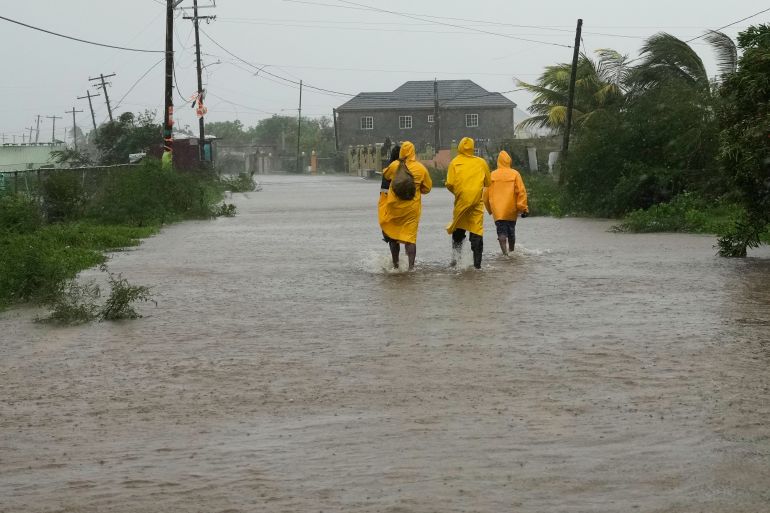
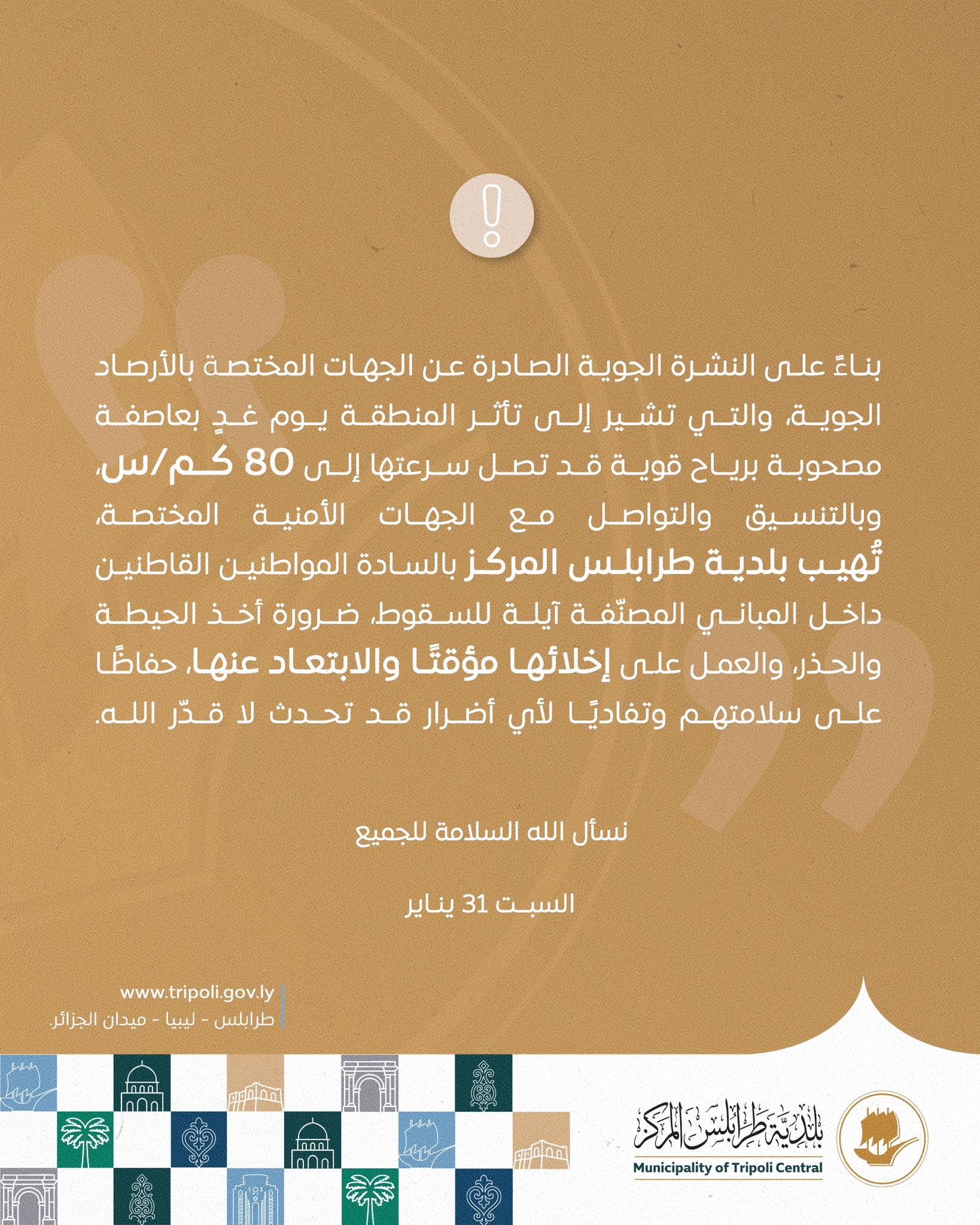
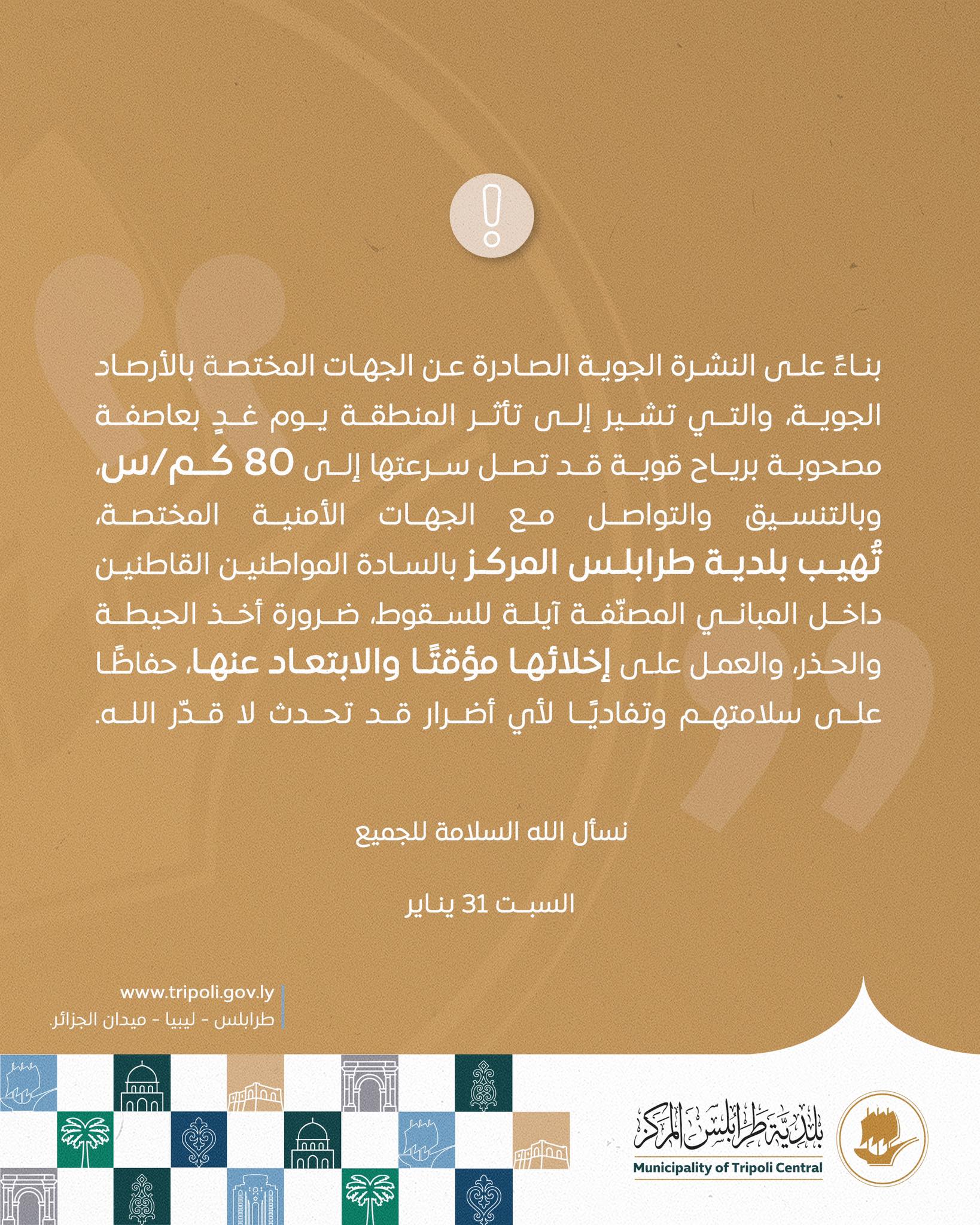
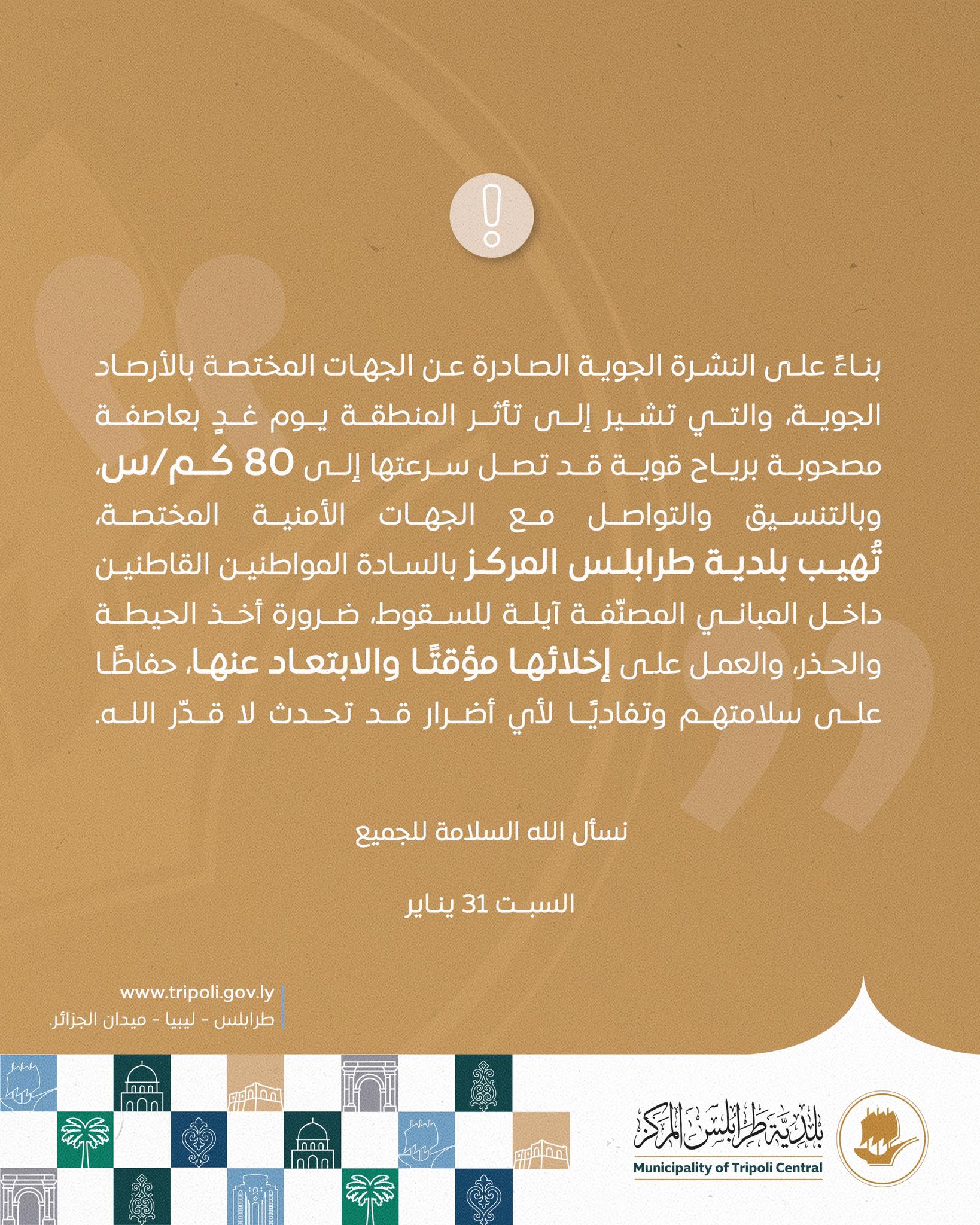
Tripoli, January 27, 2026 – A number of education directorates in Tripoli and the Western Region announced that tomorrow, Tuesday, will be an official holiday for all educational institutions due to weather changes, which have led to high winds and heavy rainfall coinciding with a strong cold wave.
In this context, the education directorates in the municipalities of (Tripoli Center – Abu Salim – Souq Al Jumaa – Janzour – Ain Zara – Al Swani Al Amriya – Misrata – Souq Al Khamis – Al Khums – Zliten – Al Gharbiyah – Al Sabeah – Qasr Bin Ghashir – Gharyan – Al Asabeah – Sidi Al Sayeh – Surman – Al Arabun – Al Rajban – Zliten) have suspended studies for tomorrow, Tuesday.
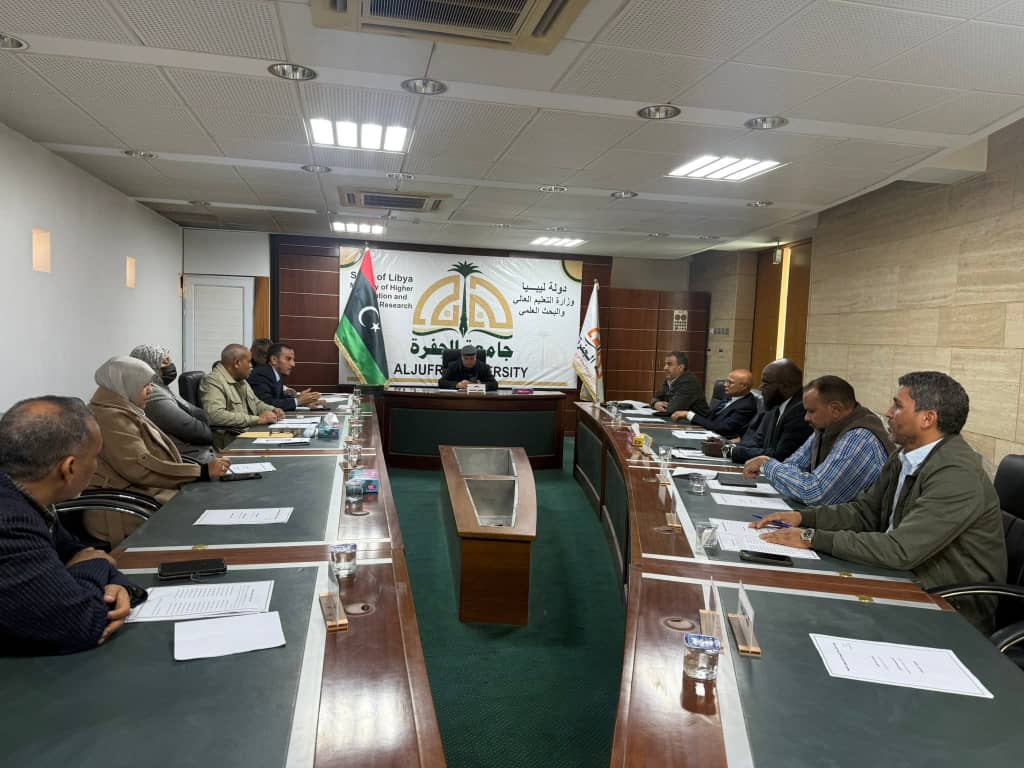
Additionally, the University of Tripoli announced the suspension of studies in all its colleges following the fluctuations in weather conditions.
The Presidency of the Government tasked by the House of Representatives had announced on Sunday an official holiday for Monday and Tuesday in all eastern and southern regions, in anticipation of the weather fluctuations Libya is witnessing these days.
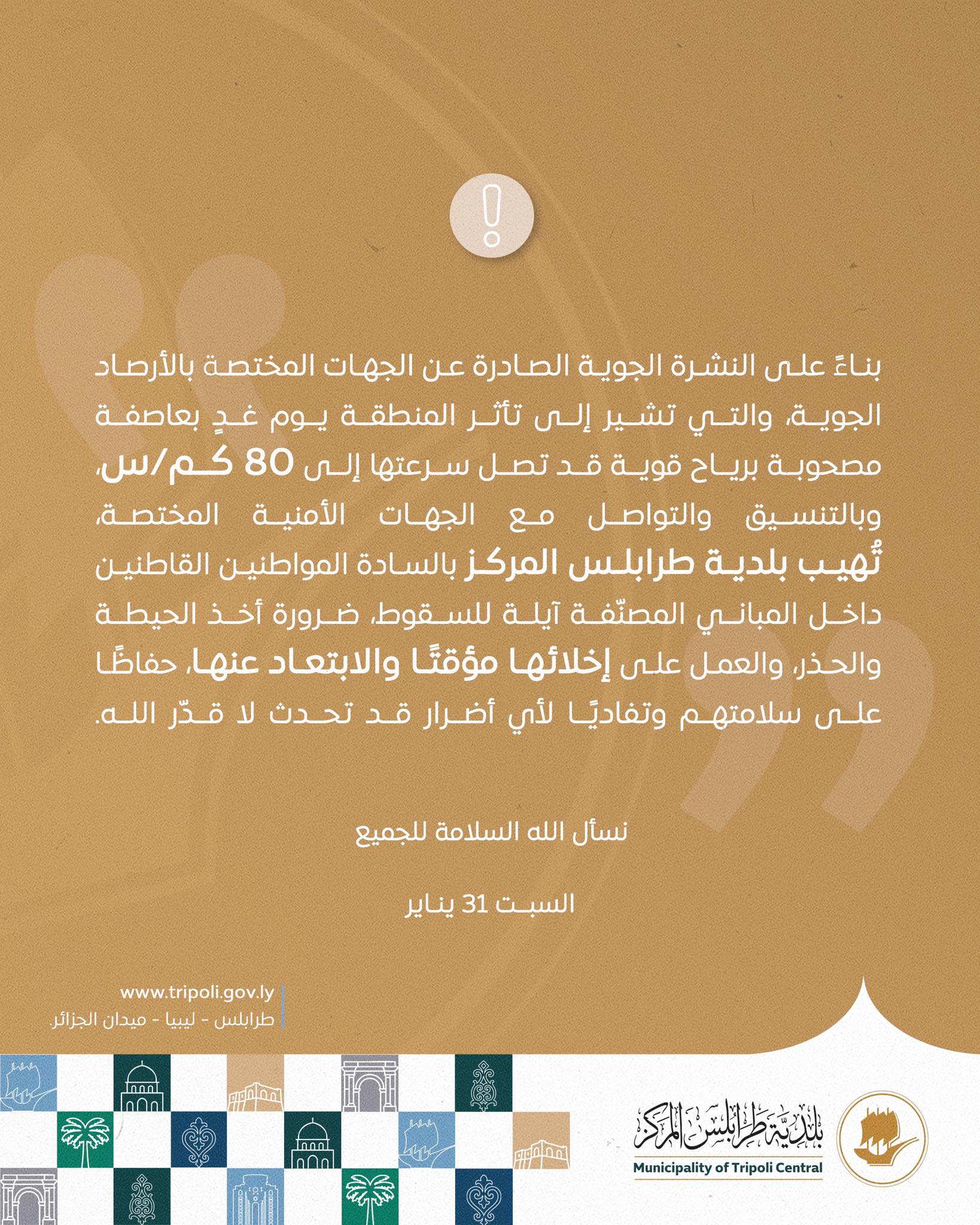
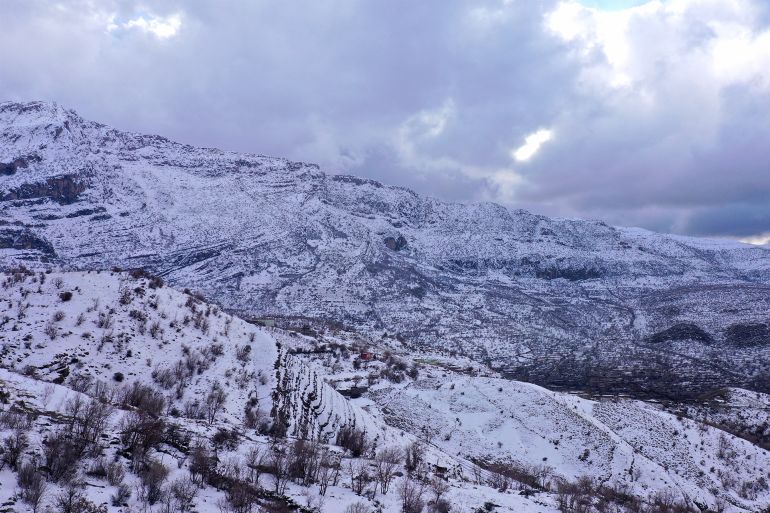
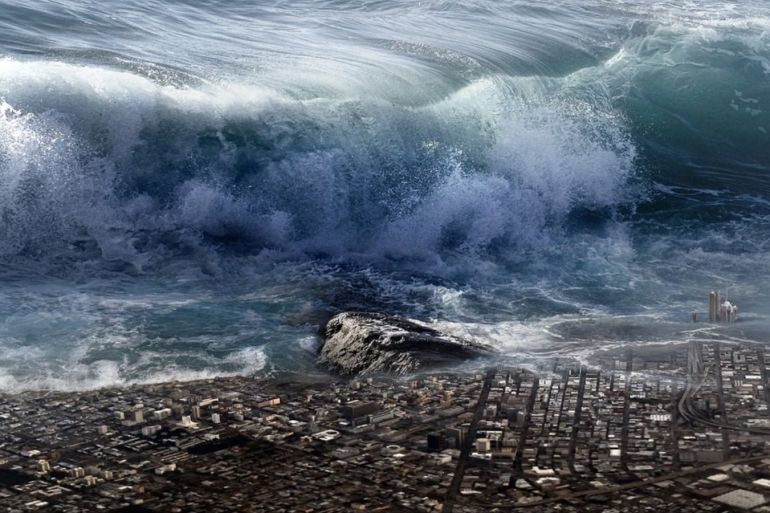
It is noteworthy that most regions of the country are witnessing notable weather fluctuations these days, affected by active to strong and cold southwestern winds, especially in northern Libya, where speeds reach about 70 kilometers per hour. This leads to dust and sand storms and reduced horizontal visibility, particularly in open areas, along with heavy rainfall accompanied by thunder cells.
Tripoli
Tripoli is the capital and largest city of Libya, located on the country’s Mediterranean coast. Historically, it was founded by the Phoenicians in the 7th century BC and has since been ruled by the Romans, Arabs, Ottomans, and Italians, serving as a major center of trade and culture in North Africa. Its historic core, the medina of Old Tripoli, contains ancient architecture and landmarks like the Red Castle (Assaraya al-Hamra).
Western Region
The Western Region refers to a former administrative area of Ghana, established in 1957 following independence and known for its coastal landscapes and cultural heritage. Historically, it was a significant center for trade and colonial activity, featuring landmarks like Fort San Antonio at Beyin. Today, it is renowned for its rich traditions, including festivals like Kundum, and natural attractions such as the Ankasa Conservation Area.
Tripoli Center
Tripoli Center is a major commercial and residential complex in the heart of Tripoli, Lebanon. It was developed in the 1970s as a symbol of modernity and economic prosperity before being heavily damaged during the Lebanese Civil War. The structure remains a prominent, though scarred, landmark in the city’s downtown area.
Abu Salim
Abu Salim is a district in Tripoli, Libya, best known internationally for the Abu Salim prison. The prison gained notoriety after a 1996 massacre where an estimated 1,200 inmates were killed, an event that later helped spark the 2011 Libyan Civil War. Historically, the area’s name is also associated with a prominent local family.
Souq Al Jumaa
Souq Al Jumaa is a traditional Friday market located in Tripoli, Libya, known for its vibrant atmosphere and trade in a wide variety of goods, from household items to livestock. Historically, it has served as a key weekly gathering point for locals and traders from surrounding regions, functioning as a central hub for commerce and social interaction for generations.
Janzour
Janzour is a coastal town located west of Tripoli in Libya, historically known for its agricultural production and as a site of Italian colonial-era settlement in the early 20th century. Its name is derived from the Arabic word for “olives,” reflecting its traditional role in olive cultivation.
Ain Zara
Ain Zara is a historic oasis and former settlement located southwest of Tripoli, Libya. It was the site of a significant battle in 1911 during the Italo-Turkish War, where Italian forces captured the area from the Ottoman Empire. Today, it exists primarily as a suburban district within greater Tripoli.
Al Swani Al Amriya
Al Swani Al Amriya is a historic residential and commercial district in Riyadh, Saudi Arabia, originally established in the 1950s as one of the city’s first planned neighborhoods outside the old city walls. It is known for its distinctive mud-brick and coral stone architecture, which reflects traditional Najdi building styles. The area has undergone preservation efforts to maintain its cultural heritage as part of Riyadh’s urban development.
Misrata
Misrata is a major port city on the Mediterranean coast of northwestern Libya, historically known as a key trading and commercial center since ancient times. It played a pivotal and fiercely defended role during the 2011 Libyan Civil War, serving as a stronghold for anti-Gaddafi forces. Today, it remains one of Libya’s most important economic hubs, known for its industry and commerce.
Souq Al Khamis
Souq Al Khamis is a traditional Thursday market located in Bahrain, historically serving as a major weekly trading hub for goods, livestock, and produce. Its name directly references its long-standing operation on Thursdays, a practice rooted in the region’s mercantile and Bedouin heritage.
Al Khums
Al Khums is a coastal city in northwestern Libya, historically significant as the site of the ancient Roman city of Leptis Magna. Leptis Magna, a UNESCO World Heritage site located just east of Al Khums, was a prominent city of the Roman Empire, famed for its well-preserved ruins including a theater, basilica, and harbor. The modern city of Al Khums developed nearby and serves as a gateway to this major archaeological treasure.
Zliten
Zliten is a coastal city in northwestern Libya, historically known for its ancient Roman ruins, including the Villa of Omira and remnants of the city of Lpqy. It is also notable for the Zliten Mosque, which dates back to the 10th century and is one of the oldest mosques in North Africa. The city has long been a center for Islamic scholarship and Sufi traditions.
Al Gharbiyah
Al Gharbiyah is a governorate in northwestern Egypt, situated in the Nile Delta region. Historically, it has been an important agricultural area since ancient times, known for its fertile lands and role in Egypt’s cotton production during the 19th and 20th centuries. The capital, Tanta, is a major cultural and religious center, notably for the annual moulid (festival) of Sayid Ahmed al-Badawi.
Al Sabeah
Al Sabeah is a historic palace located in Kuwait City, originally built in the early 20th century. It served as the residence for Sheikh Abdullah Al-Jabir Al-Sabah and has since been repurposed as a museum and cultural center showcasing Kuwaiti heritage.
Qasr Bin Ghashir
Qasr Bin Ghashir is a small town located near Tripoli, Libya, historically known for its former Royal Palace. This palace served as a residence for the Libyan monarchy under King Idris before the 1969 coup. The site reflects the nation’s pre-revolutionary era and its architectural heritage from that period.
Gharyan
Gharyan is a historic town in northwestern Libya known for its distinctive underground and hillside cave dwellings, which have provided natural insulation and protection for centuries. These traditional structures, some still inhabited today, reflect the area’s Berber heritage and adaptation to the arid desert climate.
Al Asabeah
Al Asabeah is a traditional Bedouin tribal council system historically used among Arabian tribes for consultation, conflict resolution, and collective decision-making. It represents a key aspect of pre-Islamic and Islamic Arab social and political organization, where elders and respected members would gather to deliberate on matters concerning the community.
Sidi Al Sayeh
Sidi Al Sayeh is a historic mausoleum and mosque complex located in Tunis, Tunisia, dedicated to the 15th-century Sufi saint Sidi Ali Al-Sayeh. It serves as an important religious and cultural site, known for its traditional Islamic architecture and as a place of pilgrimage and local spiritual gatherings.
Surman
Surman is a coastal town in northwestern Libya, historically part of the Tripolitania region. It is known for its Ottoman-era fortress, which served as a strategic defensive site, and the area has ancient roots linked to the Phoenician and Roman periods.
Al Arabun
“Al Arabun” is a small village in the Al-Qassim region of Saudi Arabia, historically known for its agricultural production, particularly dates. Its history is tied to the traditional Bedouin settlements of central Arabia, with development accelerating in the modern era alongside the region’s farming economy.
Al Rajban
Al Rajban is a historical village located in the Ras Al Khaimah emirate of the United Arab Emirates, known for its traditional mud-brick architecture and watchtowers. It served as a key defensive and residential settlement, reflecting the region’s agricultural and tribal heritage from the 19th and early 20th centuries.
University of Tripoli
The University of Tripoli, originally founded as the University of Libya in 1957, is the oldest and largest university in Libya. It was established in the country’s capital following independence and has since been a central institution for higher education and research, though its operations have been significantly disrupted by the conflict and instability since 2011.
Libya
Libya is a North African country with a rich history that includes ancient Phoenician and Greek settlements, most notably at Cyrene, and later Roman rule. It was part of the Ottoman Empire before Italian colonization in the early 20th century, gaining independence as a kingdom in 1951. The nation’s modern history was dominated by Muammar Gaddafi’s lengthy rule from 1969 until the 2011 revolution and subsequent period of instability.
House of Representatives
The House of Representatives is the lower chamber of the United States Congress, established by the Constitution in 1789. It is composed of representatives elected from congressional districts, with representation based on state population, and holds primary responsibility for initiating revenue bills.