Scientists have identified more than one hundred new species previously unknown in the islands south of Guadeloupe in the French Antilles region during a 2024 expedition, according to an announcement by the scientific teams on Tuesday.
The head of the Regional Agency for Biodiversity in the Guadeloupe Islands explained that researchers identified “around fifty new species of marine organisms, thirty species of plants, and more than forty species of insects.”
This expedition, led by the Regional Agency for Biodiversity in the Guadeloupe Islands in collaboration with the National Museum of Natural History, brought together 120 local and international researchers to inventory biodiversity on a small scale in the islands of Les Saintes, Marie-Galante, and La Désirade.
– For the first time in eastern Libya.. Appearance of the cross-continental White-faced Duck
– Few successes and many failures in global species conservation
Researchers detailed many small animals, such as “a new scorpion, the fourth scorpion species found on the island of La Désirade, very small and relatively white in color, with stealthy movement, and a rather large beetle about one centimeter long.”
The researcher noted that “winged animals, meaning flies, will constitute the largest proportion” among the species found on land in future publications.
They added, “For me, the major discovery, or surprise, is the island of La Désirade. We did not necessarily expect to find this many new things so quickly.”
Leading the Islands
However, the island of Marie-Galante, which previously suffered from a lack of documentation, tops the list of islands in terms of the number of terrestrial species present. The index of known species in its territory increased by 42%.
It was explained that “this allows us to make progress in data collection, and a long process will begin to determine the distribution area, the number of individuals, and whether they should be included on the Red List or not,” with studies expected to take about ten years.
French Antilles
The French Antilles refer to the French overseas territories in the Caribbean, primarily the islands of Guadeloupe and Martinique. These islands were colonized by France in the 17th century, becoming key centers for the sugar trade and the plantation economy reliant on enslaved African labor. Today, they are integral parts of the French Republic, blending French and Creole culture.
Guadeloupe
Guadeloupe is an overseas department and region of France located in the Caribbean, consisting of several islands. Historically, it was inhabited by the Arawak and Carib peoples before becoming a French colony in the 17th century, with a significant period shaped by the plantation economy and slavery. Today, it is known for its diverse Creole culture, volcanic landscapes, and beaches.
Regional Agency for Biodiversity in the Guadeloupe Islands
The Regional Agency for Biodiversity in the Guadeloupe Islands is a public institution established to manage and protect the unique ecosystems of this French overseas territory. Its work focuses on the conservation of the archipelago’s rich terrestrial and marine biodiversity, which includes parts of the Guadeloupe National Park, a UNESCO biosphere reserve.
National Museum of Natural History
The National Museum of Natural History is a Smithsonian Institution museum in Washington, D.C., founded in 1910 to house the national collections of natural specimens and cultural artifacts. Its history is rooted in the earlier collections of the United States Exploring Expedition of 1838–1842, and it is now one of the world’s most visited museums dedicated to understanding the natural world and human cultures.
Les Saintes
Les Saintes is a small archipelago in the French Caribbean, part of the Guadeloupe region, historically significant as the site of the 1782 Battle of the Saintes where the British defeated the French. Today, it is known for its preserved colonial-era forts, beautiful bays like Pain de Sucre, and a distinct Creole culture.
Marie-Galante
Marie-Galante is a Caribbean island, part of the Guadeloupe archipelago, known for its pristine beaches and traditional sugarcane agriculture. Historically, it was colonized by the French in the 17th century and became a major center for sugar production, relying heavily on the labor of enslaved Africans. Today, its landscape is still dotted with historic windmills and rum distilleries that reflect this colonial-era industry.
La Désirade
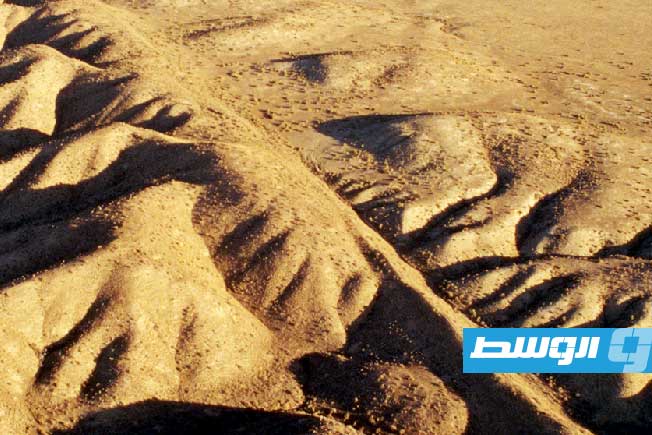
La Désirade is a small island in the French Caribbean, part of the Guadeloupe archipelago, which was first inhabited by the Arawak and later the Carib peoples. It was officially discovered by Christopher Columbus in 1493 and later served as a leper colony and a place of exile from the 18th to the 20th century. Today, it is known for its dry, rocky landscape and is a quiet commune of Guadeloupe.
Libya
Libya is a North African country with a rich history rooted in ancient civilizations like the Phoenicians and Romans, followed by centuries of Arab and Ottoman influence. In the modern era, it was an Italian colony before gaining independence in 1951, later becoming known for Muammar Gaddafi’s lengthy rule from 1969 until the 2011 revolution. The country is home to UNESCO World Heritage sites, such as the ancient Greek city of Cyrene and the Roman ruins of Leptis Magna.
Red List
The Red List refers to the IUCN Red List of Threatened Species, a comprehensive inventory created by the International Union for Conservation of Nature. Established in 1964, it assesses the global extinction risk status of animal, fungus, and plant species, serving as a critical indicator of the world’s biodiversity health.