The renovation work to convert the house of Nazi leader Adolf Hitler in Austria into a police station is nearing completion. However, this new use for the house, intended primarily to deter visits from Nazi sympathizers, continues to draw criticism.
A 53-year-old employee states that converting the house into a police station is a repurposing that could yield mixed results, going so far as to call it a “double-edged sword.” While understanding the reasons behind making it a police headquarters, she believes “it could have been used differently.”
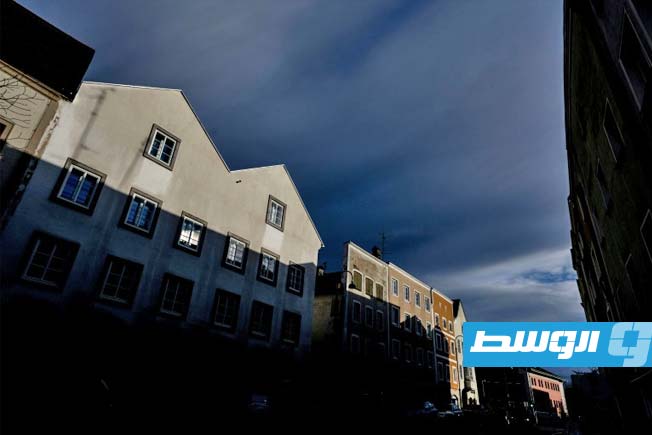
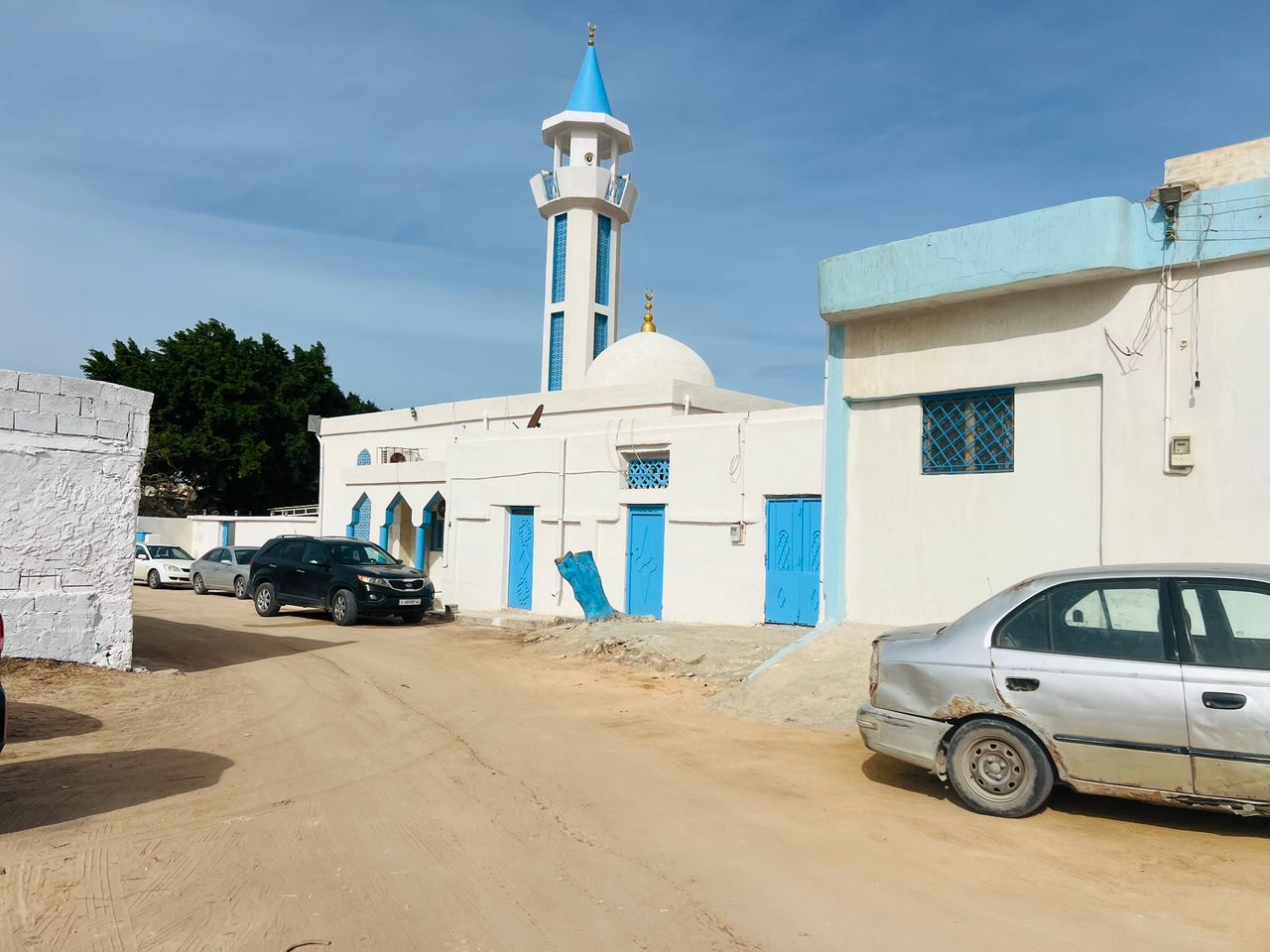
The building dates back to the 17th century. It is where the German dictator was born on April 20, 1889, and is located on a commercial street in the town of Braunau am Inn in Austria, near the border with Germany.
The Austrian Interior Minister announced that the work, which began on the house in 2023, will be completed soon. Workers are currently installing external window frames, while the old yellow paint is being replaced with a modern facade.
After a three-year delay, the work is expected to be finished by the end of March, according to the ministry, with the police station scheduled to begin operations in the second quarter of this year.
– Austria removes Nazi names from its streets
– Member of band ‘Pink Floyd’ attacks critics after investigation launched into controversial Berlin party
– Road from the Nazi era re-emerges
Authorities hope this will close a sensitive chapter in a country sometimes accused of not fully confronting its responsibility for Nazi atrocities and the Holocaust. In Austria, a far-right party founded by former Nazis leads opinion polls following its victory in the 2024 legislative elections, although it has not been able to form a government.
A Magnet for Nazi Ideologues
The house, owned by the same family since 1912, had been leased to the Austrian state since 1972, which converted it into a center for people with disabilities—a group persecuted during the Nazi era. However, it has always been a magnet for those fascinated by Nazi ideology and influenced by Hitler’s persona.
The last owner objected to the conversion of the building and challenged the state’s expropriation through all possible legal means. A special law regarding the matter had to be passed in 2016. Three years later, the Supreme Court approved the purchase of the building for 810,000 euros. The owner had requested 1.5 million, while the state initially offered only 310,000. The two-story house covers an area of 800 square meters.
Several possibilities for the house’s future were considered, but it was essential to rule out it becoming a memorial site. A committee of experts recommended avoiding this to prevent it from becoming a pilgrimage site for neo-Nazis.
Demolishing the house was not an option, as Austria must “confront its past,” according to historians.
The decision was made to convert it into a police station, though this did not achieve unanimous approval. The goal was to clearly signal that it would in no way be a place to honor Nazism.
A member of an association for survivors of concentration camps says converting the house into a police station “remains problematic because the police in any political system are obligated to carry out what is demanded of them.” It is noted that 65,000 Austrian Jews were killed in Nazi camps, and 130,000 others were forced to leave. He believes the best use for the place would be to turn it into a center for promoting peace.
Austria
Austria is a Central European country with a rich history as the heart of the Habsburg Empire, which for centuries was a major European power. Its cultural landscape is profoundly shaped by this imperial past, evident in landmarks like Vienna’s Schönbrunn Palace and its legacy in classical music through composers like Mozart and Beethoven. Today, it is known for its Alpine scenery, historic cities, and vibrant cultural traditions.
Braunau am Inn
Braunau am Inn is a historic town in Austria, situated on the border with Germany along the Inn River. It is notably the birthplace of Adolf Hitler in 1889, a fact that has shaped its modern identity as a site of remembrance and a warning against fascism. The town itself dates back to at least the 12th century and features a well-preserved medieval center.
Germany
Germany is a country in Central Europe with a complex history, having been a collection of states for centuries before unifying in 1871. It was a central power in both World Wars, leading to its division after 1945 and its peaceful reunification in 1990. Today, it is a leading economic and political force in the European Union, known for its rich cultural heritage in philosophy, music, and science.
Berlin
Berlin is the capital of Germany, historically significant as the divided epicenter of the Cold War, symbolized by the Berlin Wall from 1961 to 1989. It originated as a trading center in the 13th century and later became the capital of the Kingdom of Prussia and the German Empire. Today, it is a major European hub known for its museums, art scene, and landmarks like the Brandenburg Gate.
Hitler’s house
The house in Braunau am Inn, Austria, where Adolf Hitler was born in 1889, is a property that has been the subject of prolonged controversy and debate. In recent years, the Austrian government decided to demolish the building to prevent it from becoming a neo-Nazi pilgrimage site, with the land being repurposed for non-political use.
police station
A police station is a local facility where law enforcement officers operate, historically evolving from early watch systems in ancient civilizations to more structured municipal forces in the 18th and 19th centuries. It serves as a base for crime prevention, public assistance, and administrative duties within a community.
center for people with disabilities
The Center for People with Disabilities is a community-based nonprofit organization, typically founded in the late 20th century, dedicated to promoting independent living and providing advocacy, resources, and support services for individuals with disabilities. Its history is rooted in the broader disability rights movement, which fought for civil rights, accessibility, and self-determination, leading to the establishment of many such centers following legislation like the Americans with Disabilities Act (ADA).
Supreme Court
The Supreme Court of the United States is the highest federal court in the nation, established in 1789 under Article III of the U.S. Constitution. It serves as the final arbiter of federal law and the Constitution, with its landmark decisions shaping American civil rights, governance, and society throughout its history.
concentration camps
Concentration camps were initially used by colonial powers in the late 19th century but are most infamously associated with the vast, brutal network operated by Nazi Germany during World War II to imprison, exploit, and exterminate millions of people, primarily Jews. These sites have become enduring symbols of state-sponsored persecution and genocide in the modern era.
center for promoting peace
The Center for Promoting Peace is a cultural institution dedicated to fostering dialogue and reconciliation, often established in regions with a history of conflict. Its history is typically rooted in post-conflict efforts to build mutual understanding and prevent future violence through education and cultural exchange.