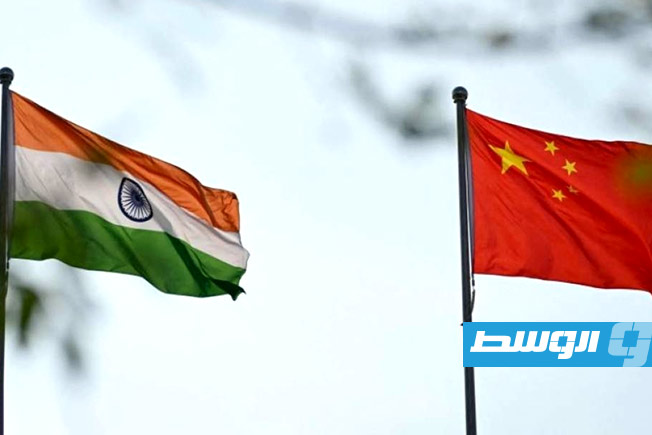
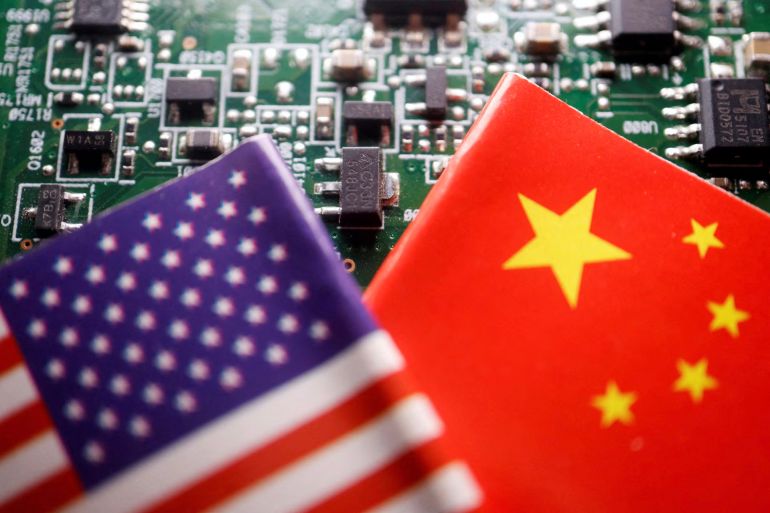
China has submitted a request to the World Trade Organization to settle disputes with India concerning certain measures imposed by New Delhi on trade in photovoltaic products and information technology products, as announced by the global organization on Tuesday.
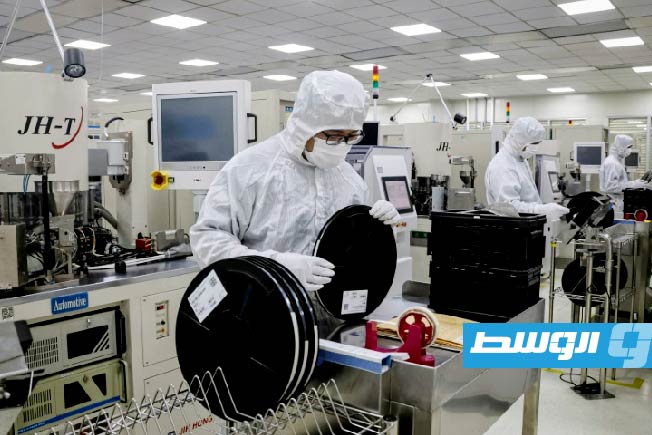
Beijing is challenging certain subsidies provided to the solar energy sector and the customs duties imposed by India on products such as mobile phones or devices for developing screen display technologies, according to the Geneva-based organization.
It was clarified that “China indicated that the measures in question include tariffs applied by India and certain other measures it considers conditional on the use of domestic products and involve discrimination against Chinese imports.”
Opportunity to examine the matter and find a satisfactory solution before escalation
China confirmed in the consultation request circulated to WTO members this Tuesday that these measures “are inconsistent with various provisions of the WTO’s General Agreement on Tariffs and Trade (1994), the Agreement on Subsidies and Countervailing Measures, and the Agreement on Trade-Related Investment Measures.”
The consultation request formally constitutes the first step in the WTO’s dispute settlement procedures. Consultations provide the parties an opportunity to examine the matter and find a satisfactory solution before escalation.
If consultations do not resolve the matter within a 60-day period, the complainant may request that the matter be referred to a panel under the judicial process.
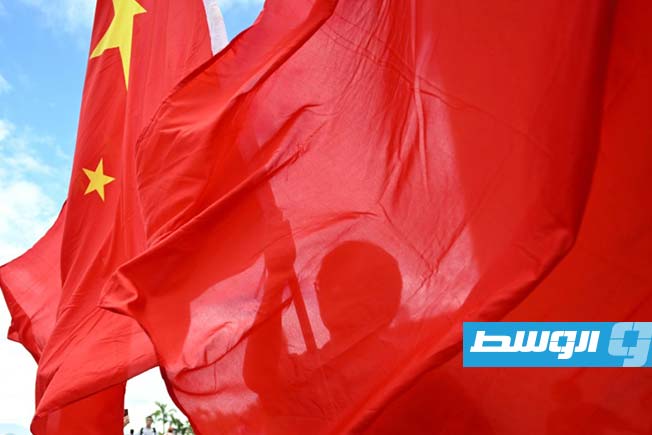
China
China is one of the world’s oldest continuous civilizations, with a recorded history spanning over four millennia. It is home to numerous UNESCO World Heritage sites, such as the Great Wall and the Forbidden City, which reflect its long imperial dynasties and profound cultural achievements.
India
India is a vast South Asian country with one of the world’s oldest civilizations, dating back to the Indus Valley Civilization around 2500 BCE. Its long history includes the rise of major empires, the development of diverse religions like Hinduism, Buddhism, and Sikhism, and a period of British colonial rule before gaining independence in 1947.
World Trade Organization
The World Trade Organization (WTO) is an international body established in 1995 to regulate global trade rules and resolve disputes between member nations. It succeeded the General Agreement on Tariffs and Trade (GATT), which was created after World War II to promote economic recovery through trade liberalization. The WTO’s primary functions are to oversee trade agreements, provide a forum for negotiations, and ensure trade flows as smoothly and predictably as possible.
New Delhi
New Delhi is the capital city of India, officially inaugurated in 1931 to serve as the new administrative center of British India, replacing Calcutta. Designed by architects Edwin Lutyens and Herbert Baker, its wide boulevards and grand government buildings, such as the Rashtrapati Bhavan and India Gate, reflect a blend of Indian and British architectural styles. Today, it remains the seat of the Government of India and a major political and cultural hub.
Beijing
Beijing is the capital of China, with a history spanning over three millennia as a significant political and cultural center. It served as the seat of imperial power during several dynasties, most notably the Ming and Qing, and is home to UNESCO World Heritage sites like the Forbidden City and the Great Wall. Today, it is a major global metropolis that blends ancient architecture with modern infrastructure.
Geneva
Geneva is a major global city in Switzerland, historically known as a center for the Protestant Reformation under John Calvin in the 16th century. It is now a key hub for international diplomacy, hosting numerous United Nations agencies and the Red Cross.
General Agreement on Tariffs and Trade (1994)
The General Agreement on Tariffs and Trade (GATT) of 1994 is the updated, legally binding set of international trade rules that succeeded the original 1947 GATT framework. It was established as part of the Marrakesh Agreement, which concluded the Uruguay Round of negotiations and created the World Trade Organization (WTO) to oversee its implementation. This agreement expanded the scope of global trade rules to include services, intellectual property, and a more effective dispute settlement mechanism.
Agreement on Subsidies and Countervailing Measures
The Agreement on Subsidies and Countervailing Measures (SCM Agreement) is a treaty of the World Trade Organization (WTO) that regulates the use of government subsidies and the application of countervailing duties. It was negotiated during the Uruguay Round and entered into force in 1995, building upon earlier rules from the General Agreement on Tariffs and Trade (GATT). Its core purpose is to discipline subsidies that distort international trade while providing a legal framework for countries to remedy the injurious effects of subsidized imports.
Agreement on Trade-Related Investment Measures
The Agreement on Trade-Related Investment Measures (TRIMs) is a World Trade Organization treaty that came into force in 1995. It prohibits member countries from applying trade-distorting investment measures, such as local content requirements, that are inconsistent with basic WTO principles.