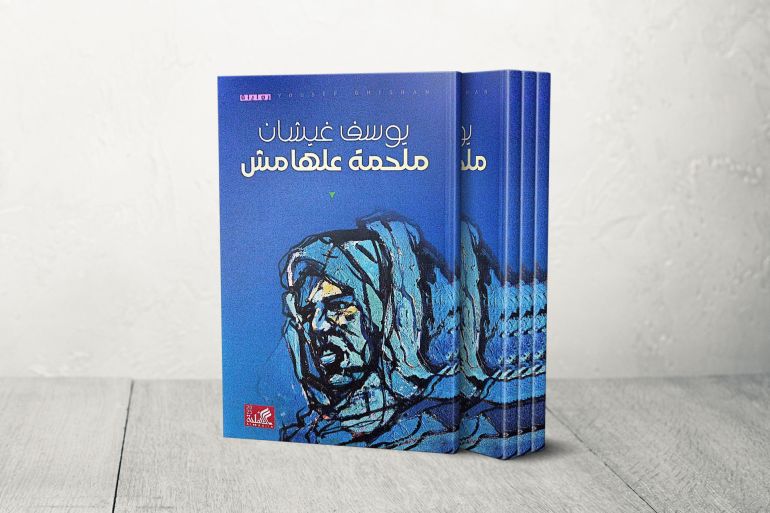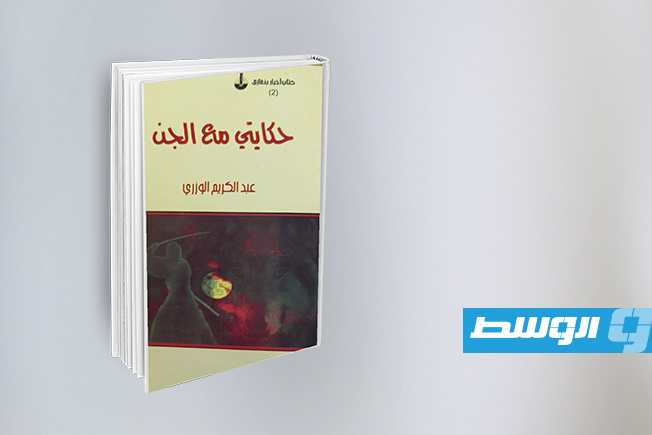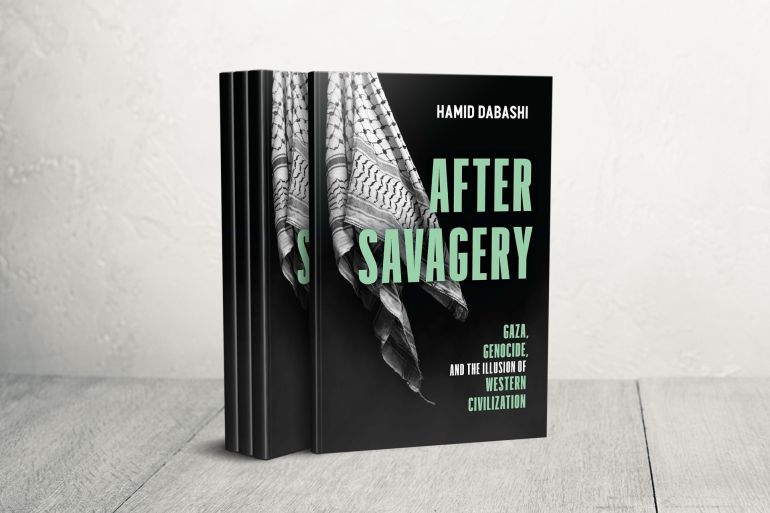
This is a major book, not in terms of its physical size or page count, but in the breadth of its inquiry, the historical foundations it builds upon, the reports it cites, the poems and novels it pauses to consider, the events it references, and the ideas it advocates for.
It is also a philosophical reckoning that continues a dialogue with Western philosophy begun in earlier works, particularly in the book “Can Non-Europeans Think?”, and is now advanced in this latest work, “After Barbarism”.
The subject of the book is Gaza, as the tragedy of our age, and what it has come to represent as an epistemic condition and epistemological ground.
When the author states that “Gaza represents an epistemic shift in our emerging future,” he confronts European critical thought with its historical blindness, its political evasiveness, and its racial limitations.
That tradition, which once heralded liberation, is shown here to be structurally incapable of confronting colonial violence when it is not European against European.
The central thesis of “After Barbarism” is decisive: non-Europeans do not exist as fully human within the European philosophical imagination.
From Kant to Hegel, and from Heidegger to Habermas and Adorno, the racialized “Other” appears either as ontological noise, a threat, or an abstract moral idea, but never as a historical subject.
The book is built on a juxtaposition of what is happening in reality and what philosophy contemplates; for instance, the chapter “A Non-Critical Theory” opens with the report by the UN Special Rapporteur on the situation of human rights in the Palestinian territories, written after the first five months of the latest war on Gaza—a horrifying report dense with the language of killing, mutilation, displacement, and the impossibility for the living to mourn their dead.
This text is presented as a human testimony and an indictment of theory’s failure to think of colonial violence as a structure, not an exception.
At the heart of this indictment stands the Frankfurt School, particularly the Germans Theodor Adorno and Max Horkheimer, whose Eurocentrism becomes an ethical scandal when placed in the context of their actual political alignments.
The book reminds us of Adorno and Horkheimer’s public defense of the 1956 Tripartite Aggression against Egypt, when they described Gamal Abdel Nasser as a “fascist tribal leader” and portrayed Arab countries as “robber states” lying in wait for Israel.
It questions why this demeaning ethnographic description was reserved for an Arab leader. Why were the symbols of European fascism not described with the same expressions? The answer lies in a racist civilizational imagination that critical theory has never abandoned.
The philosophers who diagnosed the Enlightenment reason’s complicity with domination remained incapable of seeing colonial domination when it occurred outside their European horizon, and “the West” remained the center of history against which all experiences were measured.
The book also recalls a dialogue between Adorno and Horkheimer while drafting what they called the “New Manifesto.” Adorno says: “We know nothing about Asia,” to which Horkheimer replies: “I think Europe and America are the best civilizations history has produced in terms of justice.”
They saw Western civilization as the pinnacle of justice at a moment when structural racism in the United States was savagely active, and European empires were practicing killing, plunder, and subjugation in their colonies. The irony is that a theory born from radical skepticism of Western civilization ends up defending it as the zenith of history.
The argument presented is not a reading that says this philosophy failed to live up to its ideals, nor a call to enrich it with non-Western voices to make it truly universal. It is a more radical thesis: European thought has always been, and remains, a local, tribal discourse disguised as a universal human one, imposed through conquest, colonialism, and military superiority.
This is why the