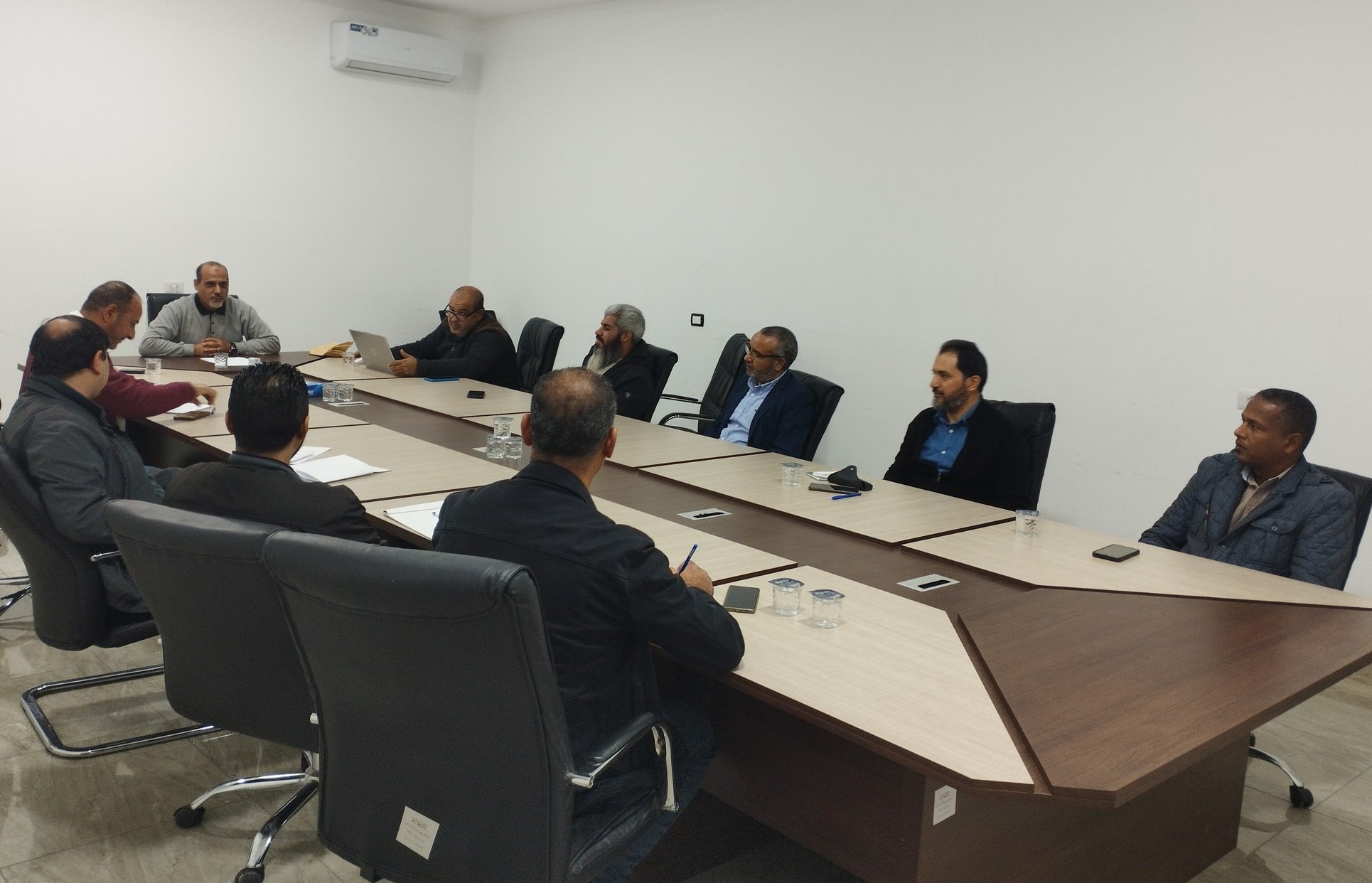
Tripoli, January 7, 2026 – The Research and Scientific Studies Department of the Libyan Center for Biotechnology Research, during its regular meeting held this Wednesday, focused on monitoring research performance and reviewing completed work.
The meeting, attended by department and office directors as well as heads of scientific divisions, also discussed operational mechanisms and their alignment with research plans. Emphasis was placed on enhancing integration between departments and supporting the production of peer-reviewed scientific research suitable for publication in specialized journals.
The Center clarified that this effort is part of its broader initiative to develop the scientific research system, improve the quality of research outputs, and strengthen the Center’s standing among specialized research institutions.
Tripoli
Tripoli is the capital and largest city of Libya, located on the country’s Mediterranean coast. Historically, it was founded by the Phoenicians in the 7th century BC and has since been ruled by the Romans, Arabs, Ottomans, and Italians, which is reflected in its diverse architecture, such as the ancient Red Castle (Assaraya al-Hamra).
Libyan Center for Biotechnology Research
The Libyan Center for Biotechnology Research is a national scientific institution in Tripoli, established to advance research in areas such as agriculture, health, and environmental biotechnology. Its history is tied to Libya’s efforts to build domestic scientific capacity, particularly from the late 20th century onward, focusing on applying biotechnology for national development.
Research and Scientific Studies Department
The Research and Scientific Studies Department is a specialized administrative unit, typically within a larger institution like a university, government, or corporation, dedicated to coordinating and advancing formal inquiry and experimentation. Its history is tied to the 20th-century institutionalization of research and development (R&D), emerging as organizations sought to systematically manage innovation, peer review, and funding for scientific projects.