Introduction
This puzzling question might one day pop into your mind: Where do the images formed by our minds come from? How can the mind construct worlds that do not exist in reality, recall a past long gone, and even formulate possibilities for a future we have not yet reached?
This takes us on a journey through three interconnected neural networks that form our mental images, granting humans the ability to think beyond the physical world into deeper, more expansive realms. This is the spark of uniqueness that ignited in human consciousness, distinguishing it from all other beings.

Main Text
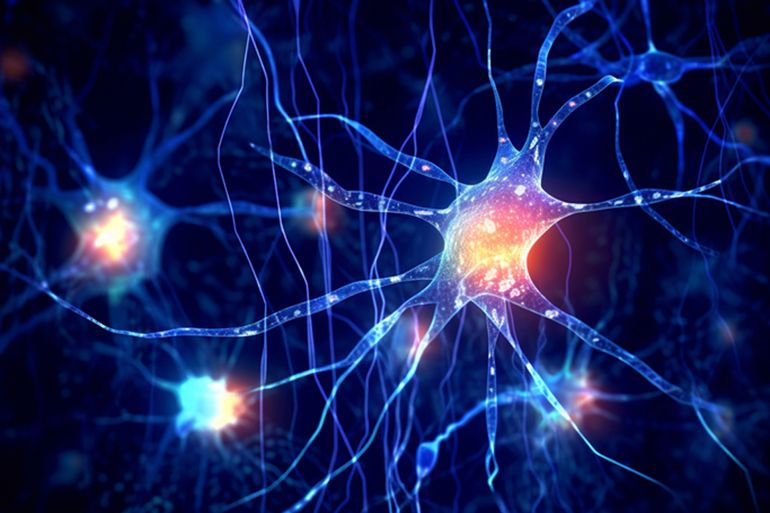
Unlike specialized mental processors, brain scans do not reveal a specific area that could be called a “cortex dedicated to imagination.” Imagination does not reside in a particular corner of our brains; rather, it is the product of inputs from all over the brain and from various parts of the body as well.
We know well that imagination does not come in a single form, and we do not all experience it in the same way. However, in recent years, neuroscientists have gained a clearer understanding of the mechanism by which the elements of imagination interact within the brain.
Developments in active brain imaging, specifically functional magnetic resonance imaging (an advanced imaging technique used to locate vital brain centers*), have shown that the brain is organized into several major networks. Each network exchanges information within its domain while maintaining constant communication with others. This enables the brain to switch between different modes of thinking by selecting the most suitable network for each task.
Our imagination relies on three pivotal networks that come together to form the images that arise in our minds. The network closest to this inner world was discovered by chance in the late 1990s, when neuroscientists noticed a distinctive pattern of brain activity in volunteers waiting inside fMRI machines.
While the participants’ minds were free and not focused on a specific task, brain regions associated with memory, mood, and self-reflection began to pulse with increased activity, reflecting a state of mental immersion and contemplation of the inner self. This state became known as the “default mode network,” a network of nerves that activates as soon as we give our minds space to wander freely, delve into the archives of memory, let our thoughts drift toward the future, or immerse ourselves in daydreams.
However, the default mode network is not the sole contributor to what we call imagination. For the contemplations of the default mode network to manifest in human consciousness, the brain must integrate the “salience network,” also known as the network of importance or prominence.
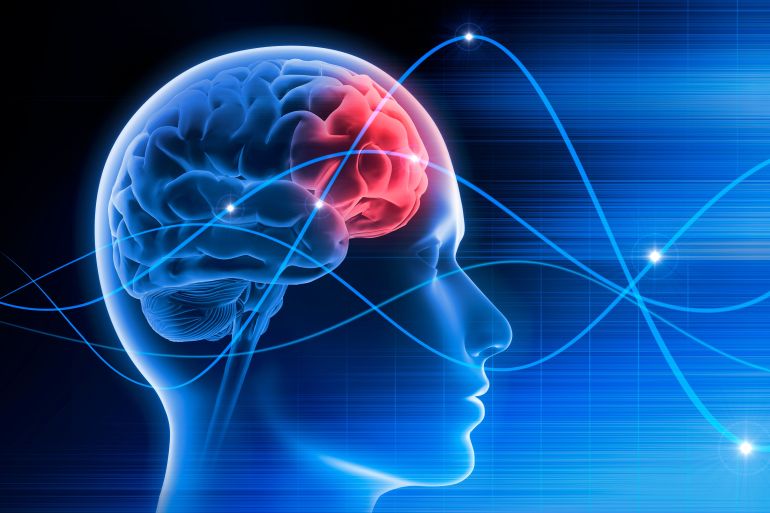
This network creates a bond between regions responsible for emotion, attention, and motivation, acting like a project manager that distinguishes between external stimuli and the internal noise within us, ultimately deciding what deserves our attention. Regarding imagination, this network plays a role in fueling ideas and memories that are essential, sudden, or so urgent they are hard to ignore.
Furthermore, the salience network we discussed earlier is where bodily inputs influence imagination. (Meaning that imagination is not solely a product of the mind; the body participates as well*). This network resides in the insular lobe, a part of the brain that processes bodily sensations which may be linked to emotional states. When these sensations are ignited by our imagination or a memory, such as recalling a frightening experience that increases your heart rate, our thoughts at that moment, or what is going through our minds, transform into a vivid, pulsating feeling.
It is true that the interaction of the default mode network with the salience network creates what