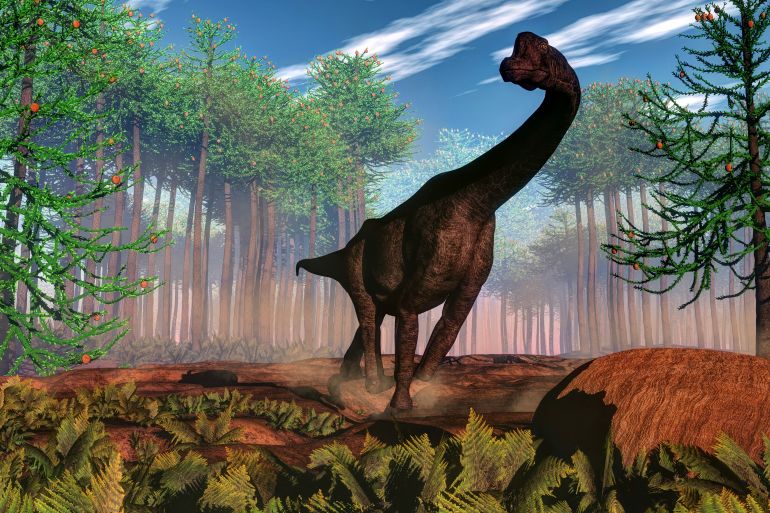
A new study reveals that young long-necked dinosaurs, known as sauropods, played a crucial role in feeding predators during the Late Jurassic period around 150 million years ago, when dinosaurs dominated the land.
According to the study, the carnivorous dinosaurs of that time relied heavily on young sauropods as a primary food source because they were weak and had little protection compared to their giant parents.
A Complete Prehistoric Food Web
The researchers relied on fossils from the Morrison Formation in the United States, one of the world’s richest fossil records for dinosaurs. Using this data, the team reconstructed a massive “food web,” a detailed map showing who ate whom within that ancient ecosystem. The team concluded that young sauropods were an important food source for several types of carnivores because they were easier to hunt compared to armored or larger dinosaurs.
Adult sauropods like Diplodocus and Brachiosaurus were among the most massive creatures to ever walk the land, with some exceeding the length of a blue whale.
“When these animals walked, the ground shook beneath their feet, yet they laid relatively small eggs, no more than a foot in diameter.”
The young of these dinosaurs needed many years to reach sizes that would protect them from predation, and during that period they were vulnerable to constant attack.
An important finding supported by the study is that sauropods most likely did not care for their young after hatching; the parents’ enormous size would have made protecting or sitting on the eggs difficult without crushing them. Fossil evidence suggests the young were left to fend for themselves, similar to what happens with turtle hatchlings today.
Life was cheap in this ecosystem, and the lives of predators like Allosaurus may have been fundamentally based on devouring young sauropods.
Who Ate Whom?
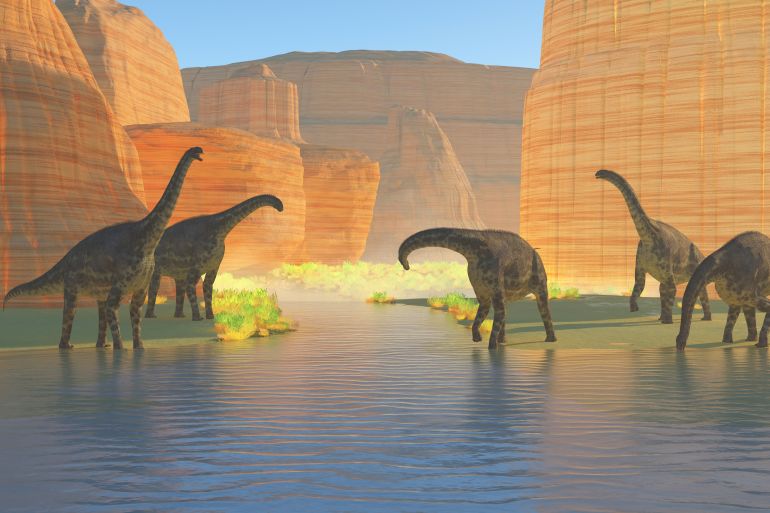
The researchers based their work on fossil records from a single site, the Dry Mesa Quarry in Colorado, USA, where dinosaur remains accumulated over a period of up to about 10,000 years. The site contains fossils of at least six types of sauropods, including Diplodocus, Brachiosaurus, and Apatosaurus, alongside massive predators that lived in the same area.
To determine the dietary relationships between these creatures, the researchers used a range of scientific evidence, including: the size and body strength of the dinosaurs, tooth wear patterns that reflect diet, the presence of specific chemical isotopes in bones that help determine the food chain, and in some cases, the contents of a fossilized stomach revealing an animal’s last meal. The team then built a model of the food web with higher precision than previous attempts, using software typically employed to study modern ecosystems.
The study concluded that sauropods had a greater impact on the ecosystem compared to other herbivorous dinosaurs like “ornithischians,” which include the armored Stegosaurus—a more dangerous prey due to its spiked tail and defensive plates. Sauropods left a tremendous mark on their environment, and this study marks the first time scientists have been able to measure this role quantitatively.
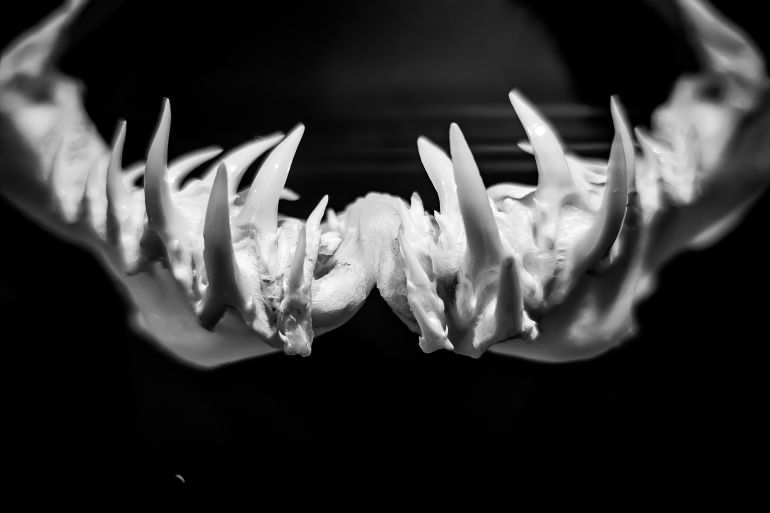
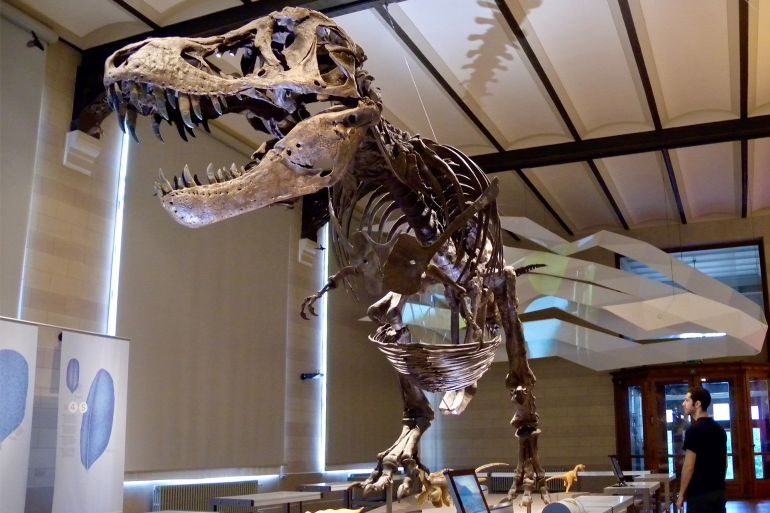
The picture changed about 70 million years later, in the time of Tyrannosaurus rex; in that era, the presence of small sauropods as easy prey became less common, which may have driven predators to develop new capabilities like greater bite force, larger size, and better vision, to enable them to hunt more dangerous prey like the three-horned Triceratops.
The lead researcher of the study stated that Jurassic predators may have lived in easier conditions than later predators, due to the abundant availability of young sauropods.