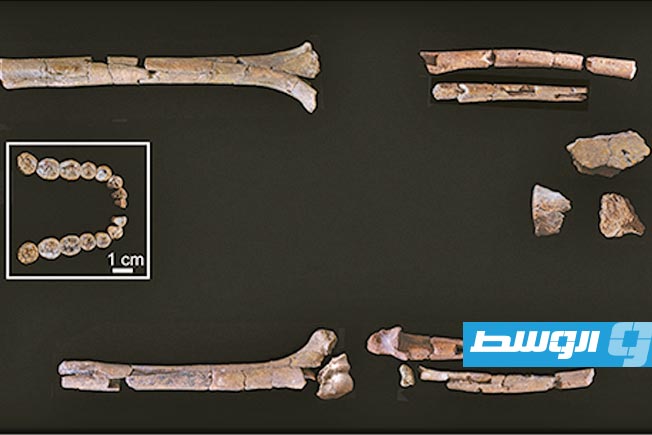
An international research team announced the discovery of a skeleton described as “the most complete Homo habilis” in northern Kenya, dating back approximately two million years.
According to a study published in the journal “Anatomical Record,” this Homo habilis represents the oldest known specimen of this species, considered a living bridge between early human ancestors and the current human genus.
The discovered skeleton includes a nearly complete set of teeth, along with parts of the skull, limbs, and shoulders.
The importance of this discovery is emphasized: “There are only three other known skeletons of this important species, all of which are fragmented and incomplete.”
The First to Make Stone Tools
Homo habilis is renowned for being one of the earliest human species to craft stone tools. The finger bones in the new discovery show the development of a “precision grip,” a fundamental human characteristic.
– Scientists: Ancient humans interbred
– Our African ancestors killed Neanderthals with ‘infection’
– Neanderthals used tools early
It was clarified that the proportions of the lower limbs remain unclear, stating: “We need more fossils of the lower limbs to change our perspective on this pivotal species.”