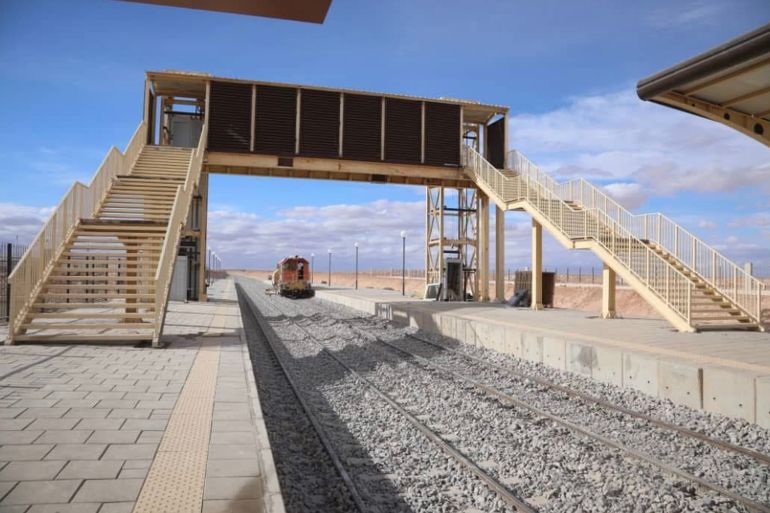
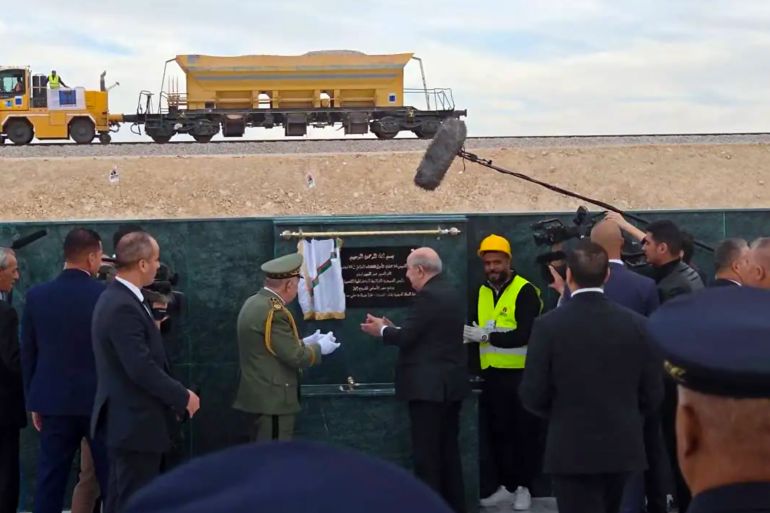
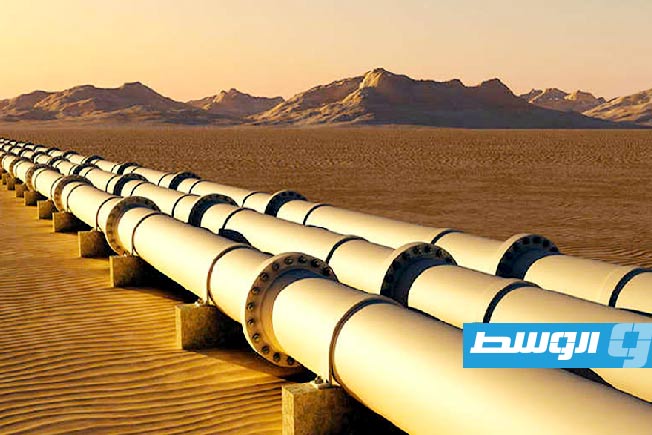
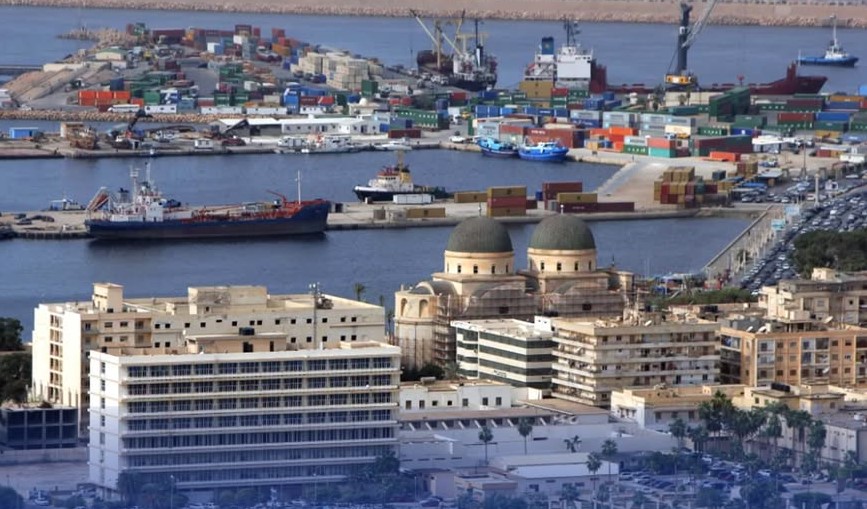
Algeria- Algeria is nearing the inauguration of one of its most prominent strategic railway projects in the country’s southwest, which is among the largest infrastructure projects.
The project spans 950 kilometers, starting from the Béchar province, which now forms a link with the Algerian railway network, reaching the far southwest in the Gara Djebilet area of Tindouf.
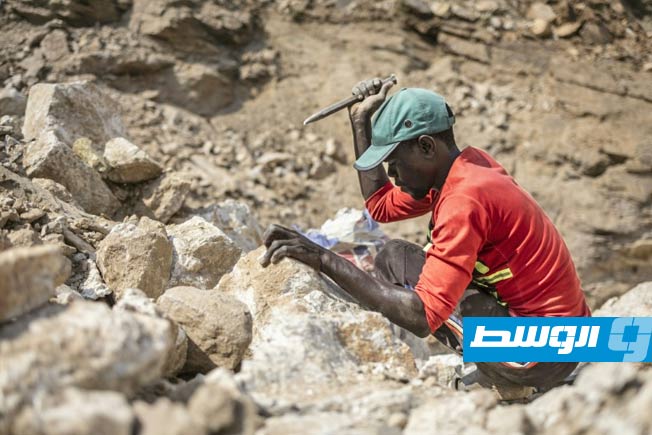
The foundation stone for this project, which connects the Gara Djebilet mine—one of the world’s largest iron ore reserves at 3.5 billion tons—with manufacturing and export centers, was laid in November 2023.
Although the project’s true value has not been disclosed, local media sources mentioned that the new project is estimated at 700 billion dinars (5.2 billion dollars).
The project is part of a comprehensive national strategy—launched by Algeria in recent years—to develop structuring projects, aiming to expand the railway network to reach 15,000 kilometers by 2030.
Project Details
The new line is being implemented by specialized Algerian public infrastructure companies in cooperation with the Chinese company “CRCC” and is divided into 3 sections:
First Section: Extends 200 kilometers from the city of Béchar to the provincial border with Béni Abbès, and includes two stations in El Abadla and Hamaqir.
Second Section: Connects Tindouf to Oum Laassel over 175 kilometers, and includes a station in Oum Laassel and two stations for passenger and freight transport in Tindouf city.
Third Section: Divided into two parts. The first part connects Hamaqir (Kilometer Point 200) to Oum Laassel over 440 kilometers and includes two stations in Tabelbala and Hassi Khebi. The second part extends from Tindouf towards Gara Djebilet over 135 kilometers and includes one station in Gara Djebilet.
The project includes 1,431 technical structures, among them 45 railway bridges, 48 road bridges, and 1,338 irrigation structures along the line’s route crossing desert areas.
The 45 railway bridges span a total length of 20 kilometers to cross watercourses and valleys in the region. They include the longest railway bridge in Algeria and Africa, built over the “Daoura” valley (Tindouf Province) with a length of 4.1 kilometers and a height of 12 meters.
Reduced Completion Time
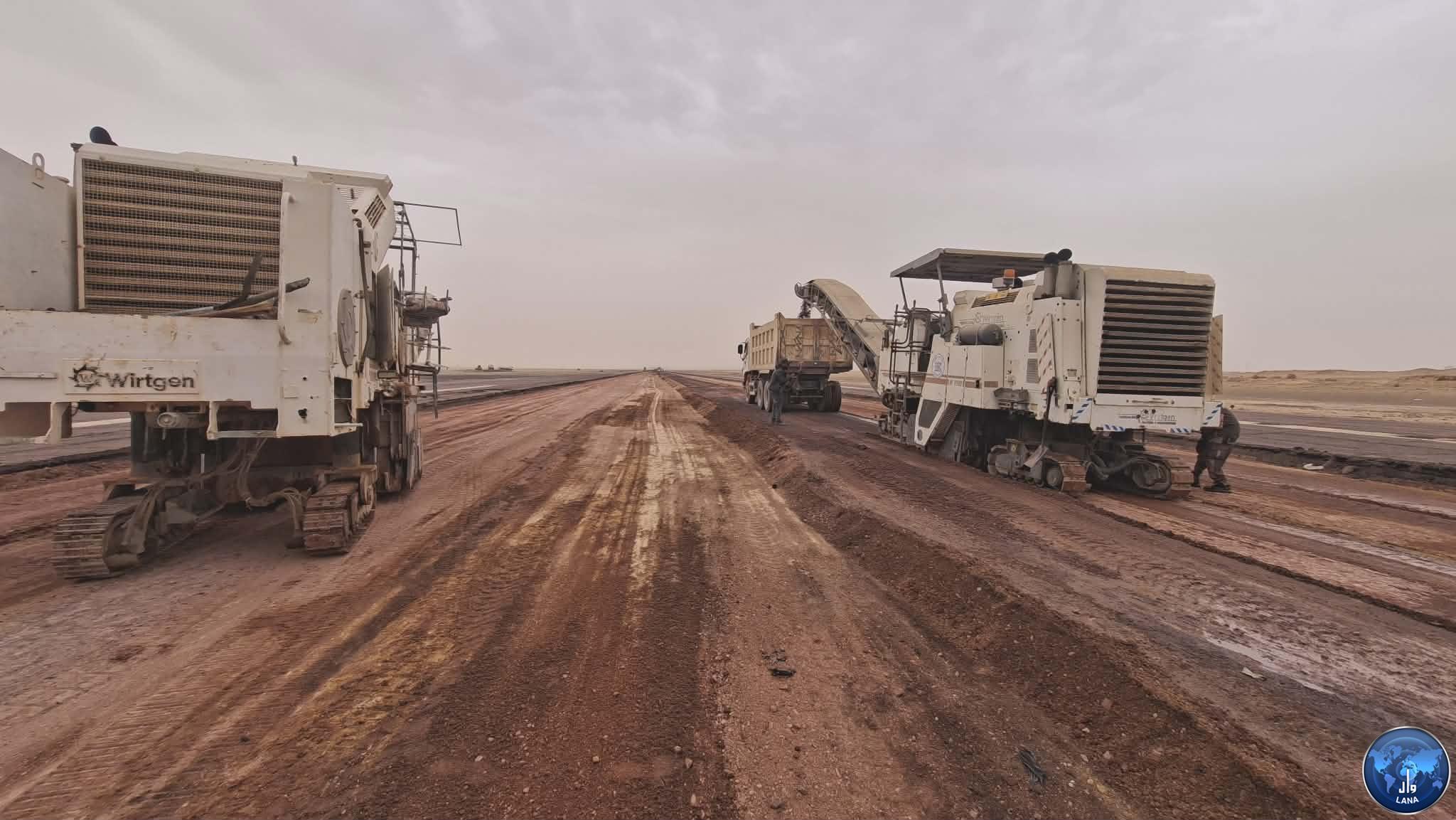
After initially being scheduled for delivery in June 2026, the pace of implementation was accelerated by adopting a continuous 24-hour work system involving over 8,000 workers. This contributed to the completion of the structures between July 2024 and November 2025, allowing it to become operational in January of this year.
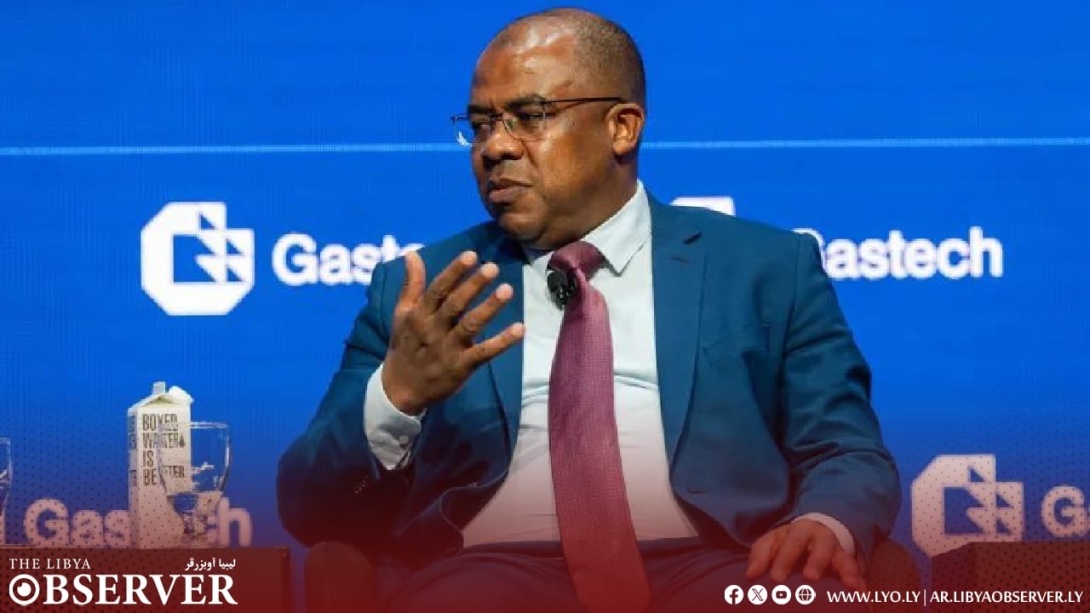
Regarding the pace of implementation, an economic expert stated that the strategic importance of the project prompted the government to race against time to complete the infrastructure serving the project, relying on important partnerships and advanced technologies.
The expert noted that completing the project with local efficiency in a difficult desert region is a “major gain” for the Algerian workforce, which has gained international experience in this field.
It was confirmed that, geographically, the railway project represents the cornerstone of the state’s strategy to break the isolation of the southwest and secure supply chains towards African markets.
The railway project represents the cornerstone of Algeria’s strategy to break the isolation of the southwest and secure supply chains towards African markets.
It is anticipated that the project will be an engine driving development in the region
Hamaqir train station
The Hamaqir train station is a historic railway station located in the Negev desert of Israel, originally built in 1915 as part of the Ottoman military railway network during World War I. It served as a strategic stop on the line connecting the Hejaz Railway to the Sinai and Palestine fronts. Today, the restored station is a heritage site and museum that preserves this important chapter of regional history.
Gara Djebilet project
The Gara Djebilet project is a major iron ore mining initiative in the Tindouf Province of Algeria, centered on one of the world’s largest untapped iron ore deposits. Its history is marked by long-standing technical challenges due to the ore’s high phosphorus content and the remote location, with serious development efforts gaining momentum in the 21st century through Algerian and international partnerships.
Béchar
Béchar is a city and province in northwestern Algeria, historically significant as a key trading and military post in the Sahara Desert. It grew around a 19th-century French fort and later became a center for coal mining in the region. Today, it serves as a regional capital and gateway to the desert landscapes of the Algerian southwest.
Algeria
Algeria is a North African country with a rich history shaped by ancient Berber kingdoms, Roman rule, and centuries of Ottoman influence. It gained independence from France in 1962 after a protracted war, and its cultural heritage includes numerous UNESCO World Heritage sites, such as the Roman ruins of Timgad and the historic Casbah of Algiers.
Gara Djebilet
Gara Djebilet is a large iron ore deposit located in southwestern Algeria near the border with Mauritania. Discovered in 1952, its history is tied to long-term economic planning due to the challenging logistics of its remote desert location and the high phosphorous content of its ore, which required advanced processing technology. Major development agreements to finally exploit the vast reserves were signed in the early 2020s.
Tindouf
Tindouf is a city in western Algeria, near the borders of Morocco, Mauritania, and Western Sahara. It is historically significant as a major Saharan trade post and is most widely known in the modern era for hosting refugee camps administered by the Polisario Front for Sahrawi people since the 1970s.
Gara Djebilet mine
The Gara Djebilet mine is a major iron ore deposit located in southwestern Algeria, near the border with Mauritania. Discovered in 1952, its high-phosphorus content delayed exploitation for decades until technological advances and a 2017 agreement with China made large-scale development feasible. It is now a cornerstone of Algeria’s national strategy for industrial and economic development.
CRCC
CRCC, or China Railway Construction Corporation, is a major state-owned construction company in China that was originally established in 1948 as part of the People’s Liberation Army’s railway engineering corps. It played a crucial role in building China’s extensive railway network, including challenging projects like the Qinghai-Tibet Railway, and has since grown into a global infrastructure giant involved in projects worldwide.
Béni Abbès
Béni Abbès is a desert oasis town in southwestern Algeria, historically known as the “Gateway to the Sahara.” It served as a key trading post and military fortification, and later became the site of a famous hermitage established by the French monk and explorer Charles de Foucauld in 1901. Today, it remains a notable stop on Saharan routes, recognized for its red dunes and traditional ksar architecture.
El Abadla
El Abadla is a town in the Béchar Province of northwestern Algeria, historically known as a key transit point for trans-Saharan trade routes. Its development was closely tied to French colonial expansion in the late 19th and early 20th centuries, when it served as a military outpost and administrative center.
Hamaqir
Hamaqir is an archaeological site in Yemen believed to be the ancient city of Timna, the capital of the Qatabanian kingdom which flourished from the 8th century BCE to the 2nd century CE. It was a major center for the incense trade and features ruins of temples, walls, and irrigation works that reflect its historical significance.
Oum Laassel
Oum Laassel is a notable archaeological site in Algeria, known for its extensive ancient rock art and funerary monuments dating back to the Neolithic period. The site provides significant insight into the prehistoric cultures of the Sahara region, featuring carvings and structures that depict the life and beliefs of early inhabitants.
Tabelbala
Tabelbala is a remote oasis town in southwestern Algeria, known for being the home of the Korandje language, a unique Northern Songhay language spoken there. Historically, it served as a crucial stop on trans-Saharan trade routes, with its settlement and cultural development deeply influenced by these ancient connections.
Hassi Khebi
Hassi Khebi is a historic oasis and cultural site located in southwestern Algeria, known for its ancient palm groves and traditional irrigation systems. It has served for centuries as a crucial stop for trans-Saharan caravans, facilitating trade and cultural exchange across the desert region.
Daoura valley
The Daoura Valley is a historically significant region in northwestern Algeria, known for its ancient rock art and prehistoric settlements. It has been inhabited since Neolithic times and later served as a key corridor for trans-Saharan trade routes. The area’s archaeological sites provide important insights into early human activity and cultural exchange in North Africa.
Tindouf Province
Tindouf Province is a remote region in western Algeria, known primarily for its vast desert landscape and its role as the host of Sahrawi refugee camps since the mid-1970s. These camps were established following the conflict over Western Sahara, and the province’s main settlement, also named Tindouf, serves as a key administrative and logistical center for the Polisario Front.
Africa
Africa is the world’s second-largest continent, known as the cradle of humankind due to archaeological evidence showing the origins of human evolution. It is home to a vast array of diverse cultures, languages, and historical civilizations, including ancient Egypt, the Mali Empire, and Great Zimbabwe. Its history encompasses powerful indigenous kingdoms, the profound impacts of the transatlantic slave trade, and the continent-wide movement for decolonization in the 20th century.