As 2025 draws to a close, the chronic challenges facing Arab scientific research remain unchanged. Discussing hopes for solutions with each new year has become a recurring scene, even if the details of priorities differ from one researcher to another.
Some believe the solution begins with implementing practical and urgent measures to curb the brain drain of Arab talent. Others look forward to a real increase in scientific research budgets, while a third group is preoccupied with freeing scientific research from the constraints of government bureaucracy that stifles creativity.
Despite differing perspectives, everyone agrees on a solid truth: the quality of Arab minds and their ability to achieve exceptional accomplishments, provided the obstacles in their path are removed.
Stopping the Brain Drain
The discussion began with a professor of mathematics from a Tunisian university. When asked about his foremost wishes for 2026, he answered with a tone tinged with regret: “I hope to see the beginnings of a real project that puts an end to the Arab brain drain.”
He expressed sorrow over the scarcity of job opportunities for talented researchers in the Arab world, which drives many of them to emigrate abroad. There, they find a scientific environment and opportunities that enable them to achieve their ambitions, while the region continues to suffer from brain drain.
While acknowledging the economic challenges affecting the research job market, the professor, a recipient of a prestigious scientific research award, emphasized the necessity of prioritizing distinguished researchers.
Moving from general ambitions to more specialized visions, he called for attracting global scientific publishing houses to the Arab region. He pointed out that Arab researchers still face significant challenges in scientific publishing, challenges likely to worsen in the coming years with the rising costs of publication. He believes Arab universities could play a pivotal role in adopting such a project.
He concluded his hopes for the new year by calling for the establishment of specialized research centers in mathematics in the Arab world, expressing regret over the lack of a specialized center in Tunisia that could host an international event he intended to organize.
He affirmed that mathematics is the science of the future, playing a central role in fields like artificial intelligence and the digital revolution that intersect with various sciences. He warned that the Arab world will not have a foothold in these areas unless it gives mathematics the attention it deserves.
He went further, stating, “If we do not act seriously on this issue, we will remain mere importers of AI applications.”
On Capabilities
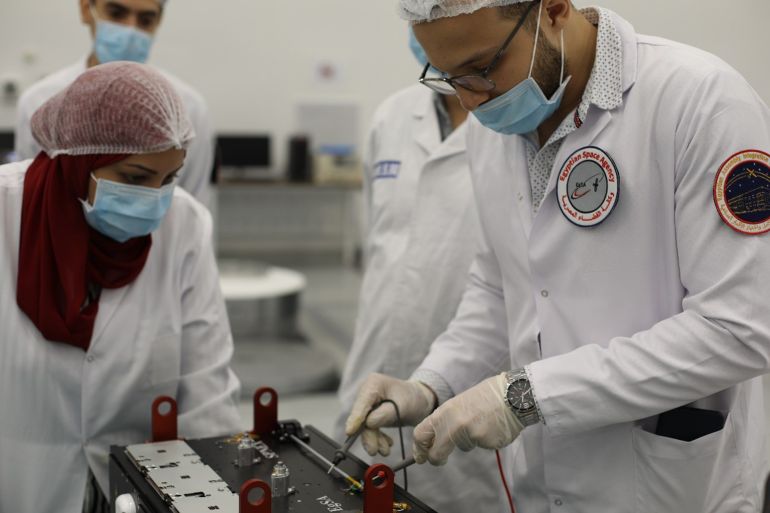
Moving from mathematics to biotechnology, where scientific research requires advanced, well-equipped laboratories, a professor of biotechnology at a Syrian university places at the top of his ambitions for the new year the establishment of laboratories that match the quality of their counterparts in Europe.
He said, “We have minds in this specialization whose competence is no less than their counterparts in the West, but we do not possess the same capabilities. Therefore, I always say in any meeting with officials: give me the capabilities, and I will create the impossible for you.”
In addition to providing the necessary funding to develop laboratories, the professor wishes for financial support to send researchers abroad to participate in international conferences and study missions. He noted that “since 2005, no Syrian researcher has been sent abroad with state support, and all participations in foreign conferences have been at their personal expense.”
He concluded his remarks by urging the necessity of liberating the scientific research climate from the administrative routine that stifles creativity, saying, “If we are always demanding increased budgets, we should not restrict what is available with administrative constraints that deprive us of maximizing the benefit of what is available. A researcher might have to wait for months to obtain simple and inexpensive equipment just to complete their work.”