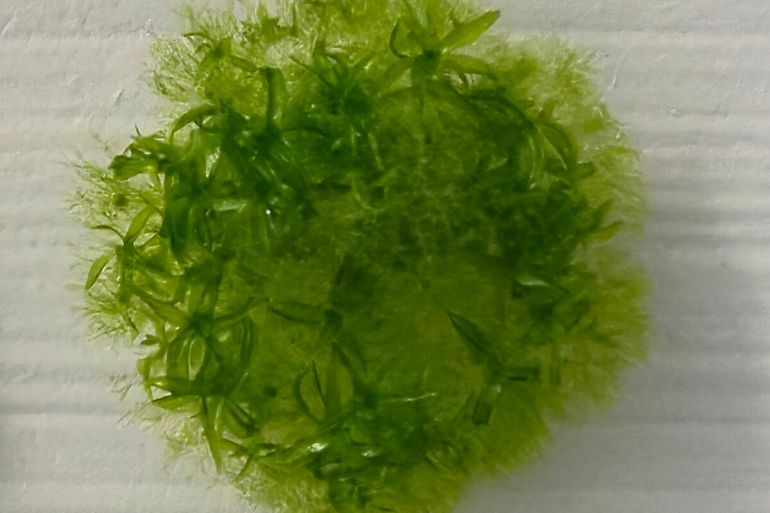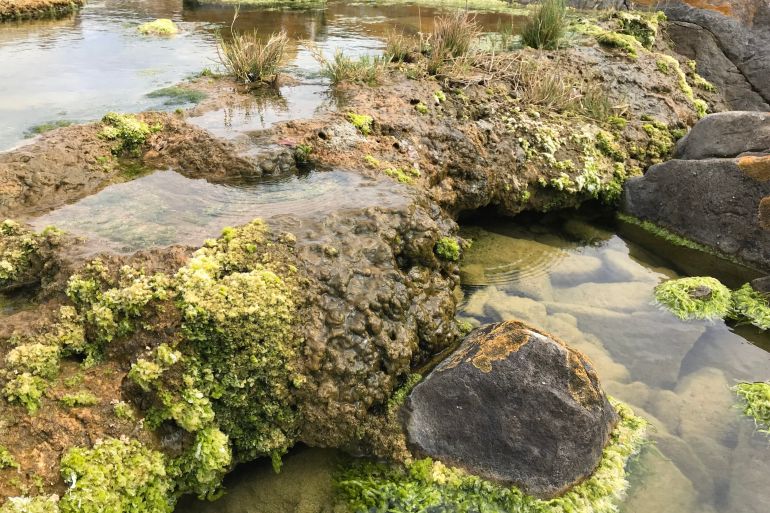
At first glance, lichens seem like marginal, overlooked plants—just fine green threads, with many species no wider than an eyelash.
However, recent research published in the journal “Forensic Sciences Research” suggests these tiny organisms could become a “witness” in criminal investigations, because even a microscopic fragment stuck to a shoe or piece of clothing can carry an extremely precise location fingerprint.
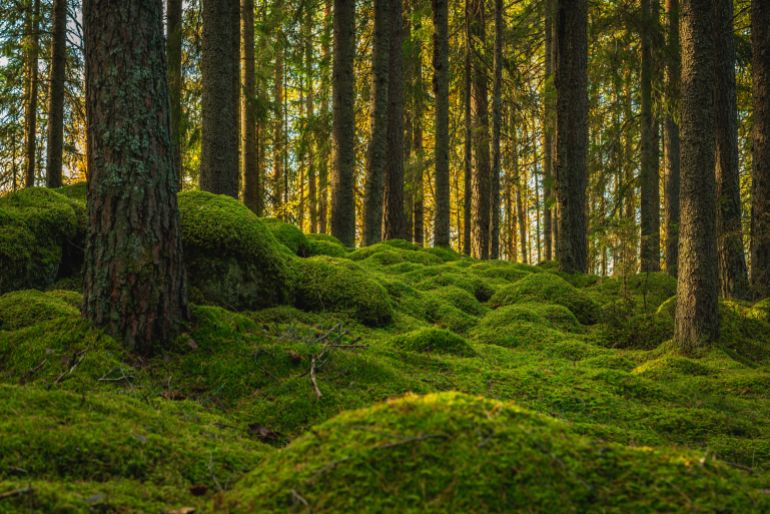
The idea scientists rely on is simple yet powerful: lichen species are not distributed randomly. They specialize in specific microenvironments within a single location, where you might find them in the shade of a bush, or in a damp area on the edge of a swamp or stream.
According to the study, this specialization makes the mix of species, and sometimes the even smaller organisms living on the lichens, a strong indicator of a person’s location.
Neglected Evidence
Researchers say the problem hasn’t been a lack of botanical evidence, but rather that many investigators may neglect it because they don’t know what they’re looking at.
In this context, the researchers reviewed nearly 150 years of research in this field, searching for cases where lichens were used in forensic contexts.
They found that the forensic use of these plants is documented but not extensive, reinforcing the idea that the field is still less widespread than its potential allows.
The study showed that the earliest case documented in the literature dates back to 1929, when lichen growth on a decomposed skeleton helped estimate the time since death.
Since then, at least ten other cases have been recorded in several countries like Finland, Sweden, Italy, and China, where lichens provided clues related to the time, location, or circumstances of the crime.
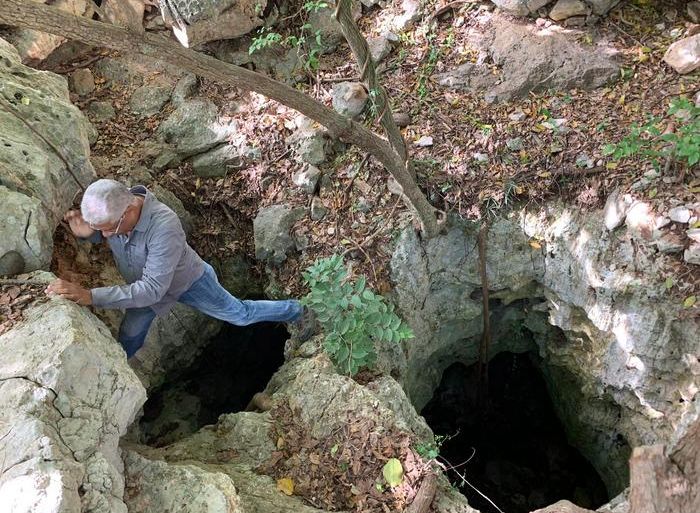
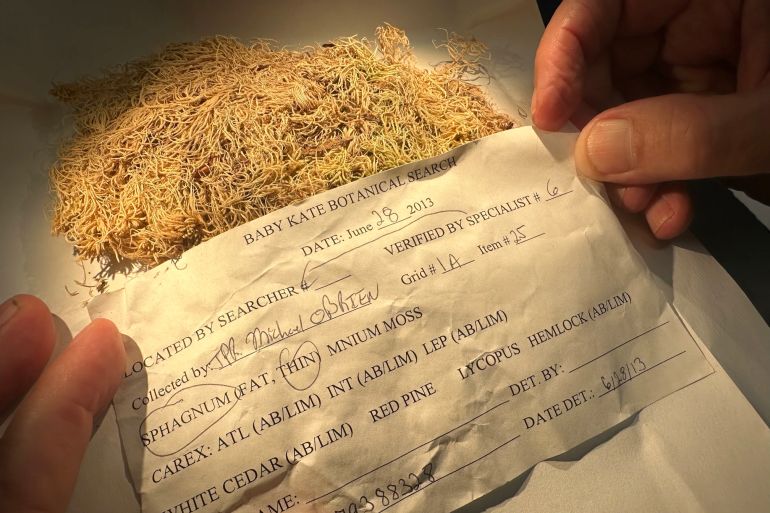
The most dramatic story in the study is the so-called “Baby Kate” case in North America, where a father killed his infant child and gave police a general description of the burial site without precise details.
Later, investigators found microscopic plant fragments on his shoe, and in 2013, the research team leading this study searched for the exact location matching those fragments.
Relying on the lichen pieces alone, the team was able to narrow the search from seven counties to a very small area estimated at about 50 square feet. The father later confirmed in a subsequent interview that this was the intended burial site.
Forensic Botany
It’s not just about lichens. Forensic botany is a scientific discipline that uses plant evidence to solve crimes. This field combines knowledge of ecology and plants with forensic analysis techniques to provide crucial evidence in investigations.
The importance of forensic botany lies in its ability to link suspects to specific locations. Any plant part, whether a leaf, a small twig, or even a pollen grain stuck to a suspect’s clothing or car, can act as a “biological fingerprint” proving their presence at a crime scene.
This science also helps determine the actual location of a crime and its timing. By analyzing the types of plants and their growth stages, experts can determine how long a body has been in a particular place or reveal if it was moved from elsewhere, radically changing the course of an investigation.
Furthermore, analyzing the type and quantity of plants at a crime scene can help determine the nature of death—whether it was homicide, accident, or suicide—by providing contextual evidence that supports or refutes different narratives.
For example, the presence of specific patterns of plant damage or the scattering of identical plant parts on the victim’s clothing and the surrounding crime scene could be consistent with an accidental fall.
Conversely, if the plants found on a body do not match the environment of the discovery location, it strongly suggests the body was moved after death, which often supports the hypothesis of homicide and refutes claims of suicide or accident at the discovery site.