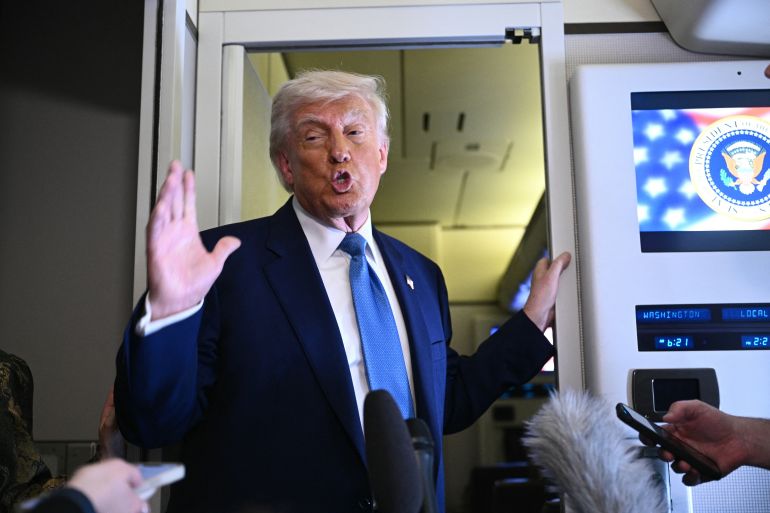
U.S. President Donald Trump has issued a new executive order outlining the United States’ space policy for the next five years. Media reports have described it as a “declaration of sovereignty” aimed at establishing a permanent American presence on other celestial bodies and transforming space into an active economic and defense arena by 2028.
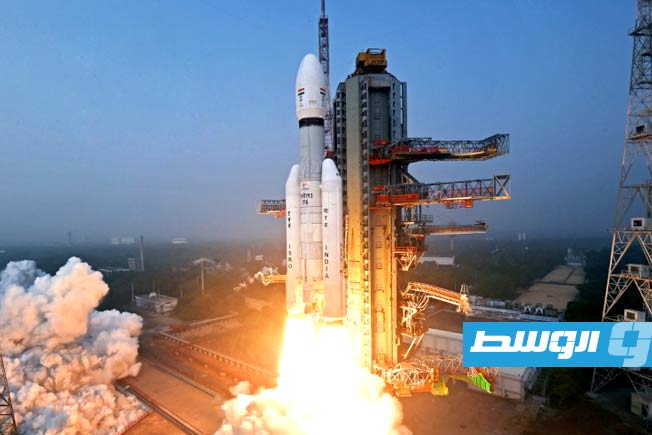
The new order calls for the establishment of a “permanent lunar site” by 2030, following a 2028 deadline for returning humans to the Moon’s surface.
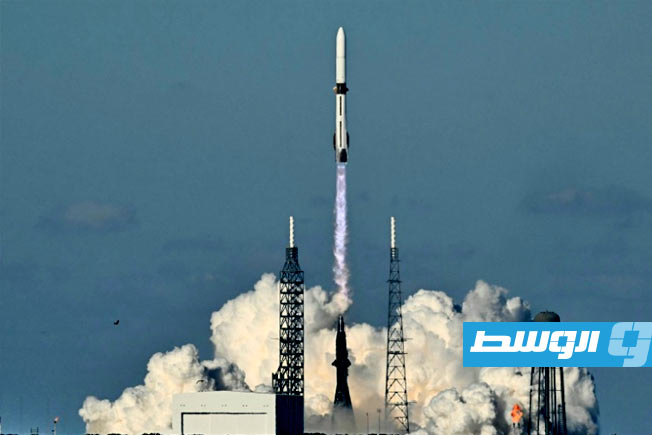
Although the Artemis program faces technical challenges, particularly regarding the readiness of SpaceX’s Starship vehicle, the presidential directive emphasizes enhancing “cost-effectiveness” and fully opening the door to commercial launch services to accelerate the timeline.
First Astronaut on Mars
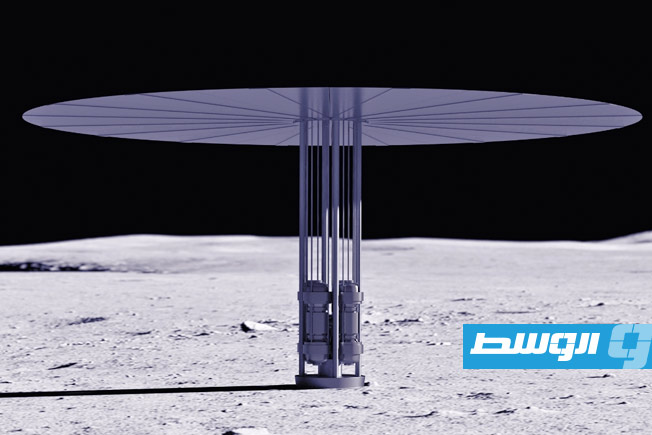
The executive order reaffirmed Washington’s commitment to being “the first nation to land an astronaut on Mars.” To this end, the U.S. administration is betting on “space nuclear reactors.” America seeks to launch nuclear reactors and develop advanced propulsion technologies before the end of the decade—a step scientists see as essential for providing sustainable power to lunar bases and reducing travel time to the Red Planet.
– Trump Prioritizes the Moon in Space Projects and Aims to Install a Nuclear Reactor on Its Surface
– Trump’s NASA Chief Candidate Aims to Beat China to the Moon
– The United States is Losing the Space Race Because of Elon Musk
Trump is also organically integrating space into the national defense system through the “Golden Dome” project, with an estimated cost of around “$175 billion.” This project will rely on satellites in very low Earth orbit to “detect, characterize, and counter” threats, including space-based nuclear weapons and hypersonic missiles.
Furthermore, Trump seeks to inject at least “$50 billion” to create a “vibrant commercial space economy.” This initiative aims to replace the International Space Station (ISS) with commercial stations by 2030 and transform aerospace manufacturing into an engine for creating high-wage jobs.
United States
The United States is a federal republic founded in 1776 after declaring independence from Great Britain, with its modern government established by the Constitution in 1789. Its history is marked by westward expansion, industrialization, and its emergence as a global superpower in the 20th century. The nation’s culture is a diverse blend of indigenous, European, African, and immigrant influences.
Earth
Earth is the third planet from the Sun and the only known astronomical object to harbor life. Its geological history spans over 4.5 billion years, with the emergence of life occurring approximately 3.7 billion years ago, leading to the diverse biosphere and human civilizations of today.
Mars
Mars is the fourth planet from the Sun and is often called the “Red Planet” due to its reddish appearance from iron oxide on its surface. While not a human-made cultural site, it holds significant cultural and scientific history as a subject of mythology, observation, and modern exploration, with robotic missions seeking evidence of past water and potential for ancient life.
Moon
The Moon is Earth’s only natural satellite, formed approximately 4.5 billion years ago from debris after a massive collision between Earth and a Mars-sized body. It has been a central object in human mythology, science, and exploration, most notably with the first crewed landing by Apollo 11 in 1969.
Artemis program
The Artemis program is NASA’s ongoing initiative to return humans to the Moon, aiming to land the first woman and first person of color on the lunar surface by 2025. It builds upon the legacy of the Apollo missions and is designed to establish a sustainable, long-term human presence on the Moon as a stepping stone for future crewed missions to Mars.
SpaceX
SpaceX, founded by Elon Musk in 2002, is a private American aerospace manufacturer and space transportation services company. Its history is defined by pioneering reusable rocket technology, drastically reducing the cost of access to space, and achieving milestones like being the first private company to send astronauts to the International Space Station.
Starship
Starship is a fully reusable, super heavy-lift launch vehicle system developed by SpaceX, designed for missions to the Moon, Mars, and beyond. Its history is rooted in the earlier SpaceX projects like the Falcon rockets, with development formally announced in 2017 and featuring iterative prototype testing. The system aims to revolutionize space travel by dramatically reducing costs through full reusability.
International Space Station
The International Space Station (ISS) is a habitable artificial satellite in low Earth orbit, representing a multinational collaborative project primarily led by the United States and Russia. Its construction began in 1998, with continuous human occupation since 2000, serving as a microgravity and space environment research laboratory.
ISS
The International Space Station (ISS) is a habitable artificial satellite in low Earth orbit, representing a multinational collaborative project primarily led by the United States and Russia. Its construction began in 1998, with continuous human occupation since the year 2000, serving as a microgravity and space environment research laboratory.
China
China is one of the world’s oldest continuous civilizations, with a recorded history spanning over four millennia. It is home to numerous UNESCO World Heritage sites, such as the Great Wall and the Forbidden City, which reflect its long imperial past and profound cultural achievements.