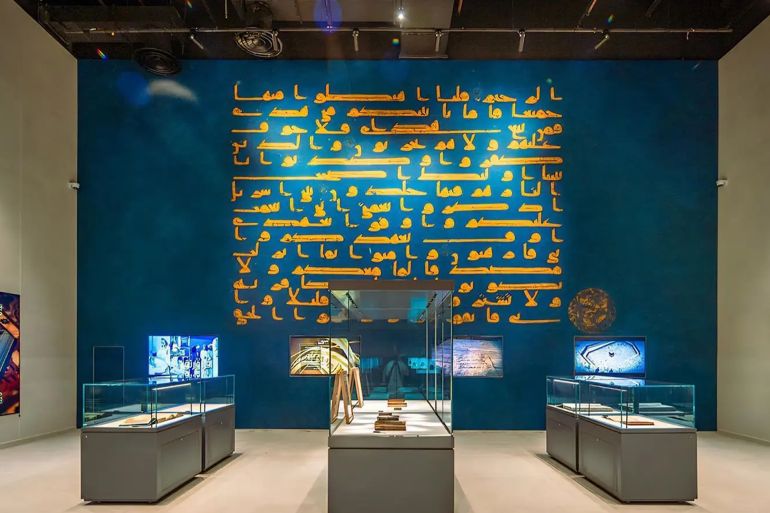
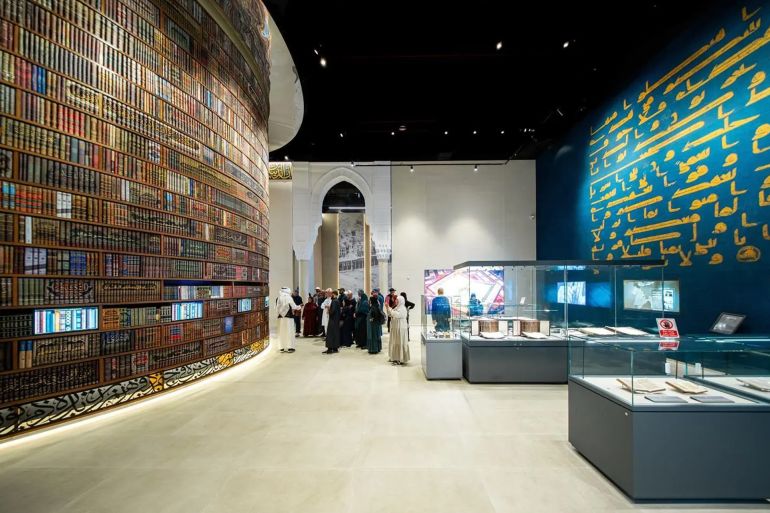
The Quran Museum in the Hira Cultural District is displaying a rare copy of the “Blue Quran,” containing verses from Surah Al-Baqarah from the end of verse (37) to the beginning of verse (42). This step highlights the richness of Islamic Quranic heritage and its ancient artistic history.
A Unique Copy with Gold Ink
The Blue Quran is considered one of the rarest and most luxurious handwritten Qurans in the history of Islamic civilization. It was written with pure gold ink in the ancient Kufic script on a dark blue background, in a unique artistic style that reflects the care of early Muslims for the aesthetics of writing the Holy Quran and their reverence for the Quranic text.
This Quran dates back to the third Hijri century, corresponding to the ninth century CE, giving it high historical and scientific value as a witness to the development of Arabic calligraphy and ornamentation in the early Islamic eras. Additionally, the surviving copies in the world are rare, with their pages today distributed among a limited number of museums and global collections.
This copy is displayed to introduce visitors of the Quran Museum to the history and stages of the Quran
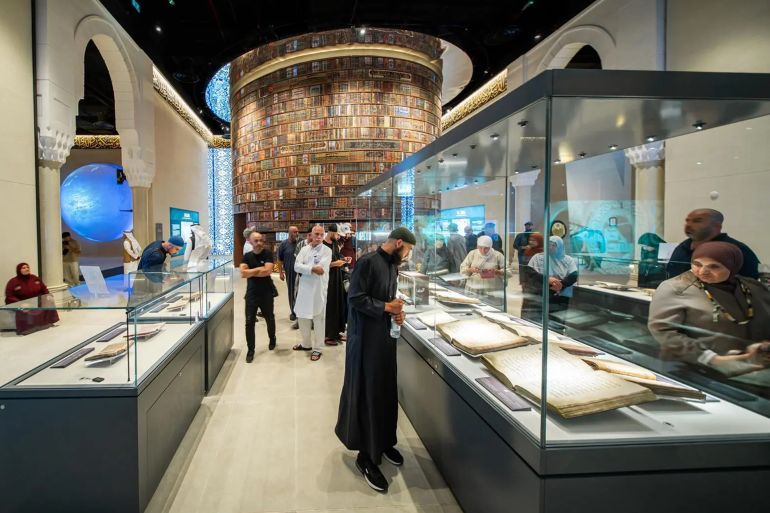
The display of this copy comes within the efforts of the Quran Museum to introduce visitors to the history of the Holy Quran and its artistic stages, and to provide an opportunity to view exceptional examples of Quranic manuscripts. This enhances cultural and cognitive awareness and enriches the experience of visitors to the Hira Cultural District from within the Kingdom and abroad.
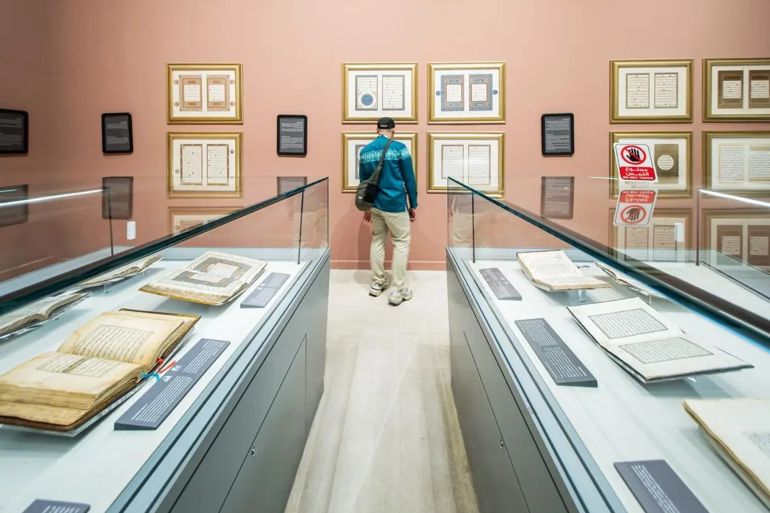
The museum houses rare manuscripts and historical copies of the Holy Quran
Protecting Rare Quranic Manuscripts
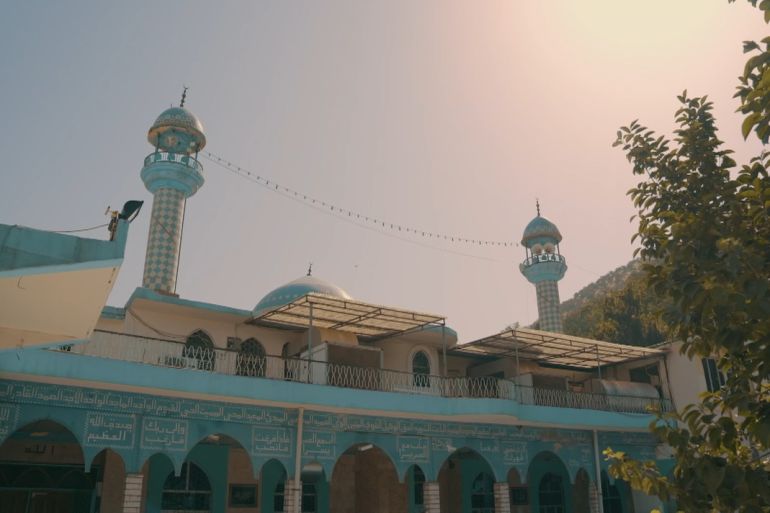
The Quran Museum in the Hira Cultural District in Makkah is a cultural and educational landmark that highlights the history of the Quran and its journey since the revelation.
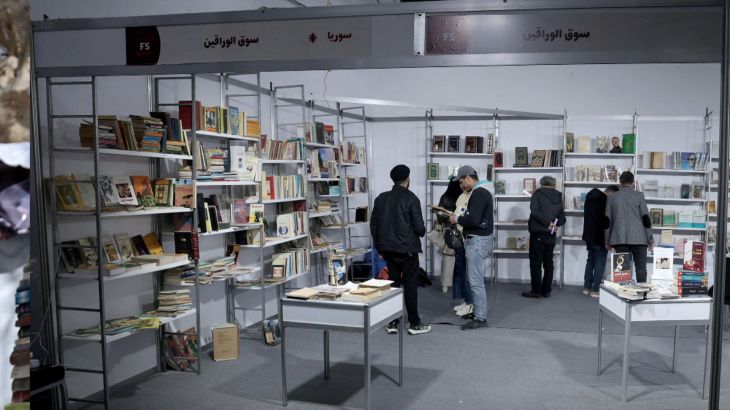
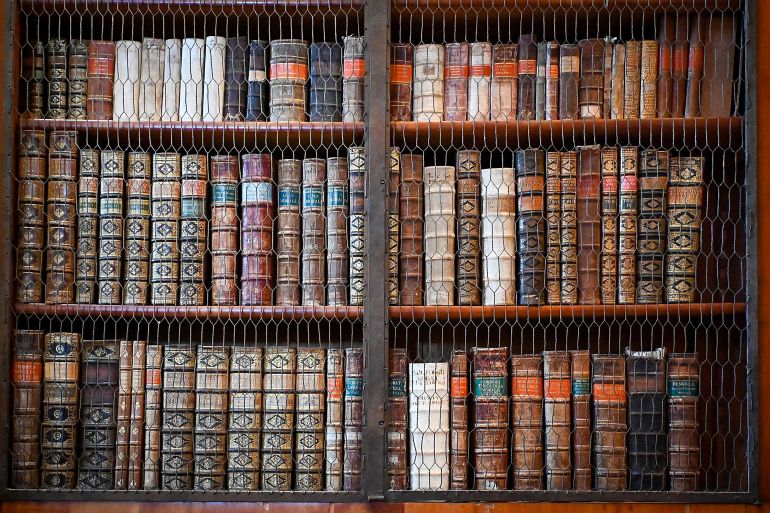
The museum houses rare manuscripts and historical copies of the Holy Quran, in addition to interactive displays and modern technologies that reflect the care of Muslims for the Quran throughout the ages, in a location linked to the beginnings of the Islamic message.
aj-logoaj-logoaj-logo
Blue Quran
The Blue Quran is a renowned early medieval manuscript, likely created in 9th or 10th-century North Africa or Persia, distinguished by its stunning indigo-dyed parchment and gold Kufic script. Its history is tied to the Fatimid Caliphate or Abbasid court, and it represents a pinnacle of Islamic art, with its pages dispersed among major museums and collections worldwide.
Quran Museum
The Quran Museum, located in Sharjah, United Arab Emirates, is a cultural institution dedicated to the Islamic holy book. It showcases a vast collection of Qurans and manuscripts, tracing the history of their calligraphy, printing, and preservation across different eras and regions.
Makkah
Makkah, located in Saudi Arabia, is the holiest city in Islam, as it is the birthplace of the Prophet Muhammad and the site of the Kaaba, the most sacred structure in the faith. Its history dates back thousands of years, with the Kaaba believed to have been built by the Prophet Abraham and his son Ishmael, and it has served as the spiritual center and direction of prayer for Muslims worldwide ever since.
Hira Cultural District
The Hira Cultural District is a modern cultural and artistic hub located near the Cave of Hira on Jabal al-Nour in Mecca, Saudi Arabia. It was developed to commemorate the mountain cave where the Prophet Muhammad received his first revelation, integrating this profound Islamic history with contemporary facilities for visitors, exhibitions, and educational programs.
Kingdom
The term “Kingdom” is broad, but if referring to a specific historical kingdom like the Kingdom of Aksum, it was a major trading empire in northeastern Africa from about 100 AD to 940 AD, known for its obelisks and early adoption of Christianity. If referencing the fictional “Kingdom” from popular media, it is a South Korean zombie thriller series set in Korea’s Joseon period, blending political intrigue with a pandemic narrative.