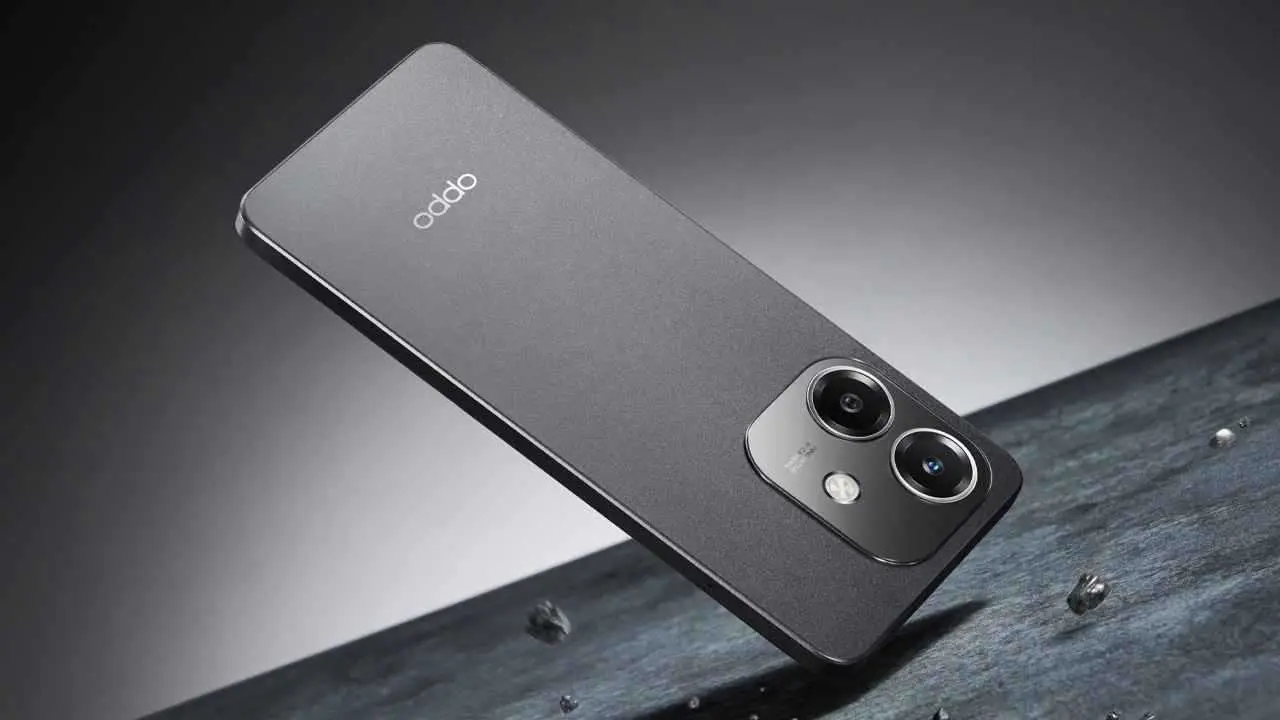
Oppo has announced the launch of its new Oppo A6c smartphone, a strong competitor in the mid-range Android smartphone market.
The phone features a sturdy, water and dust resistant body with an IP64 rating, made from plastic and impact/scratch-resistant glass. It weighs 210 grams with dimensions of 166.6/78.5/8.6 mm.
The Oppo A6c comes with a 6.75-inch IPS LCD screen, a resolution of 720/1570 pixels, a 120Hz refresh rate, 1125 nits brightness, and an approximate pixel density of 256 PPI.
The device runs on Android 15 with the ColorOS 15 interface, powered by a Qualcomm SM6225 Snapdragon 685 processor, an Adreno 610 GPU, 6GB of RAM, and 128GB of internal storage expandable via microSDXC.
Its primary camera is 13 megapixels capable of recording FHD video at 30 frames per second, while the front camera is 5 megapixels.
The phone supports dual SIM cards, a 3.5mm headphone jack, a USB Type-C 2.0 port, a fingerprint scanner, and a massive 6500 mAh battery with fast charging technology and 5W reverse charging for other devices.
In other smart device news, Insta360 has unveiled a small webcam called the Link 2 Pro, powered by AI technologies and an advanced person-tracking system, making it suitable for high-quality video conferences and live streaming.
HMD also announced new wireless earbuds in the DUB X50 Pro series, featuring IPX4 water and dust resistance, Active Noise Cancellation (ANC), Hi-Fi DSP audio signal processing, and fast response for calls and gaming.
Each earbud has a 70 mAh battery, while the charging case contains 600 mAh, providing up to 60 hours of playback at 50% volume.
HMD also launched the Dub S60 earbuds with Dolby Audio for a surround sound experience, and the smaller Dub P50 earbuds with up to 25 hours of playback, catering to daily listening, music, and gaming needs.
Oppo A6c
The Oppo A6c is a smartphone model released by the Chinese electronics company Oppo in 2019. It was marketed as a budget-friendly device within Oppo’s A-series, featuring a large display and a focus on camera capabilities for its price segment.
Android
Android is an open-source mobile operating system developed by Google, originally founded by Android Inc. in 2003 before being acquired by Google in 2005. It was designed primarily for touchscreen devices like smartphones and tablets, with its first commercial version released in 2008, and has since become the world’s most widely used OS for mobile devices.
Qualcomm SM6225 Snapdragon 685
The Qualcomm SM6225 Snapdragon 685 is not a place or cultural site, but a mobile system-on-a-chip (SoC) designed for smartphones. Introduced by Qualcomm in 2023, it is an updated version of the Snapdragon 680, built on a 6nm process for improved efficiency and performance in mid-range devices.
Adreno 610
“Adreno 610” is not a place or cultural site; it is a model of graphics processing unit (GPU) designed by Qualcomm for use in mobile devices. It was introduced as part of the Qualcomm Snapdragon 600 and 700 series platforms, providing improved graphics performance and energy efficiency for smartphones and tablets.
ColorOS 15
ColorOS 15 is not a physical place or cultural site, but a software platform. It is the fifteenth major version of the custom Android operating system developed by Oppo for its smartphones, building upon the interface and features of its predecessors.
Insta360 Link 2 Pro
The Insta360 Link 2 Pro is a high-end AI-powered webcam designed for video conferencing and content creation, released in 2024 as an upgrade to the original Insta360 Link. It builds upon the history of its predecessor by incorporating enhanced features like a larger 1/1.5-inch sensor, improved AI tracking for automatic framing, and advanced gesture controls for a more seamless user experience.
HMD
HMD stands for the Holocaust Memorial Day Trust, the charity established in the UK to promote and support Holocaust Memorial Day on January 27th each year. This day commemorates the six million Jews murdered in the Holocaust, alongside the millions of other victims of Nazi persecution and subsequent genocides. The trust organizes a national ceremony and educational resources to honour the survivors and challenge hatred and prejudice in society today.
DUB X50 Pro
The DUB X50 Pro is not a recognized historical place or cultural site; it appears to be a model name for a consumer electronic device, such as a smartphone or audio product. Therefore, it does not have a cultural history to summarize in this context.
Dolby Audio
Dolby Audio is not a physical place or cultural site, but a suite of audio technologies developed by Dolby Laboratories. It was founded by Ray Dolby in 1965, with its first major innovation being Dolby Noise Reduction to improve sound quality in tape recording. The technologies have since become an industry standard for enhancing audio in cinemas, home entertainment, and personal devices.
Dub S60
“Dub S60” does not correspond to a widely recognized place or cultural site. Without more specific context or corrected spelling, it is not possible to provide a meaningful historical summary.
Dub P50
The “Dub P50” is not a recognized historical place or cultural site. It appears to be a reference to a specific model of a vehicle, the Peel P50 microcar, famously driven by Jeremy Clarkson on the BBC’s *Top Gear*. As such, it does not have a cultural history in the traditional sense of a monument or landmark.