Scientists have attempted many solutions using natural raw materials to produce absorbent materials for capturing pollutants from industrial wastewater. However, these solutions, primarily based on agricultural waste such as rice straw, wood shavings, and fruit peels, often face several obstacles. The most prominent is that the raw materials they rely on are tied to a specific season, making the solution unsustainable year-round. Additionally, some are not ideally suited for chemical treatment, resulting in weaker absorption capacity compared to traditional solutions. Moreover, they may degrade quickly or lose effectiveness after one or two cycles of use, increasing long-term costs.
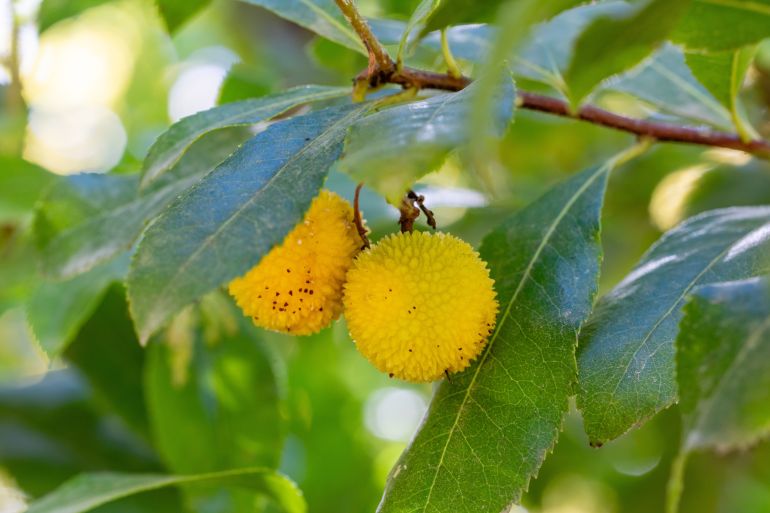
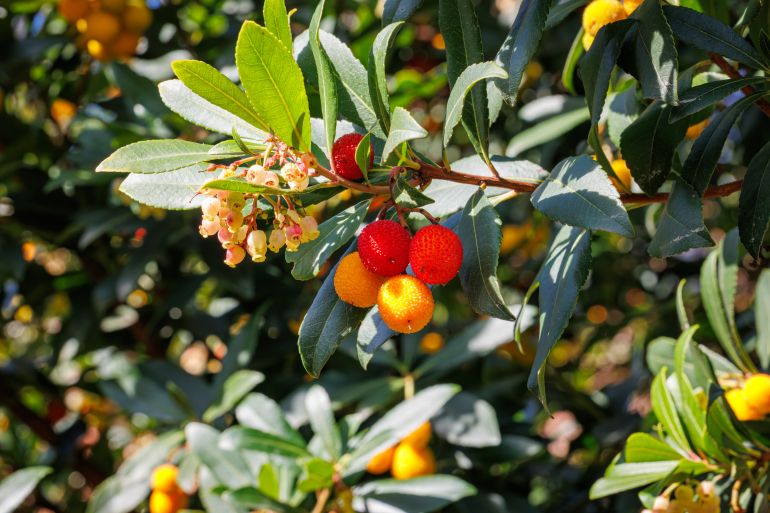
In an attempt to overcome these challenges, a Libyan research team from the University of Benghazi, in collaboration with a researcher from Tribhuvan University in Nepal, found their solution in a plant native to the Libyan environment: “Arbutus pavarii,” locally known as “Al-Qatlab” or “Al-Shamari.” They successfully used its leaves to produce an absorbent material for the dye “Methyl Violet 6B,” a commonly used dye in the textile, paper, and sometimes pharmaceutical industries.
Experiments conducted on the new material, which the researchers named “MABL” (short for “Modified Arbutus pavarii Leaf Adsorbent”), confirmed that it overcomes all previous challenges. It is based on a locally abundant plant available year-round in the Al-Jabal Al-Akhdar region. Its leaves accept chemical treatments and achieve results in capturing dyes up to 3 times while maintaining over 83% of its efficiency.
It is noted that, in addition to its abundance in the environment of the Al-Jabal Al-Akhdar region in Libya—a key feature of the plant that encouraged the search for industrial uses for its leaves—the leaves themselves possessed encouraging advantages. Most notably, they are rich in “lignocellulose,” a mixture of three main components: cellulose, hemicellulose, and lignin. These components contain functional groups, such as hydroxyl and carboxyl, which act like small chemical hooks on the leaf surface.
Activating Hook Efficiency
To benefit from this important feature in the plant’s leaves, efforts were made to activate the efficiency of the hooks on the leaf surface by chemically modifying them through acid and alkaline treatment. This modification increases their number and makes them negatively charged or more active. Since the target dye (Methyl Violet 6B) is positively charged, it is strongly attracted to these negative groups, allowing dye molecules to easily adhere to the surface of the modified leaves.
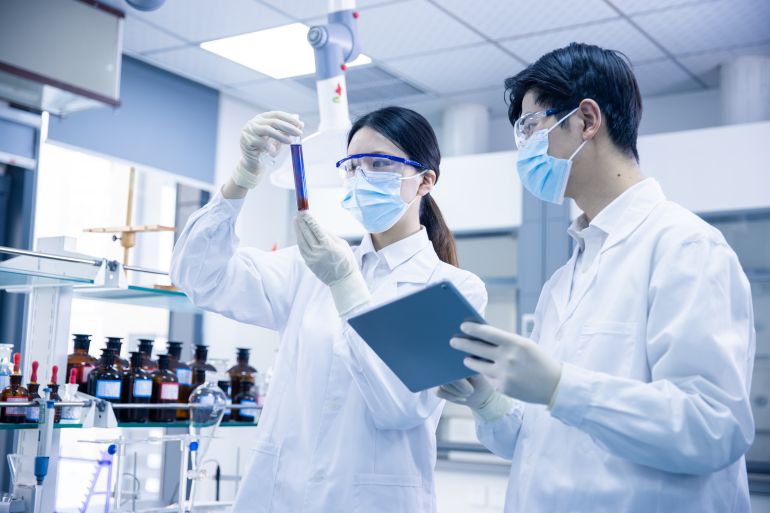
The steps taken to achieve this purpose were revealed. They began with cleaning and drying the leaves, then grinding them to obtain a fine powder. This was followed by acid treatment using sulfuric acid to break down some plant components like hemicellulose and lignin, exposing the basic cellulose fibers and increasing porosity. Then, an alkaline treatment known as “xanthation” is performed, where the material is treated with an alkaline solution (sodium hydroxide), followed by the addition of carbon disulfide. The goal is to add new sulfur-rich chemical groups to the material’s surface, increasing its absorption capacity. Afterwards, the material is washed and dried, ready for use as an absorbent for Methyl Violet 6B dye.
It is explained that the traditional method for modifying biomaterials often does not sufficiently open the internal structure. However, the method used opens the structure of the lignocellulose compound through acid treatment, while xanthation places strong hooks inside it to capture the dye. The result is a large porous structure with a high density