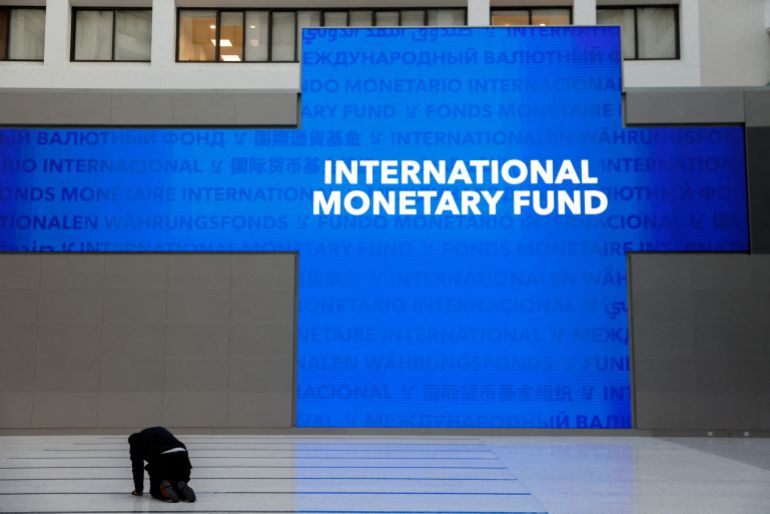
The International Monetary Fund announced on Tuesday that it has reached a staff-level agreement with Egypt regarding the combined fifth and sixth reviews under the Extended Fund Facility (a long-term financing program supporting structural reforms). This could potentially unlock a disbursement of $2.5 billion under the program.
The Fund merged the fifth and sixth reviews of its support program for Egypt to grant the authorities more time to achieve the core objectives outlined in the program.
Resilience and Sustainability Facility
The Fund added in a statement that it also reached a staff-level agreement on the first review of another existing financing program, the Resilience and Sustainability Facility (a loan dedicated to addressing climate change and energy challenges). This could provide Egypt with access to additional financing of up to $1.3 billion.
Both agreements still require approval from the IMF Executive Board.
In March 2024, Egypt reached an agreement on a $8 billion loan spanning 46 months, at a time when the country was facing high inflation and a foreign currency shortage.
Over the past few months, Egypt has managed to curb inflation, which peaked at 38% in September 2023. The annual inflation rate in Egyptian cities reached 12.3% in November.
However, the severity of the foreign currency shortage in the country has eased, supported by the IMF loan program, record tourism revenues, remittances from Egyptians working abroad, and investment agreements with Gulf states worth tens of billions of dollars.
A statement noted: “Stabilization efforts have achieved important gains and the Egyptian economy is showing signs of strong growth.”
State Asset Divestment
The Fund added that structural reforms still need to be accelerated, including the divestment of state-owned assets (selling government stakes to the private sector). This is a key pillar of the loan agreement, and the Fund views progress on it as slow.
In August of last year, Egypt approved legislative amendments aimed at accelerating the sale of state-owned assets.
The statement continued: “Moving forward, efforts to reduce the state’s role should be accelerated. This includes making significant additional progress on the divestment agenda and undertaking additional efforts to ensure a level playing field.”
To date, the International Monetary Fund has disbursed approximately $3.5 billion under its loan program with Egypt.
Egypt
Egypt is home to one of the world’s oldest civilizations, with a recorded history spanning over 5,000 years and famed for its monumental pharaonic achievements like the Pyramids of Giza and the Sphinx. Its rich cultural heritage, from ancient temples along the Nile to Islamic Cairo and Coptic sites, reflects a continuous legacy of influential empires and religions.
International Monetary Fund
The International Monetary Fund (IMF) is an international financial institution established in 1944 at the Bretton Woods Conference to foster global monetary cooperation and financial stability. Its primary functions include providing policy advice, financial assistance to member countries facing balance of payments problems, and promoting exchange rate stability.
Extended Fund Facility
The Extended Fund Facility is a lending arrangement established by the International Monetary Fund in 1974 to provide medium- to long-term financial support to countries facing serious balance of payments difficulties due to structural weaknesses. It typically supports comprehensive reform programs aimed at addressing underlying economic problems and restoring macroeconomic stability.
Resilience and Sustainability Facility
The Resilience and Sustainability Facility (RSF) is a lending instrument established by the International Monetary Fund (IMF) in 2022 to provide long-term, affordable financing to help member countries address longer-term structural challenges. Its primary focus is to build resilience against climate change and to foster sustainable economic stability through policy reforms and investments.
IMF Executive Board
The IMF Executive Board is the day-to-day decision-making body of the International Monetary Fund, overseeing the economic policies of member countries and approving financial assistance. It was established in 1945 alongside the IMF itself, following the Bretton Woods Conference, to promote global monetary cooperation and financial stability. The Board consists of 24 Executive Directors representing the Fund’s 190 member countries.
Gulf states
The Gulf states, typically referring to Bahrain, Kuwait, Oman, Qatar, Saudi Arabia, and the United Arab Emirates, are a group of Arab monarchies bordering the Persian Gulf. Historically, their economies were based on fishing, pearling, and trade, but the discovery of vast oil reserves in the 20th century transformed them into globally significant energy exporters and modern, wealthy nations.