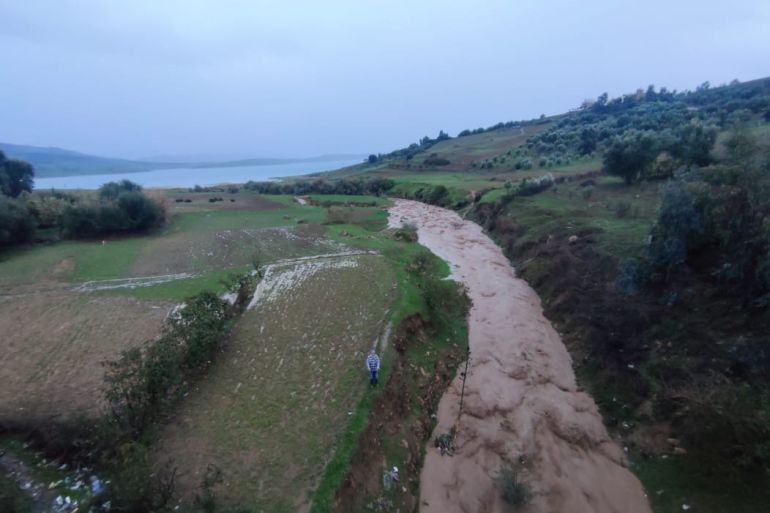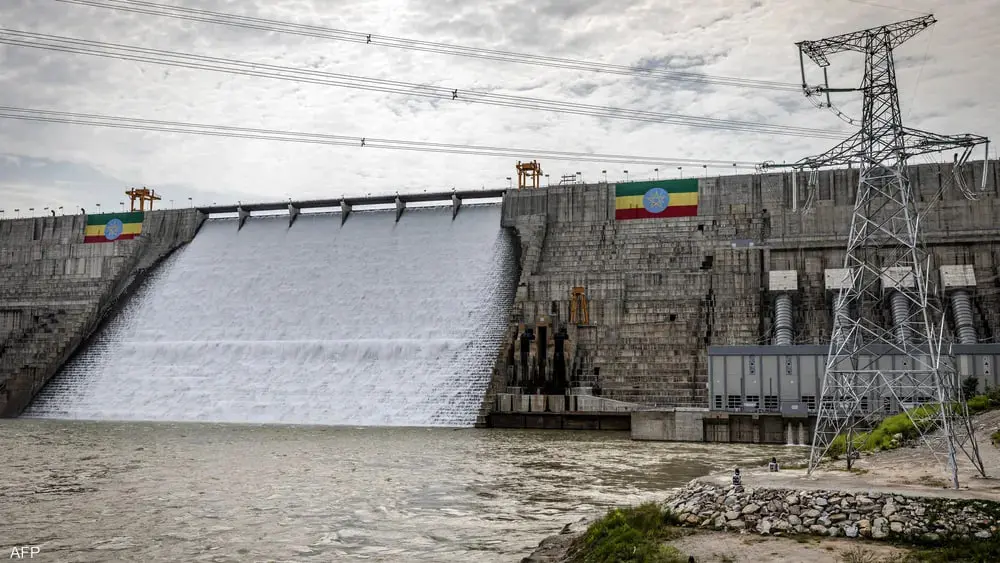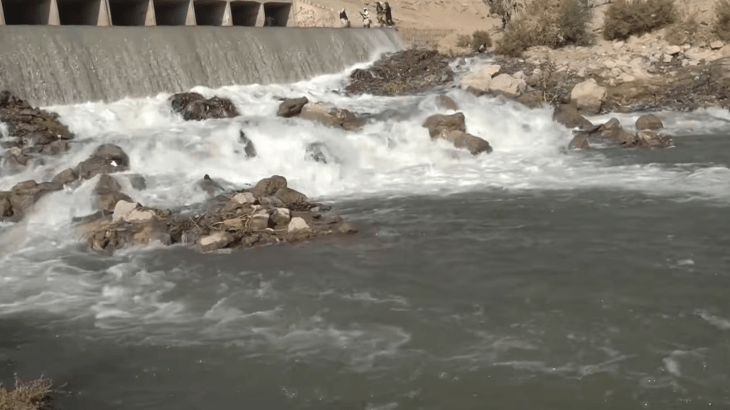
Local authorities responsible for the historic Marib Dam have opened the dam’s channels after nearly six months of closure, marking the start of a new agricultural season in eastern Yemen. This step aims to supply farms with water and replenish artesian wells, according to a field survey.
The Marib Dam holds an estimated 4 million cubic meters of water, which flows through the main channel before branching into a vast network of waterways. The water first collects in what is locally known as the “diversion point” and then extends towards the Wadi district for a distance exceeding 50 kilometers. The subsidiary channels stretch for about 80 kilometers, with the entire network covering approximately 200 kilometers within the city and Wadi districts.
Start of the Agricultural Season
The opening of the channels coincides with the start of the winter agricultural season in Marib, a province that produces several crops. These include potatoes, tomatoes, onions, wheat, sesame, and citrus fruits, which supply local markets during the winter.
Farmers benefit from the dam’s water in two ways: first, through direct irrigation from the channels using pumps, and second, through the replenishment of groundwater and artesian wells. This contributes to stabilizing agricultural activity after periods of water scarcity.
A Respite for Residents and Displaced Persons
With the water flowing, the dam’s channels have become a place of respite and visitation for the province’s residents and displaced persons. Hundreds of citizens visit with their families for outings and relaxation.
One citizen stated, “We are among the displaced persons in Marib province. We came to change the atmosphere and see these beautiful scenes. This place is a breath of fresh air for all displaced persons and residents of Marib, and it holds great moral significance after the war and displacement.”
Another added that the availability of security, stability, and natural scenery has encouraged many to visit the channels, saying the place “restores one’s perspective on life and renews the spirit.”
Direct Impact on Agriculture
For their part, farmers confirmed that opening the channels has helped raise the water level in artesian wells after a period of decline. They pointed out that the delayed opening of channels in the past had led to damage to some farms due to water shortages.
One farmer explained that the channels directly feed agricultural lands and help compensate for the shortage of groundwater, which positively reflects on agricultural production and the continuation of the season.
Local authorities indicate that the water is still in the process of gradually reaching the furthest channels in the Wadi district, requiring several days to cover the entire network. Farmers hope that the continued flow of water will improve agricultural production and support stability in the province.