Earth is home to extremely harsh environments, from deep-sea hydrothermal vents to frozen glaciers. Yet, as intense as they are, they cannot compare to the environment of outer space, where organisms face drastic temperature fluctuations, near-zero gravity, and high levels of radiation—all factors that push the biological limits of survival to the extreme.
Space is described as “an extremely harsh place for living organisms.”
It is said that “space is devoid of air, saturated with intense ultraviolet radiation capable of damaging DNA, and its temperatures fluctuate between extreme freezing and intense heat,” presenting any form of life with a severe existential test.
Despite these extreme conditions, the list of organisms proven capable of surviving in the cold cosmic vacuum is growing. Among the most famous are tardigrades, or water bears, along with some flowering plants, like thale cress (Arabidopsis thaliana).
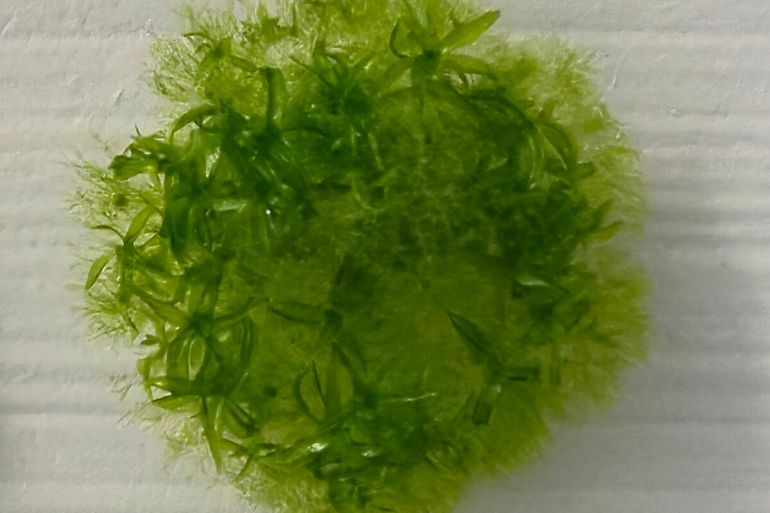
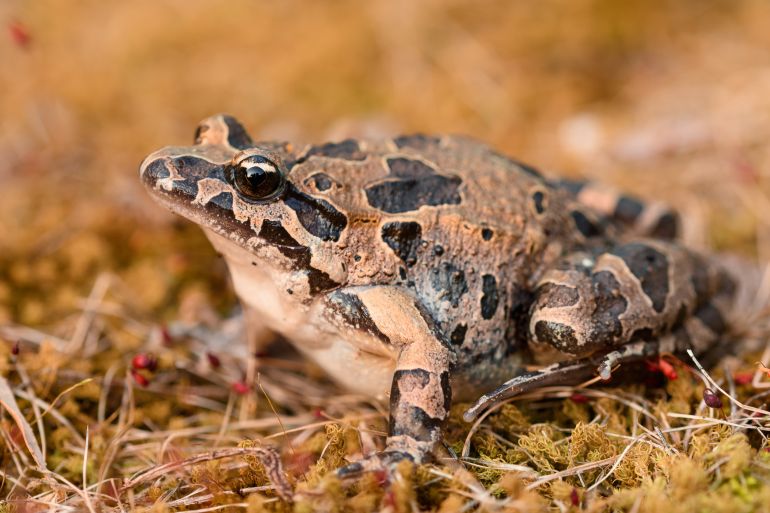
Recently, a type of moss has joined this list: “spreading earth moss,” scientifically known as *Physcomitrium patens*. It has demonstrated an ability to withstand a long journey into outer space, according to a recent study published in a scientific journal.
Exceptional Abilities… Why This Moss?
Mosses—diverse, plant-like, autotrophic, photosynthetic aquatic organisms, often seen in moist and shady environments—are known for their remarkable ability to withstand harsh conditions, including strong radiation and severe drought. They are believed to be among the first organisms to adapt to life on land around 500 million years ago.
While most research has focused on larger organisms like bacteria or crop plants, the researchers in this study chose spreading earth moss as an ideal plant model. Its unique characteristics, simple structure, and sequenced genome have made it one of the most used species in scientific research on growth, development, and adaptation.
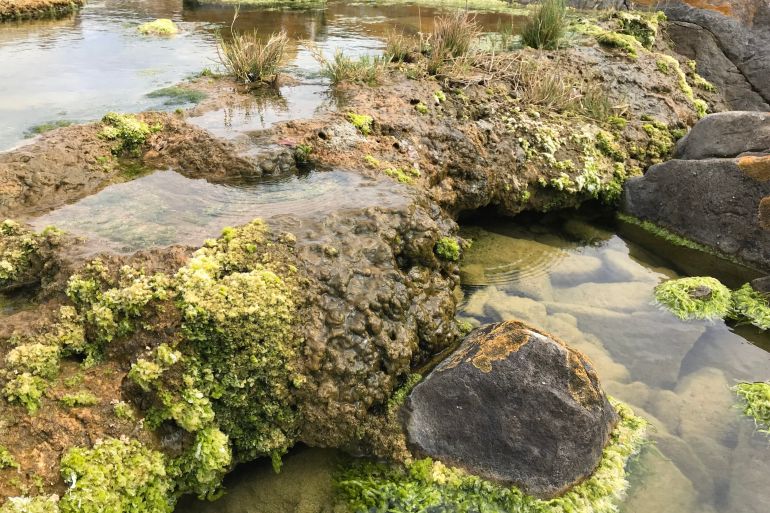
Today, this moss grows in temperate environments around swamps and ponds in Europe, North America, and East Asia. However, it is renowned for its ability to live in Earth’s most extreme environments: from the polar tundra and frozen peaks of the Himalayas to the ice of Antarctica and fresh lava fields, and even in the scorching, completely dry sands of a desert in California.
Inspired by this astonishing diversity in resilience, a key question arose: if this moss can survive in harsh ice, dry desert wilderness, and volcanic environments, could it add another achievement to its record and prove its ability to survive in the harsh environment of space?
The space exposure unit used in the experiment, next to a 100-yen coin for scale.
Testing the Moss’s Resilience on Earth
Before sending this moss to space, researchers worked to simulate its harsh conditions on Earth. They exposed samples to a range of stresses similar to the space environment, including extreme heat, severe cold, near-total vacuum, and high levels of ultraviolet radiation.
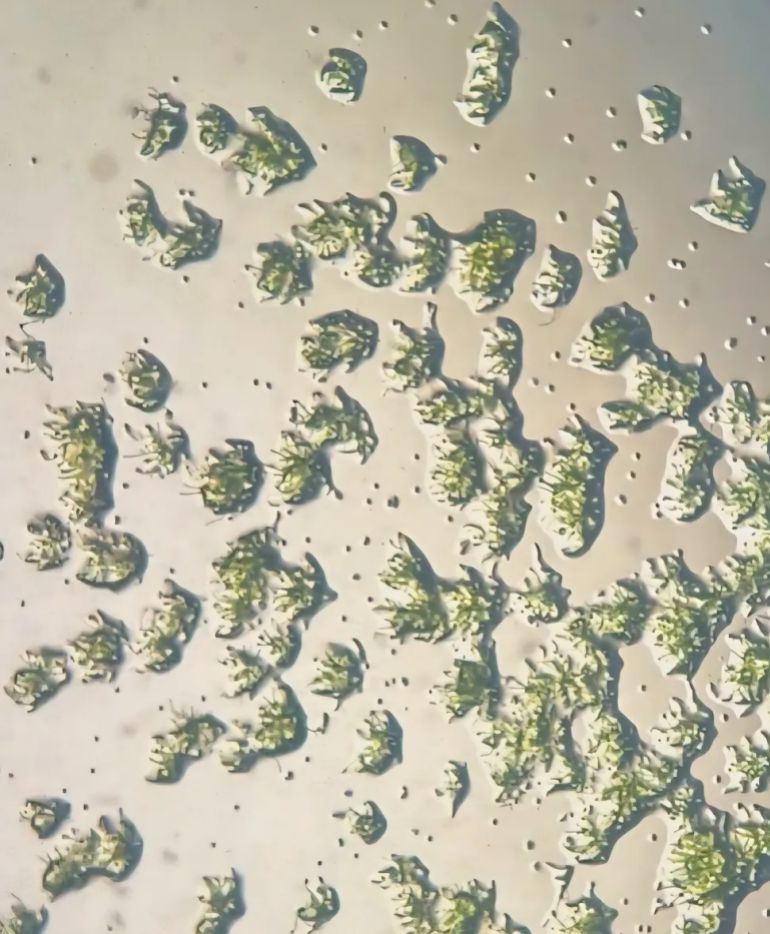
To analyze the moss’s ability to adapt to these destructive conditions, the team focused on three types of cells at different stages of its life cycle: young structures (the initial growth phase), stress-induced stem cells, and spore capsules containing the spores responsible for reproduction.
The experiments revealed that radiation was the most lethal factor, quickly destroying the young phase entirely. Although the stem cells showed a higher degree of resistance, they did not approach the level of endurance displayed by the spores protected inside the capsules.
In almost all tests, these capsules were the most stress-tolerant, withstanding ultraviolet radiation, extreme heat, and freezing cold. They tolerated radiation at a rate about a thousand times greater than any other part of the plant, a performance nearing that of Earth’s most extreme organisms.
Furthermore, the spores withstood severe freezing at -196 degrees Celsius for a week—a
Earth
Earth is the third planet from the Sun and the only known celestial body to harbor life, with a geological history spanning approximately 4.54 billion years. Human cultures and civilizations have developed across its diverse continents and ecosystems over hundreds of thousands of years, fundamentally shaping its modern environment.
outer space
Outer space is the vast expanse beyond Earth’s atmosphere, which humans began exploring in the mid-20th century with the launch of satellites and crewed spacecraft. This exploration has led to significant scientific discoveries and the establishment of international agreements, like the Outer Space Treaty, to govern its peaceful use.
deep-sea hydrothermal vents
Deep-sea hydrothermal vents are fissures on the ocean floor where geothermally heated water, rich in minerals, erupts into the cold, deep sea. They were first discovered in 1977 near the Galápagos Islands, revolutionizing our understanding of life by revealing ecosystems that thrive in complete darkness, powered by chemosynthesis rather than sunlight.
frozen glaciers
Frozen glaciers are massive, slow-moving bodies of dense ice that form over centuries from accumulated snow. Historically, they have shaped landscapes through erosion and served as crucial records of past climate conditions preserved in their ice layers. Many glaciers are now receding at an accelerated rate due to global climate change.
tardigrades
Tardigrades, often called “water bears” or “moss piglets,” are microscopic, eight-legged animals renowned for their extreme resilience. They have existed for hundreds of millions of years, with a fossil record dating back over 500 million years, and can survive conditions like extreme radiation, vacuum, and dehydration that would be fatal to almost all other life forms.
water bears
Water bears, also known as tardigrades, are not a physical place or cultural site but a phylum of microscopic, eight-legged animals renowned for their extreme resilience. They have existed for over 500 million years, surviving in environments ranging from deep oceans to mountaintops by entering a dormant state that allows them to withstand conditions like extreme radiation, pressure, and temperature.
thale cress
Thale cress, or *Arabidopsis thaliana*, is a small flowering plant native to Eurasia and Africa. It is not a cultural site but a model organism in plant biology, chosen for its simple genetics and rapid life cycle. Its history as a scientific tool began in the early 20th century, with its genome becoming the first of any plant to be fully sequenced in 2000.
Arabidopsis thaliana
Arabidopsis thaliana, commonly known as thale cress, is a small flowering plant native to Eurasia and Africa. It is not a cultural site but a model organism that has become fundamental to plant biology research due to its small genome and rapid life cycle, with its DNA fully sequenced in the year 2000.
spreading earth moss
“Spreading Earth Moss” is a traditional Japanese gardening technique, known as *kokedama*, where plants are grown in a ball of soil wrapped in moss instead of a pot. Its history dates back centuries, evolving from the art of *nearai* (root washing) and the display styles of bonsai and *ikebana*. This method emphasizes harmony with nature and is appreciated for its simple, portable, and sculptural beauty.
Physcomitrium patens
Physcomitrium patens is a species of moss widely used as a model organism in plant biology and genetics research. Its significance stems from its relatively simple genome and ability to be easily manipulated in the lab, which has made it instrumental for studying plant evolution and development. While not a cultural site, its history in science began with its establishment as a model system in the early 21st century.
Europe
Europe is a continent with a rich and complex history, shaped by ancient civilizations like Greece and Rome, the medieval period, the Renaissance, and transformative modern events including the Industrial Revolution and two World Wars. Culturally, it is renowned for its diverse artistic heritage, architectural landmarks, and as the birthplace of influential movements in philosophy, science, and politics. Today, it is home to numerous UNESCO World Heritage Sites and is politically organized in part by the European Union.
North America
North America is a continent comprising countries such as Canada, the United States, and Mexico, with a human history spanning thousands of years from its indigenous civilizations to European colonization beginning in the late 15th century. It is defined by its diverse landscapes, cultures, and a modern history shaped by migration, independence movements, and economic development.
East Asia
East Asia is a vast and diverse region primarily comprising China, Japan, Korea, and Mongolia, known for its shared historical and cultural connections through Confucianism, Buddhism, and the use of Chinese characters. Its history is marked by ancient dynasties like China’s Zhou and Han, the imperial rule of Japan, and the Korean kingdoms, which fostered complex trade, philosophical exchange, and occasional conflict. In the modern era, the region has been shaped by rapid industrialization, significant economic growth, and distinct political systems.
polar tundra
The polar tundra is a vast, treeless biome found in Earth’s northernmost regions, characterized by permafrost, low temperatures, and a short growing season. Historically shaped by ice ages, its fragile ecosystem has supported indigenous cultures for millennia, who have adapted to its extreme conditions.
Himalayas
The Himalayas are a vast mountain range in Asia, separating the plains of the Indian subcontinent from the Tibetan Plateau. Formed by the tectonic collision of the Indian and Eurasian plates over 50 million years ago, they are home to Earth’s highest peaks, including Mount Everest, and hold profound cultural and spiritual significance for numerous religions and communities in the region.
Antarctica
Antarctica is Earth’s southernmost continent, characterized by its extreme cold, vast ice sheets, and unique ecosystems. Historically, it has no native human population, but its exploration began in the early 20th century following expeditions like those of Roald Amundsen, who first reached the South Pole in 1911. Today, it is governed internationally by the Antarctic Treaty System, which dedicates the continent to peace and scientific research.
California
California is a state on the West Coast of the United States, originally inhabited by numerous Native American tribes before becoming a Spanish colony and later part of Mexico. It was annexed by the U.S. in 1848 after the Mexican-American War and experienced a massive population boom during the Gold Rush of 1849, rapidly evolving into an economic and cultural powerhouse. Today, it is known globally for its entertainment industry, technological innovation, and diverse geography ranging from beaches to mountains.
100-yen coin
The 100-yen coin is a denomination of Japanese currency first introduced in 1957, featuring a cherry blossom design since 1967. Its history reflects Japan’s post-war economic growth, as it replaced a silver 100-yen coin to become a durable and widely used symbol of everyday commerce.