Hundreds of people filed a lawsuit against the Japanese government on Thursday, accusing it of “unconstitutional” inaction on climate change, in a first-of-its-kind legal action for the country.
The lead lawyer for the group stated: “We submitted the petition and evidence to the court, and our request has been formally accepted.”
In this unprecedented complaint, the plaintiffs denounced the state’s “utterly insufficient” efforts to combat climate change, which they argue endangers the health and livelihoods of the approximately 450 complainants.
Five climate-related lawsuits have previously been filed in Japanese courts, primarily targeting coal-fired power plants. However, according to the lawyers for the new case, this is the first time the state is being asked to pay compensation for its inaction, a point confirmed by a specialist in climate litigation in Japan.
The plaintiffs are seeking symbolic compensation of 1,000 yen (about 5.5 euros) per person, with their lawyer emphasizing that the goal is to highlight state responsibility rather than focus on the financial amounts.
Although the chances of winning such a case are considered slim in Japan, “if the main goal of the lawsuit is to raise public awareness, it could be successful,” from the perspective of a specialist.
Heat threatens population health and affects crops
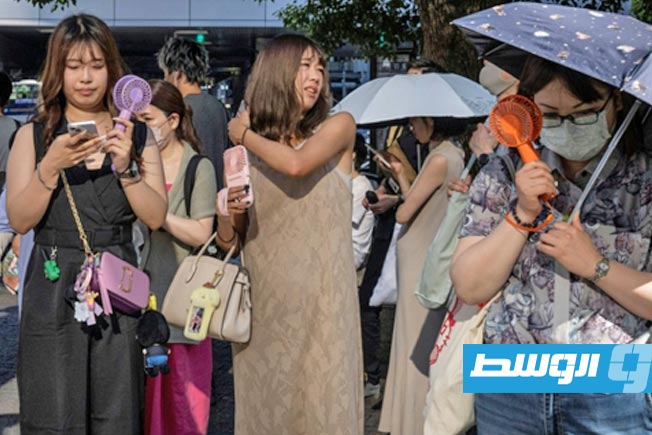
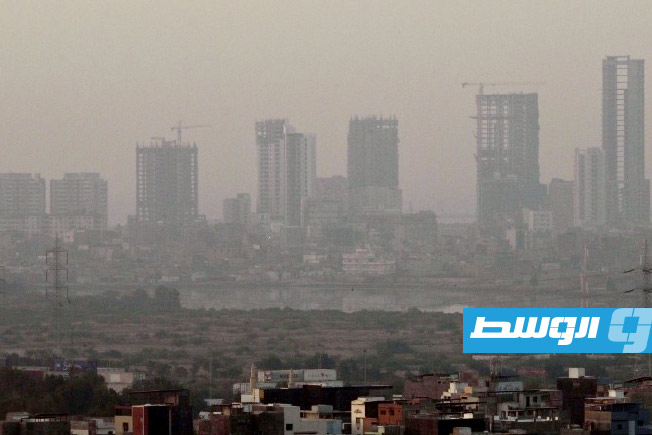
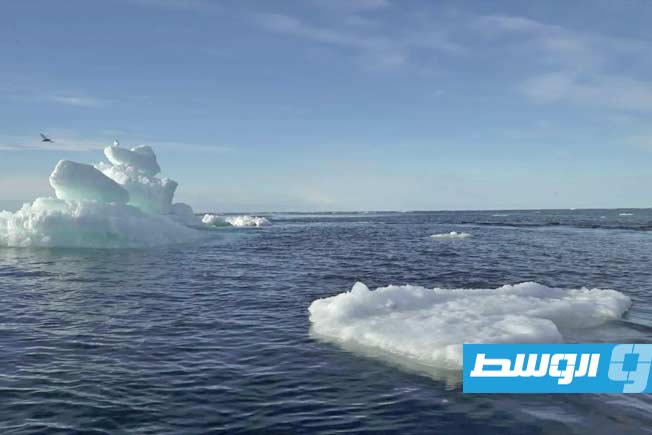
Japan experienced its hottest summer on record this year since data collection began in 1898. The complainants note in their filing that heat waves threaten public health, affect crops, and cause economic losses.
The Chief Cabinet Secretary declined to comment directly on the lawsuit when asked at a press conference but reiterated that the country has ratified “ambitious” emissions reduction targets aligned with the Paris Agreement. Japan is committed to reducing emissions by 60% by 2035 compared to 2013 levels, and by 73% by 2040.
Similar complaints have been filed in other countries; last year, a court in South Korea ruled that a significant part of the country’s climate goals was unconstitutional, and a similar decision was issued in Germany in 2021.
Japan
Japan is an island nation in East Asia with a rich cultural heritage spanning over two millennia, from its ancient Shinto traditions and imperial rule to the feudal samurai era and its rapid modernization following the Meiji Restoration. It is renowned for its unique blend of deep tradition and cutting-edge technology, as seen in sites like historic Kyoto temples and modern Tokyo.
Japanese government
The Japanese government is a constitutional monarchy with a parliamentary system, established under its post-World War II constitution in 1947. Its modern form replaced the previous absolute monarchy and militaristic governance, creating a democratic framework where sovereignty rests with the people and the Emperor serves as a symbolic head of state.
COP 30
COP 30 refers to the 30th Conference of the Parties to the United Nations Framework Convention on Climate Change, which is scheduled to be held in Belém, Brazil, in 2025. It will be the first COP hosted in the Amazon region, aiming to highlight the critical role of tropical forests and biodiversity in global climate action. This follows Brazil’s previous hosting of the Rio Earth Summit in 1992, which established the original climate convention.
Paris Agreement
The Paris Agreement is an international treaty on climate change, adopted in 2015, which aims to limit global warming to well below 2°C. It operates on a framework where countries set their own national pledges for reducing greenhouse gas emissions and regularly report on their progress.
South Korea
South Korea, officially the Republic of Korea, is a country in East Asia located on the southern portion of the Korean Peninsula. Its modern history began with its liberation from Japanese colonial rule in 1945, followed by the establishment of a separate government in 1948 and the devastating Korean War (1950-1953). Since the late 20th century, it has undergone rapid industrialization and democratization, becoming a global leader in technology and popular culture.
Germany
Germany is a country in Central Europe with a complex history, having been a collection of states for centuries before unifying in 1871. It was a central power in both World Wars, was divided into East and West Germany during the Cold War, and reunified in 1990 to become a leading economic and political force in the European Union. Its cultural landscape is marked by numerous historic sites, castles, and contributions to philosophy, music, and science.