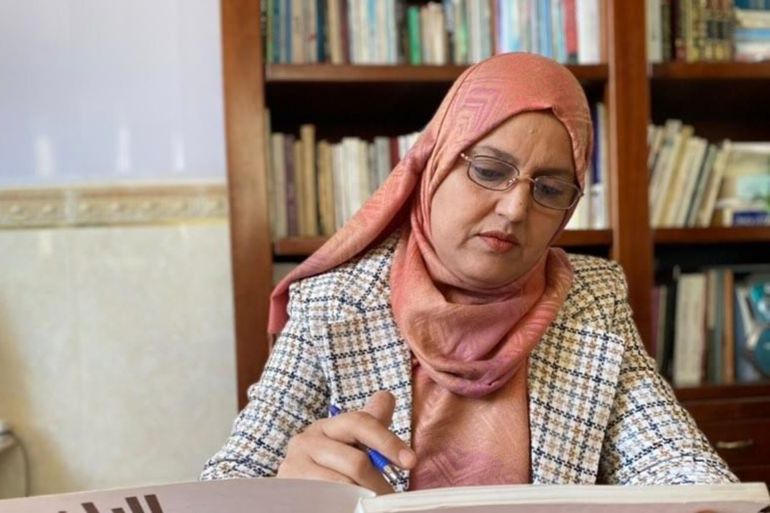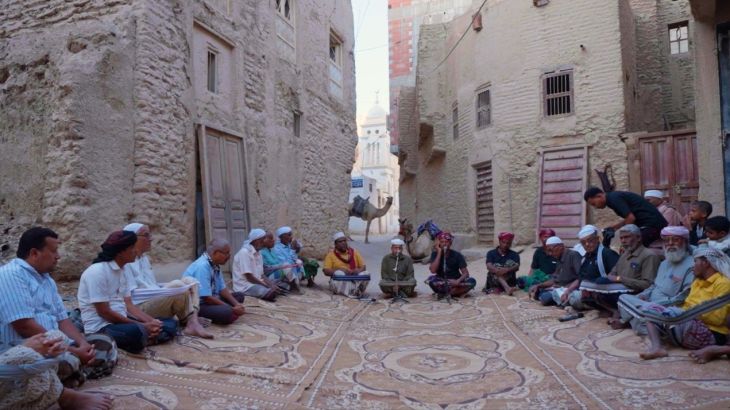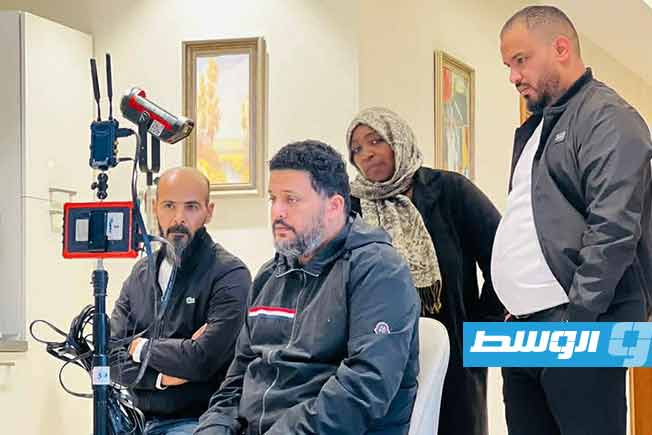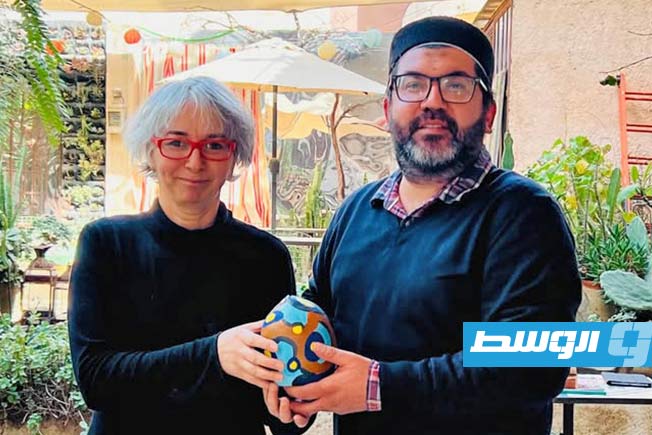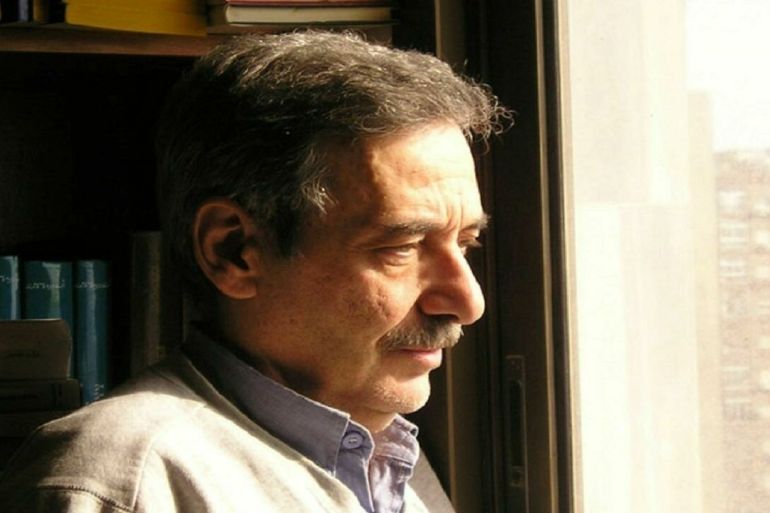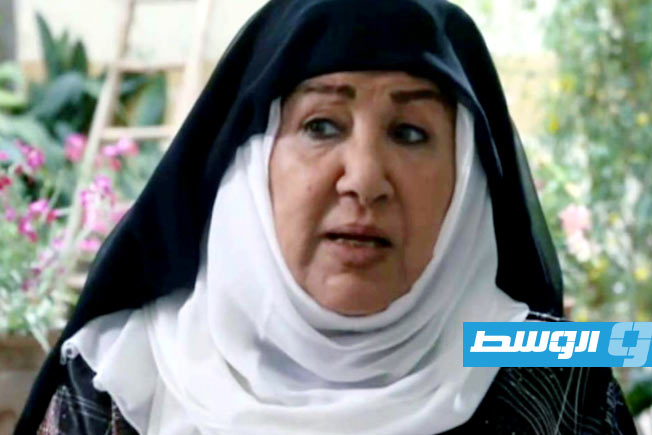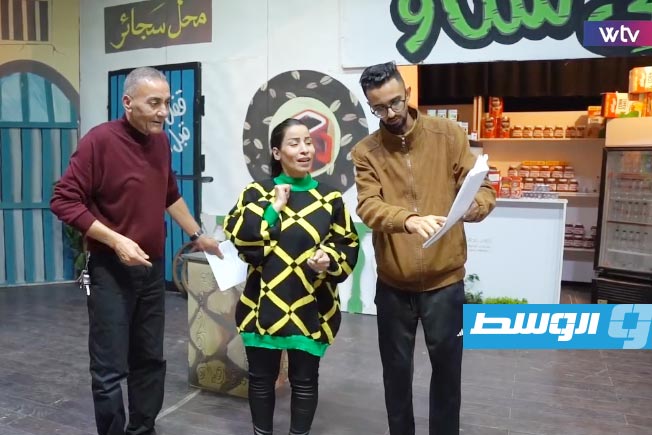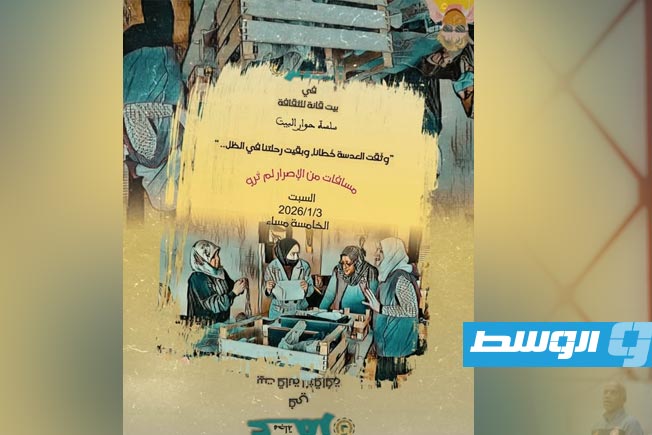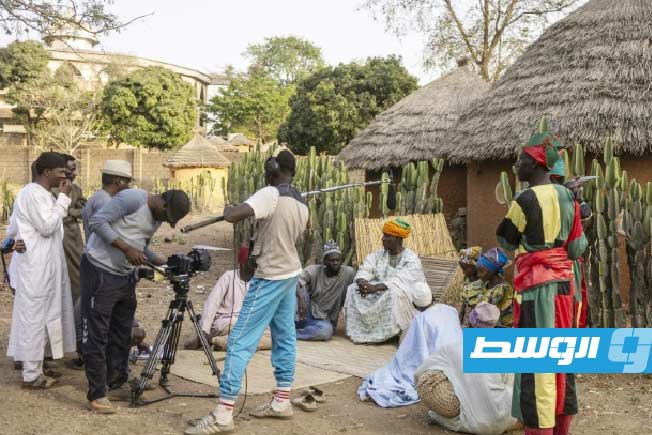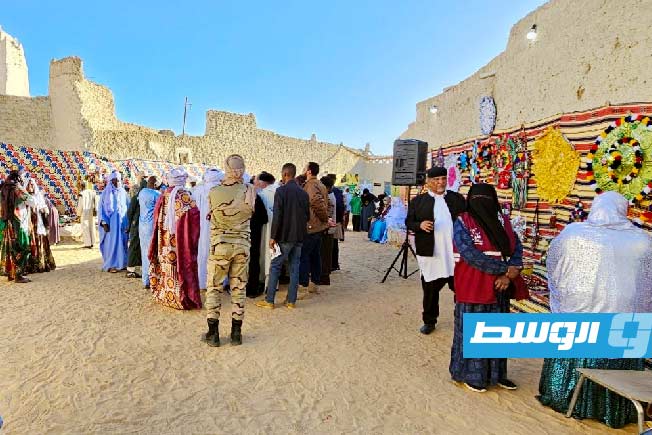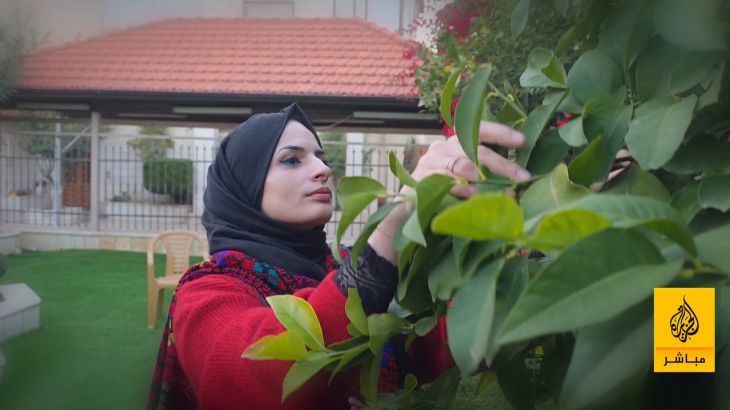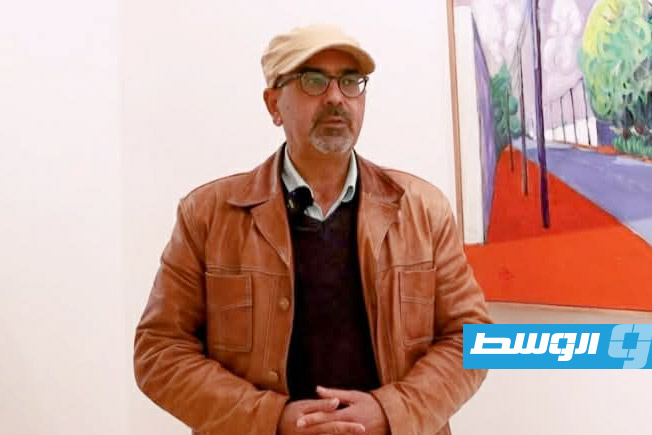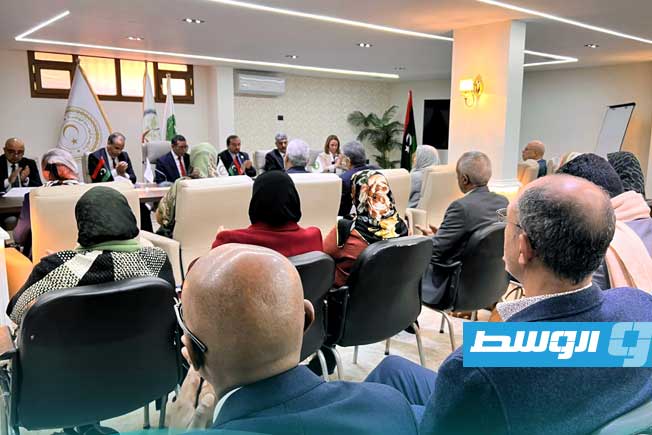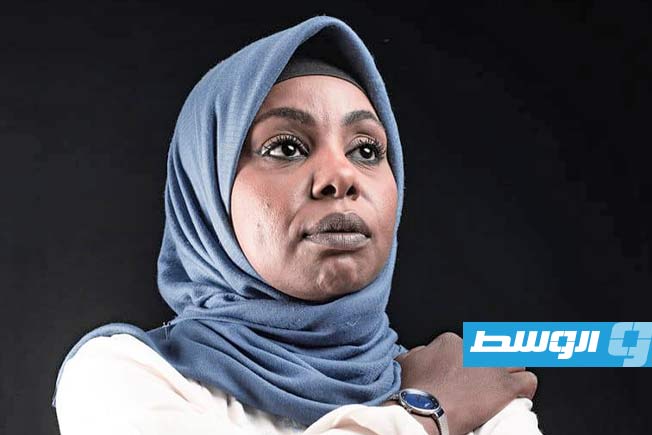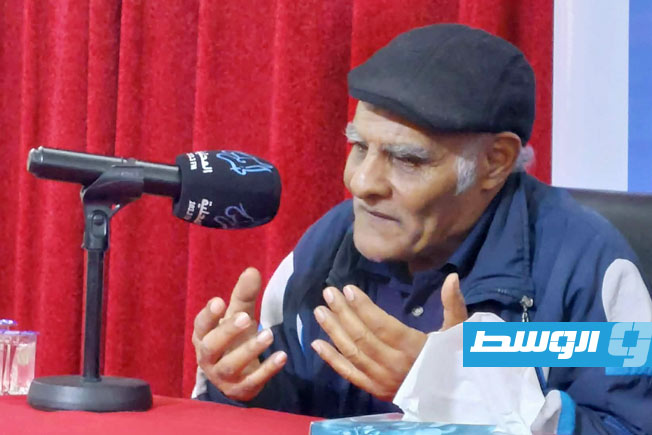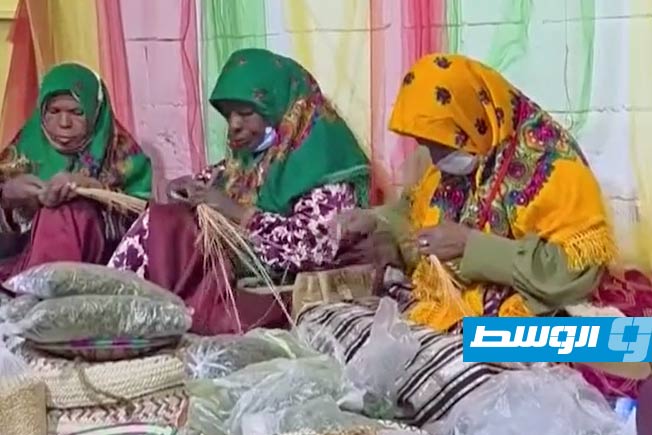
A still from an episode of the program “Here is Libya” which highlighted the craft of palm frond weaving in southern Libya.
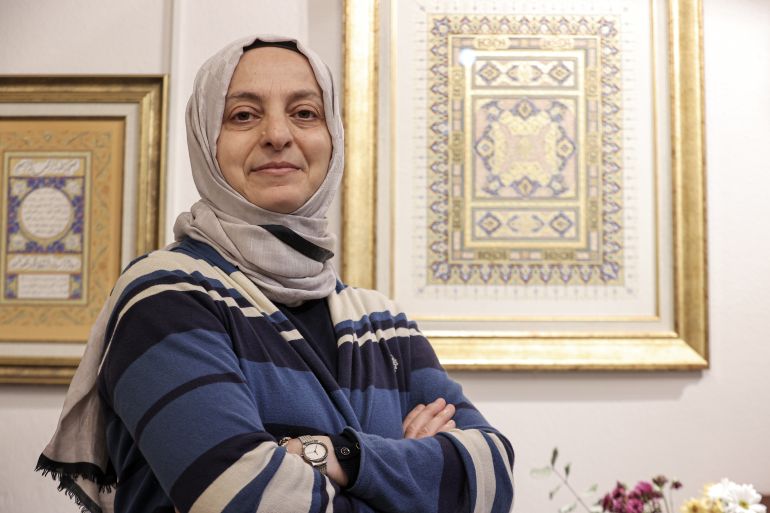
A woman from the “Al-Sa’ud” area in the “Wadi ‘Atabah” region spoke about her journey with the craft of palm frond weaving, confirming it is a skill passed down through generations by “observation and imitation.”
This came during an episode of the program “Here is Libya,” which visited the weavers and learned about the details of this traditional craft.
A Legacy from Mothers and the Stages of Production
The woman says: “We learned this craft from our mothers; we used to watch them when we were young as they stitched and moistened the palm fronds with water.” She adds, precisely describing the laborious stages of work that begin in the forest with harvesting the “midrib” and “leaf stalks” from the date palm, then cleaning and drying the fronds, then moistening them with water to make them pliable for shaping.
–
–
This is followed by the stage of dyeing and decoration, where the woven items are dyed with bright colors to add beauty to the final product, which is completed with stitching, braiding, and the processes of “interlacing” and “tying” to form the various pieces.
Developing the Craft and Its Products
The woman confirmed that they have not stopped at the limits of the past, but have worked on “developing the craft” to keep pace with the times, noting that this work represents a “lawful livelihood” that families depend on. Among the most prominent products made and sold are “large baskets and bags,” “plates and trays,” and “carrying baskets,” which are tools used for storing and presenting dates and grains.
The Continuity of the Craft and Passing It to New Generations
The woman points with pride to the fact that the craft is still alive thanks to the continued organization of courses to teach “braiding,” “knotting,” and “palm frond stitching,” and the interest of young people and the desire of the new generation to learn this “handicraft” that protects from need, as the industry is linked to preparing crops like wheat and barley.
The woman concluded her talk by praising God for this blessing, affirming that “handicraft” is true security, and calling on future generations to hold on to this legacy that combines national identity and economic benefit.