Tripoli, December 8, 2025 – A Libyan researcher and academic has accused the Nobel Prize committee of violating scientific and ethical standards by awarding this year’s prize in Chemistry to three scientists for developing and establishing a “new concept” called reticular chemistry. He claims he preceded them in this concept by years and that his doctoral thesis was on the same subject.
In a statement, he said he was years ahead of these scientists and that his doctoral thesis, which he received with honors from the Hungarian Academy of Sciences, was on the same topic. It is published and documented on several well-known global platforms such as Springer publishing house, Google Scholar, and the publications of the Institute of Isotopes in Budapest. He pointed out that these publications prove that his thesis and published work addressed the same subject, goal, and idea long before them. The goals and results of his experiments were to contribute to enhancing material capacity in the field of purification and separation, which in materials science is called a “discovery,” not merely an application, and is termed an “innovation.” This grants what is known as “scientific precedence.”
According to the researcher, in the interest of scientific integrity, his contribution and research results existed and were published before the birth of this scientific field. He stated he was ahead of them by stages and no one can overlook this fact, which is the justification the Nobel committee relied on in its award statement. He emphasized that the foundations for which the prize was awarded and the essence of the innovation he presented are the same as the essence of the prize award.
He added that what happened is strange, inconsistent with the spirit of science, contrary to scientific standards and research rigor, and undermines scientific credibility. The material upon which these “scientists” built their studies, “Zirconium,” is the same material he studied, researched, developed some of its compounds, increased its efficiency, and innovated new methods to enhance its effectiveness. He noted that compounds of this very material were the title of his thesis, as documented and established.
He confirmed that he published 13 scientific papers in peer-reviewed journals in the Netherlands, Britain, and Hungary under the supervision of his late thesis supervisor, who conducted the practical part and experiments in the laboratories of the “Institute of Isotopes” in Budapest, part of the Hungarian Academy of Sciences which granted him his doctorate. He said awarding the prize to these scientists constitutes disregard for the efforts of other parties, a breach of the principle of scientific priority and reference protocol, representing an infringement of rights, an overlooking of prior efforts, and a disregard for scientific standards. He clarified that the reasons for awarding the prize align and correspond with the objectives of his thesis.
He continued that the results he reached were documented scientific precedence and a foundational building block in establishing the science of “reticular chemistry.” He affirmed that awarding the prize this year violated the standards upon which competition, innovation, and evaluation criteria are based, in the simplest terms. He noted that this matter has caused great harm to him, the University of Tripoli, educational institutions, and the Libyan people, as the Nobel Prize is considered an indicator of the academic and scientific level of universities and countries.
He demanded recognition and restitution for his research based on official documents and documented analytical data, which state that this work is not merely a passing endeavor but a realized Libyan scientific contribution meeting the conditions of scientific research. He expressed his congratulations to the Nobel Prize winners for their achievements, while affirming his full respect for the prize committee and its historical trajectory.
He said his case is not against anyone, nor does it aim to detract from any researcher. He demanded recognition of the scientific precedence of his work, which he began in the late 1980s and published in the early 1990s, using FTIR, XRD, and thermal analysis to study the crystalline structure of zirconium and phosphates and their properties. These are the scientific foundations upon which the field of MOFs was later built, which has today become a giant industrial sector.
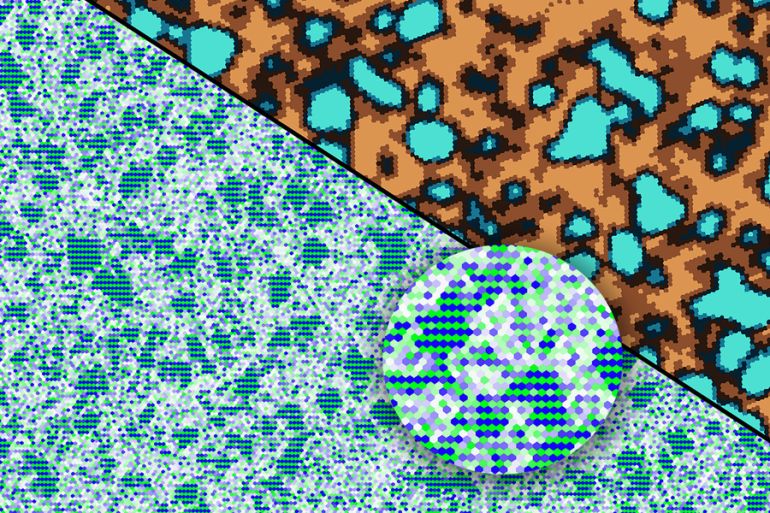
He explained that the concept of “reticular chemistry” or “Reticular Chemistry” in simplified terms is the development of porous materials with a network structure. This is the same goal and purpose of his scientific study related to studying the molecular structure of metal-organic frameworks, or so-called MOFs (an abbreviation for Metal-Organic Frameworks). These are materials used as small “sites or anchor points” within the structure of some materials that can capture, trap, and store unwanted molecules. He indicated that this opens horizons for applications in purification and separation, such as gas purification, impurity separation, air purification from carbon dioxide, reducing environmental pollution, treating plastic pollution, separating compounds, energy storage, dialysis,
Tripoli
Tripoli is the capital and largest city of Libya, located on the country’s Mediterranean coast. Historically, it was founded by the Phoenicians in the 7th century BC and has since been ruled by the Romans, Arabs, Ottomans, and Italians, serving as a major port and cultural crossroads. Its historic center, the medina, features ancient architecture like the Arch of Marcus Aurelius and the Red Castle (Assai al-Hamra).
Nobel Prize
The Nobel Prize is an international award established in 1895 by the will of Swedish inventor Alfred Nobel. It is awarded annually in the fields of Physics, Chemistry, Physiology or Medicine, Literature, and Peace, with a prize in Economic Sciences added in 1968, to individuals and organizations who confer the “greatest benefit to humankind.”
Hungarian Academy of Sciences
The Hungarian Academy of Sciences was founded in 1825 by Count István Széchenyi, who donated a year’s income to establish a learned society for the advancement of the Hungarian language and scientific study. Its iconic headquarters, a Neo-Renaissance palace on the Danube bank in Budapest, was completed in 1865 and remains a central institution for Hungarian research and scholarship.
Springer publishing house
Springer Publishing House is a German academic publishing company founded in 1842 by Julius Springer in Berlin, initially focusing on political and philosophical works. It grew into a major international publisher of scientific, technical, and medical literature, and in the 20th century, it became particularly renowned for its extensive catalog of scientific journals and books.
Google Scholar
Google Scholar is a freely accessible web search engine that indexes the full text of scholarly literature across various publishing formats and disciplines. It was launched in 2004 by Google as a tool to help researchers and academics find peer-reviewed papers, theses, books, and conference proceedings. The platform aggregates content from academic publishers, universities, and other repositories, making it a central database for scholarly research.
Institute of Isotopes
The Institute of Isotopes is a Hungarian research institution founded in 1959, originally focused on nuclear research and the production of radioactive isotopes. It has since evolved into a major center for scientific development, particularly in the fields of radiochemistry, nuclear medicine, and environmental studies.
Budapest
Budapest is the capital of Hungary, formed in 1873 by the unification of the three historic cities of Buda, Óbuda, and Pest. Its history is deeply marked by the Ottoman occupation, the Austro-Hungarian Empire, and its role as a major cultural and political center in Central Europe. The city is renowned for its stunning architecture, including the Hungarian Parliament Building and the Buda Castle, and its thermal baths built over natural springs.
Zirconium
Zirconium is a chemical element, not a place or cultural site. It was discovered in 1789 by Martin Heinrich Klaproth as a component of the mineral zircon, which has been used as a gemstone for centuries.
Netherlands
The Netherlands, officially the Kingdom of the Netherlands, is a country in Northwestern Europe known for its flat landscape, extensive canal systems, and historic trading ports. Its history is deeply shaped by its relationship with water, including centuries of land reclamation, and it rose to global prominence as a maritime and economic power during the Dutch Golden Age in the 17th century.
Britain
Britain is a sovereign island nation in northwestern Europe with a long and influential history, including its formation through the union of England, Scotland, and Wales, and later with Northern Ireland. It was the centre of the British Empire and the birthplace of the Industrial Revolution, shaping global politics, economics, and culture for centuries. Today, it is a constitutional monarchy and a modern, multicultural society.
Hungary
Hungary is a landlocked country in Central Europe with a rich history dating back to the Magyar conquest in the late 9th century. Its capital, Budapest, is famed for historic sites like the Buda Castle and the Hungarian Parliament Building, reflecting a cultural heritage shaped by Roman, Ottoman, and Austro-Hungarian influences.
University of Tripoli
The University of Tripoli is the largest and oldest university in Libya, founded in 1957 as the University of Libya with its first faculty in Benghazi before expanding to Tripoli. It has since grown into a major public institution with numerous colleges and faculties, playing a central role in the country’s higher education system throughout the 20th and 21st centuries.
MOFs
MOFs, or Metal-Organic Frameworks, are not a single place or cultural site but a class of synthetic porous materials. They consist of metal ions or clusters connected by organic linkers, forming highly customizable structures with vast surface areas. First developed and named in the 1990s, their history is rooted in materials science for applications like gas storage, separation, and catalysis.
Metal-Organic Frameworks
Metal-Organic Frameworks (MOFs) are a class of highly porous crystalline materials composed of metal ions or clusters connected by organic linkers. First developed in the 1990s, their history is rooted in advancing materials science to create structures with exceptionally high surface areas and tunable chemistry. These properties make MOFs highly promising for applications in gas storage, separation, and catalysis.