Exclusive: Central Bank Sends Multiple Communications to Unity Government and Security Agencies to Raise Dinar Value, Lower Prices, and Ensure Liquidity
libyawire.org > News > Economy > Exclusive: Central Bank Sends Multiple Communications to Unity Government and Security Agencies to Raise Dinar Value, Lower Prices, and Ensure Liquidity
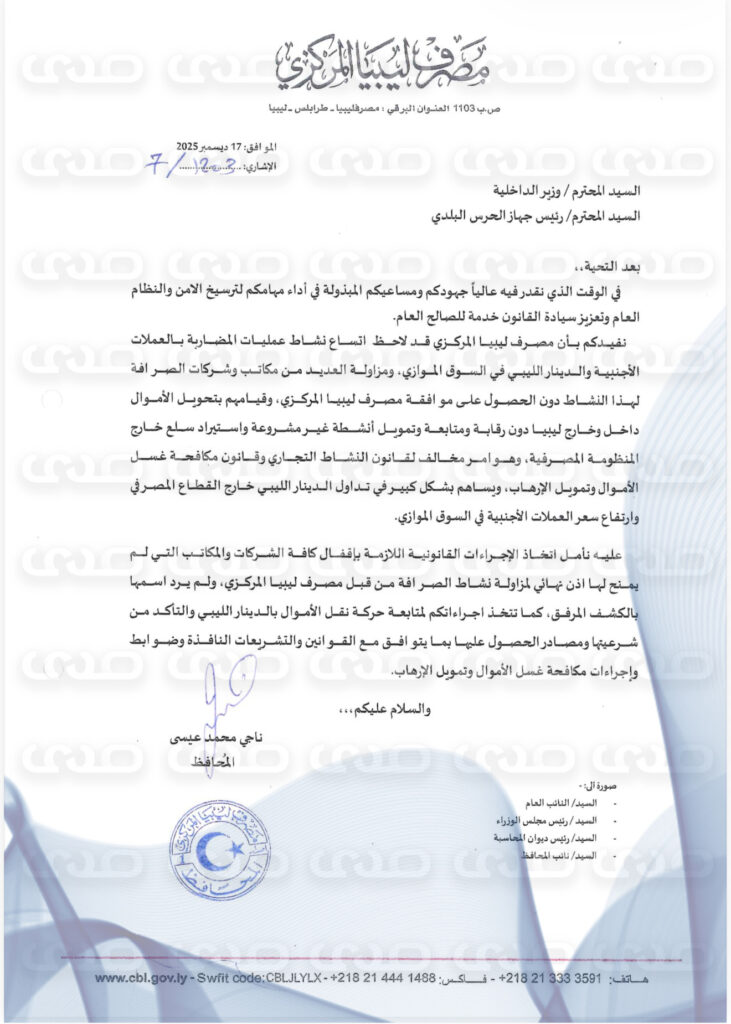
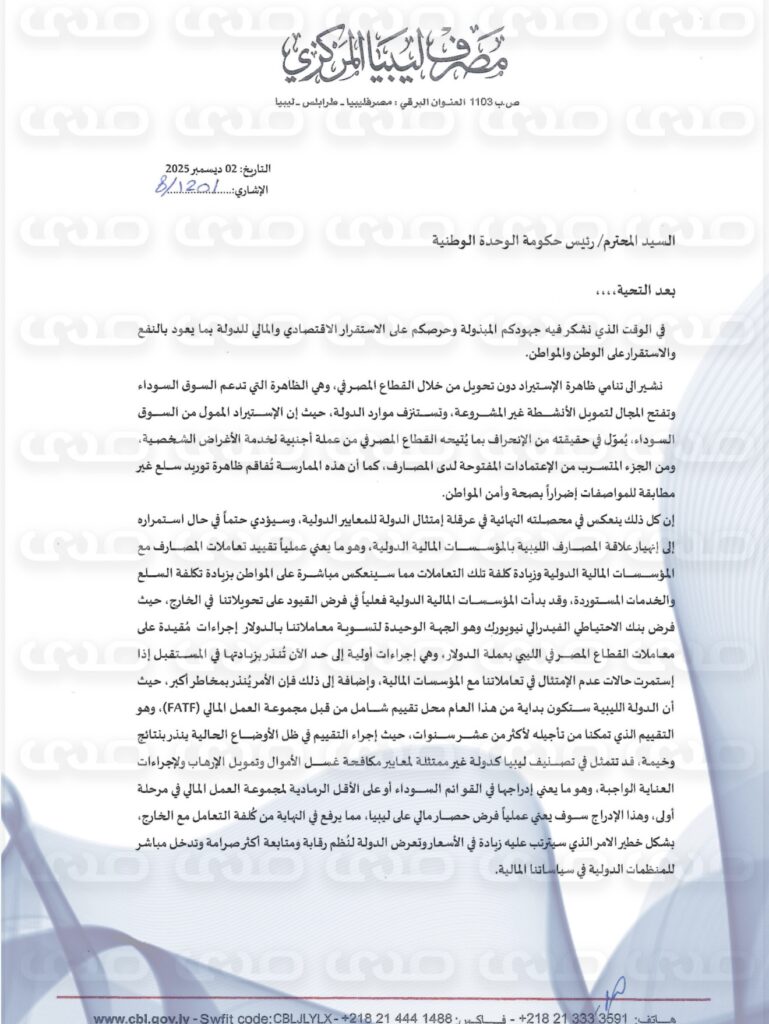
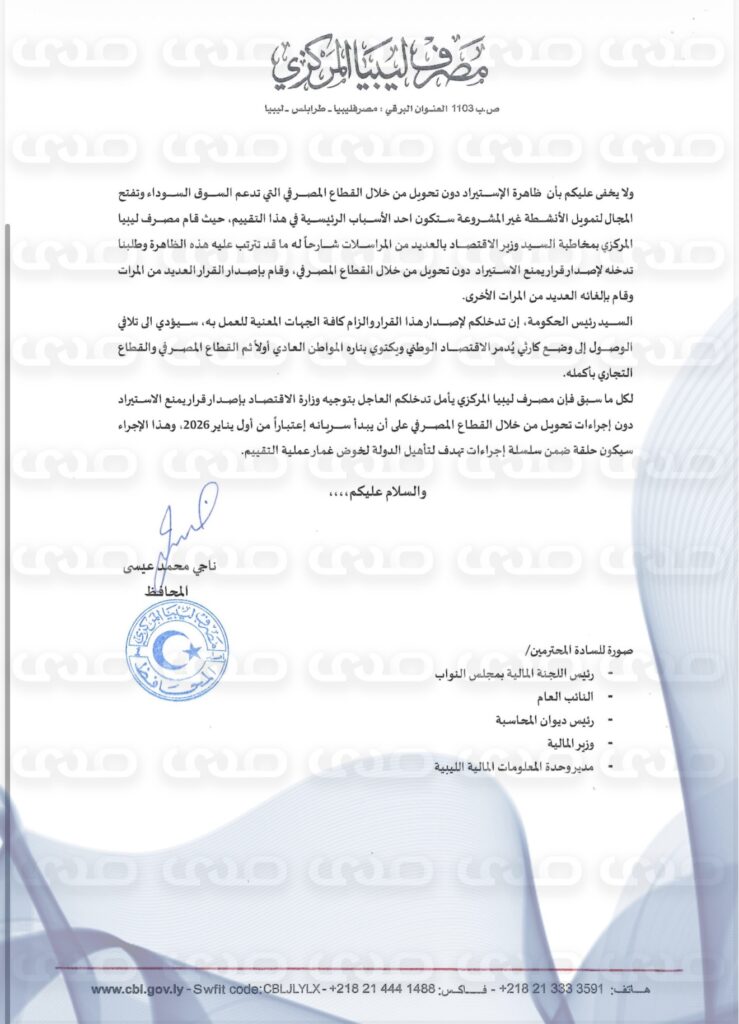
The Central Bank of Libya’s governor has sent correspondence to the head of the Government of National Unity, the Internal Security Agency, and the Interior Ministry, ordering the closure of unlicensed exchange offices operating without permits. The correspondence also calls on Prime Minister Dbeibah to direct the Ministry of Economy to issue a decision prohibiting import and export operations except through banking channels.
Sources indicate that the Central Bank continues to urge all relevant parties to implement genuine economic reforms to improve the economic situation for the benefit of citizens’ living standards. This involves proposing a package of measures to raise the value of the Libyan dinar, ensure the availability of cash liquidity, and reduce the general price level and inflation rate.
Central Bank sends multiple letters to Unity Government and security agencies to raise dinar value, lower prices, and ensure liquidity 2Central Bank sends multiple letters to Unity Government and security agencies to raise dinar value, lower prices, and ensure liquidity 3Central Bank sends multiple letters to Unity Government and security agencies to raise dinar value, lower prices, and ensure liquidity 4
Central Bank of Libya
The Central Bank of Libya is the country’s primary monetary authority, established in 1956 to issue currency and manage monetary policy. It has played a critical and often divisive role during periods of conflict since 2011, with rival administrations at times claiming control over separate branches of the institution.
Government of National Unity
The Government of National Unity (GNU) is a term most notably associated with the post-apartheid transitional government in South Africa, formed in 1994 following the country’s first multiracial elections. It was a coalition government led by Nelson Mandela’s African National Congress (ANC) and included other major parties like the National Party and the Inkatha Freedom Party, aimed at fostering reconciliation and stability during the transition to majority rule.
Internal Security Agency
The Internal Security Agency is Poland’s primary counterintelligence and security service, established in 2002 to replace the former State Protection Office. It is responsible for protecting the country’s internal security, countering terrorism, and combating espionage and organized crime.
Interior Ministry
The Interior Ministry is a government department responsible for internal affairs, such as public safety, civil registration, and domestic policy. Historically, such ministries were established in many countries during the 18th and 19th centuries to centralize state administration and maintain order following the rise of the modern nation-state.
Ministry of Economy
The Ministry of Economy is a government department responsible for formulating and implementing national economic policy. Its history is tied to the modern development of the state it serves, typically evolving from earlier finance or trade offices to address broader economic planning, industry, and commerce.
Libyan dinar
The Libyan dinar is the official currency of Libya, introduced in 1971 to replace the Libyan pound. It was established following the 1969 revolution that brought Muammar Gaddafi to power, marking a shift in the country’s economic identity.