African Cooperation and Coordination Discussed Between Al-Baour and Central African Foreign Minister
African Cooperation and Coordination Discussed Between Al-Baour and Central African Foreign Minister
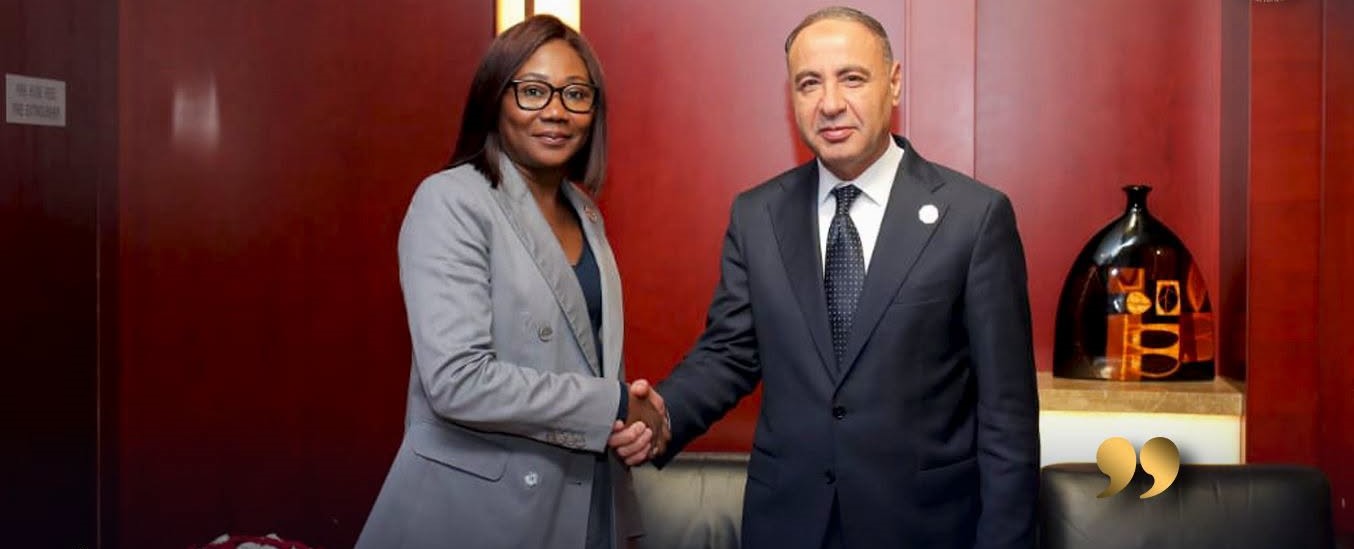
Addis Ababa, July 29, 2026 – The Acting Minister of Foreign Affairs and International Cooperation of the Government of National Unity, Al-Taher Al-Baour, discussed with the Minister of Foreign Affairs of the Central African Republic, Sylvie Baïpo-Temon, ways to strengthen and develop bilateral cooperation, as well as coordinate positions on a number of regional and continental issues.
This took place during a meeting on the sidelines of the 49th Ordinary Session of the Executive Council of the African Union, held in the Ethiopian capital, Addis Ababa, on July 27 and 28.
The meeting addressed prospects for expanding cooperation between Libya and the Central African Republic in various fields of common interest, serving the interests of the two friendly countries and peoples, and enhancing bilateral relations between them.
The two sides also exchanged views on a number of items on the African Union’s agenda, stressing the importance of continued coordination and consultation within common African frameworks, to support efforts for peace, stability, and sustainable development on the continent.
The two sides reaffirmed their commitment to strengthening cooperation and coordination between the two countries in regional and international forums, reflecting the depth of fraternal relations and the spirit of African solidarity.
Addis Ababa
Addis Ababa, the capital of Ethiopia, was founded in 1886 by Emperor Menelik II and became an important African political and cultural center. The city hosts the headquarters of the African Union and preserves historical monuments such as the Holy Trinity Cathedral and the National Palace. Today, it is a symbol of the continent’s unity and modernization, combining tradition with rapid urban development.
Central African Republic
The Central African Republic is a country located in the heart of Africa, known for its tumultuous history marked by French colonization and political instability after independence in 1960. It is home to diverse landscapes, from savannahs to tropical forests, and a rich culture reflected in the traditions of local ethnic groups, as well as natural sites such as Manovo-Gounda St. Floris National Park.
African Union
The African Union is an international organization founded on July 9, 2002, which brings together all African states, with its headquarters in Addis Ababa, Ethiopia. It succeeded the Organization of African Unity, established in 1963, aiming to promote unity, peace, and economic development on the continent. The African Union plays a central role in coordinating Africa’s collective efforts in areas such as security, trade, and poverty alleviation.
Libya
Libya, a country in North Africa, is known for its rich historical heritage, including the ancient Greco-Roman ruins of Leptis Magna, Sabratha, and Cyrene. Over time, it was under the rule of the Phoenicians, Romans, Arabs, and Ottomans, and in the 20th century became an independent kingdom, followed by the dictatorship of Muammar Gaddafi. After 2011, the country entered a period of political instability and conflict.