How Oil and Chinese Competition Threaten AI Investments
How Oil and Chinese Competition Threaten AI Investments
The sharp decline in the stocks of a group of semiconductor manufacturing companies in the United States, Asia, and Europe has highlighted widespread investor concerns about the potential to achieve expected profits from the massive investments poured into the artificial intelligence sector, especially given competition with.
Shares of South Korea’s “SK Hynix” fell by up to 10% on Tuesday, according to what the newspaper reported, while shares of the larger “Samsung Electronics” fell by more than 12%. The two Korean companies recorded declines of 41% and 34% respectively during the current month of July so far.
On the Tokyo Stock Exchange, shares of “Kioxia Holdings” for memory chip manufacturing fell by 18.33%. Shares of “Advantest” for chip testing equipment manufacturing and “Tokyo Electron” for chip manufacturing equipment manufacturing each fell by more than 10%.
In Europe, shares of “ASML Holding” – the world’s largest manufacturer of chip production equipment – fell by 2.9%, amid concerns about the continuation of demand for its products at the same pace.
On the stock exchange, shares of “SanDisk” giant in the memory field fell by 11% on Monday, then fell by 12.7% during Tuesday’s trading. “NVIDIA” shares also lost 4.9% by the end of Monday’s trading.
The Financial Times quoted the head of equity strategy at Barclays Bank, Venu Krishna, as saying that there are “concerns dominating the scene” for major technology companies, including a “state of uncertainty regarding financing” and high capital expenditures for these companies, especially on the infrastructure needed for artificial intelligence.
Impact of rising oil prices
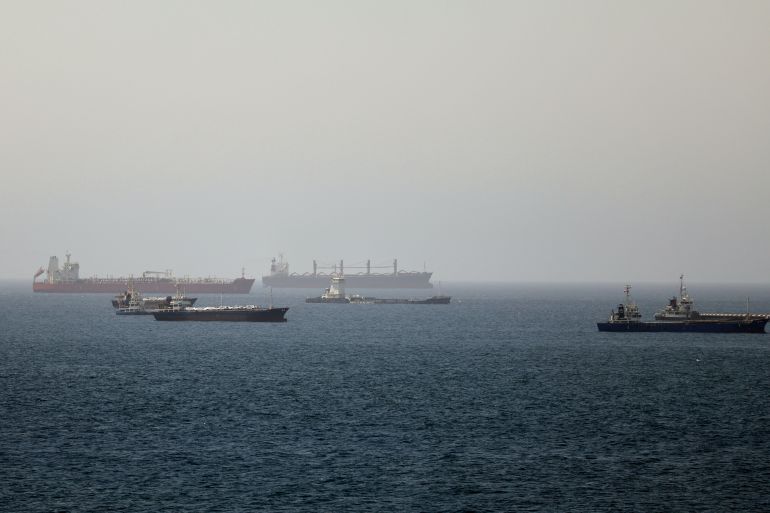
In this context, investor fears have escalated that rising oil and gas prices, as a result of the war in , will increase the cost of operating and maintaining the massive data centers that represent one of the most important forms of infrastructure for the artificial intelligence sector.
Data centers consume significant amounts of energy, due to their need to run the computer servers necessary for artificial intelligence, in addition to the enormous storage spaces required. This means the cost of these centers increases with the rise in oil and gas costs, and consequently, the expected profits from technology companies decline.
The price of oil rose last week to around $100 per barrel for Brent crude, but it
United States
The United States of America is a vast country located in North America, consisting of 50 states and a federal district. Founded in 1776 through the Declaration of Independence from the Kingdom of Great Britain, the nation experienced rapid territorial expansion and became a global economic and cultural power. Its history includes notable periods such as the Civil War, the Great Depression, and its rise as a superpower in the 20th century.
Asia
Unfortunately, the term “Asia” refers to an entire continent, not a specific cultural place or site. Asia is the largest continent in the world, with a vast and diverse history, being the cradle of ancient civilizations such as those in Mesopotamia, the Indus Valley, and China. For a more precise answer, please provide the name of a specific tourist destination or historical site.
Europe
**Europe** is not a single cultural place or site, but a continent with a rich and diverse history. Here, ancient civilizations such as the Greek and Roman were born, and over the centuries it was the cradle of the Renaissance, the Industrial Revolution, and major artistic and philosophical movements. Today, Europe is known for its impressive cultural heritage, from medieval castles and Gothic cathedrals to world-renowned museums and varied natural landscapes.
South Korea
South Korea is a country in East Asia, known for its rich history spanning thousands of years, from ancient kingdoms like Silla and Goguryeo to the modern era. After the Korean War (1950-1953), the country developed rapidly to become a global economic and technological power, with influential popular culture such as K-pop and dramas. Notable cultural sites include Gyeongbokgung Palace in Seoul and Bulguksa Temple in Gyeongju.
Tokyo
Tokyo, the capital of Japan, is a fascinating city that harmoniously blends tradition with modernity. Originally founded as a small fishing village named Edo, it became the center of power for the Tokugawa shogunate in the 17th century, and after the Meiji Restoration in 1868 it was renamed Tokyo and transformed into the imperial capital. Today, it is one of the largest and most dynamic cities in the world, renowned for its advanced technology and rich cultural heritage.
Kioxia
“Kioxia” refers to Kioxia Holdings Corporation, a Japanese multinational corporation specializing in flash memory and solid-state drives (SSDs). Founded in 1987 as a joint venture between Toshiba and Western Digital, it was originally named Toshiba Memory Corporation and was renamed Kioxia in 2019. It is one of the world’s largest producers of NAND flash memory, crucial for data storage in various electronic devices.
Advantest
Advantest Corporation is a Japanese electronics company founded in 1954, specializing in the manufacturing of semiconductor test equipment. It is one of the leading global suppliers of automatic test equipment (ATE) used in the production of integrated circuits. The company plays a critical role in the electronics manufacturing process, ensuring the quality and performance of chips.
Tokyo Electron
Tokyo Electron Limited (TEL) is a Japanese electronics and semiconductor equipment manufacturing company founded in 1963. It is one of the world’s largest producers of semiconductor fabrication equipment, including systems for deposition, etching, and cleaning. TEL is a key player in the global supply chain for manufacturing advanced microchips.
ASML
ASML is a Dutch company founded in 1984 and a leader in the production of equipment for manufacturing semiconductor chips. Headquartered in Veldhoven, Netherlands, ASML became a global leader in lithography technology, including extreme ultraviolet (EUV) lithography, essential for modern processors. Its history reflects continuous innovation and collaboration with global partners, contributing to the development of the microelectronics industry.
SanDisk
**SanDisk** is an American company specializing in the production of data storage solutions, such as memory cards and SSD drives. Founded in 1988, it became a global leader in flash technology, and was later acquired by Western Digital in 2016. The company is known for its innovations in portable storage and the widespread use of its products in electronic devices.
NVIDIA
Unfortunately, “NVIDIA” is not a place or a cultural site, but an American multinational technology company, specialized in graphics processing units (GPUs) and artificial intelligence. Founded in 1993, NVIDIA became famous for its gaming graphics cards and, more recently, for accelerating AI and machine learning applications. There is no history related to a cultural site in this case.
Financial Times
The “Financial Times” (FT) is an international business and economic newspaper, founded in 1888 in London. The publication is known for its detailed analyses and its distinctive pink paper. Throughout its history, it has become one of the most influential sources of financial information in the world.
Barclays Bank
Barclays Bank is a British financial institution with a long history, founded in 1690 in London. Over the centuries, it has evolved from a simple foreign exchange and banking house into one of the largest global banking groups. Today, it is known for its retail, corporate, and investment services, with a significant presence worldwide.
Gulf of Oman
The Gulf of Oman is a body of water located between the Arabian Peninsula and Iran, connecting the Arabian Sea to the Strait of Hormuz which leads to the Persian Gulf. Historically, this gulf has been an important maritime trade route since ancient times, used by civilizations like the Sumerians and Omanis to trade goods such as frankincense and spices. Today, the gulf remains a strategically vital area for global trade and energy.
Strait of Hormuz
The Strait of Hormuz is a narrow strategic passage between the Persian Gulf and the Gulf of Oman, known for its global geopolitical and economic importance. Historically, it has been a key point for maritime trade and oil transport routes, mentioned since antiquity under various names such as the “Persian Gates.” Today, approximately 20% of the world’s oil transits this strait, making it vital for the global economy.
Arabian Sea
The Arabian Sea is a part of the Indian Ocean, located between the Arabian Peninsula and the Indian subcontinent. Historically, it has been an essential maritime route for trade between the East and West, facilitating cultural and economic exchanges since antiquity. Over the centuries, its ports have played a crucial role in the development of civilizations in the region.
Dublin
Dublin is the capital and largest city of Ireland, located on the east coast at the mouth of the River Liffey. With a history dating back to the 9th century, when it was founded by Vikings, the city became an important cultural and economic center, known for its Georgian architecture and literature. Over the centuries, Dublin has played a crucial role in Irish history, including during the Easter Rising of 1916 and the country’s independence process.
Ireland
Ireland, also known as the “Emerald Isle,” is a country with a rich history marked by Celtic, Christian, and British influences. From the ancient Gaelic kingdoms and medieval monasteries, to the Great Famine of the 19th century and the struggle for independence, Irish culture remains deeply rooted in traditions, music, and literature. Today, Ireland is known for its green landscapes, historic castles, and the welcoming atmosphere of its pubs.