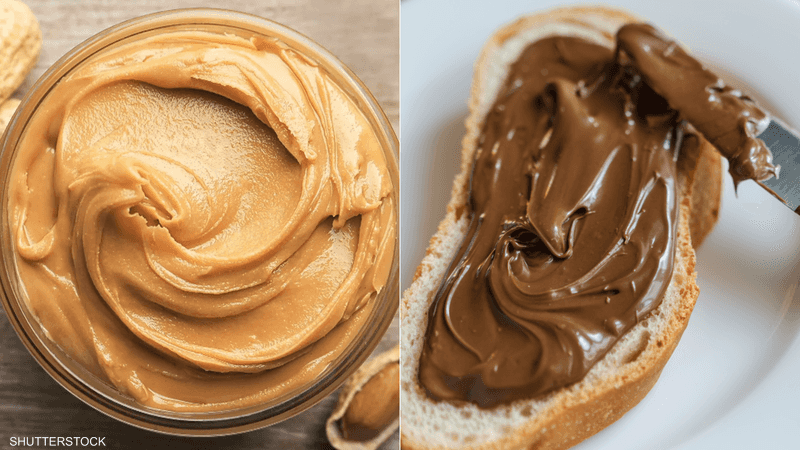
Peanut butter and Nutella have become common staples in households around the world, and many people are confused about which one is better for their health.
Natural peanut butter, rich in nuts and salt without any other additives, offers nutritional benefits and important amounts of protein. Nutella, on the other hand, is a spread based on hazelnuts and chocolate, providing the body with some antioxidants, but it is very rich in sugar and palm oil.
It is recommended to include natural peanut butter in a balanced diet, while limiting Nutella consumption to an occasional treat.
Peanut Butter
Despite its calorie and fat content, peanut butter is a good source of protein and many other nutrients, such as magnesium, iron, vitamin B5, and vitamin A.
Most peanut butters are high in calories and fat, and it is advised to limit consumption to just one or two tablespoons per day.
Not all peanut butters are the same; some contain added oils, salt, and sugars to improve flavor and extend shelf life.
Nutella
Nutella is known for its high calorie, sugar, and fat content. It contains palm oil, hazelnuts, cocoa, milk powder, and artificial additives.
Although its calorie count is similar to that of peanut butter, Nutella is a product high in sugar and fat. Its sweet taste and smooth texture also make it easy to overconsume.
It is recommended to eat it only occasionally, as regular consumption may harm the body.
Nevertheless, some of Nutella’s ingredients, such as hazelnuts, provide antioxidants and some vitamins like B6, zinc, magnesium, and potassium, which are known to support heart, skin, and gut health.
Cocoa is rich in antioxidants and beneficial for heart health, while milk provides the body with nutrients, fats, and proteins that support overall health.
However, Nutella contains palm oil, which research has linked to an increased risk of heart disease with regular consumption.
Important Tips
- It is recommended to add nut butters like peanut butter to a balanced diet and consume Nutella only occasionally.
- Enhance the value of snacks with protein and healthy fats by mixing peanut butter with apples or bananas.
- Choose butter that is free of fillers, additives, and artificial sweeteners.
Peanut butter
### **Types:**
– **Smooth/Creamy:** Finely ground for a spreadable texture.
– **Crunchy/Chunky:** Contains peanut pieces for added texture.
– **Natural:** Often made with just peanuts and salt, requiring stirring due to oil separation.
– **Commercial:** May include hydrogenated oils to prevent separation and added sugars.
### **Nutritional Profile:**
– High in **protein**, healthy fats (monounsaturated and polyunsaturated), and dietary fiber.
– Good source of vitamins and minerals like vitamin E, magnesium, and potassium.
– Calorie-dense (about 90–100 calories per tablespoon).
### **Uses:**
– Spread on bread, toast, or crackers.
– Used in baking (cookies, bars).
– Added to smoothies, sauces, or dressings.
– Common in sandwiches like the classic **PB&J** (peanut butter and jelly).
### **Fun Facts:**
– Patented in the late 19th century, popularized as a protein source in the early 20th century.
– The U.S. celebrates **National Peanut Butter Lover’s Day** (March 1) and **National Peanut Butter Month** (November).
– Astronaut **Alan Shepard** even took a peanut butter sandwich to space (unofficially) on Apollo 14!
### **Allergy Note:**
Peanut allergies are common and can be severe. Many schools and airlines have restrictions on peanut products.
Would you like a recipe, history deep dive, or something else related to peanut butter?
Nutella
### **Ingredients:**
– **Hazelnuts:** The primary nut used, making up about 13% of the spread.
– **Cocoa:** Provides the chocolate flavor.
– **Sugar and palm oil:** Give it a smooth, spreadable texture.
– **Skim milk powder and lecithin** (an emulsifier).
### **Uses:**
– Spread on toast, pancakes, waffles, or crepes.
– Used in baking (cakes, brownies, pastries).
– As a filling for desserts like croissants or crepes.
– Sometimes eaten straight from the jar (no judgment!).
### **Fun Facts:**
1. **World Nutella Day** is celebrated on February 5th.
2. One jar of Nutella is sold every 2.5 seconds worldwide.
3. The original recipe was created in the 1940s during World War II, when cocoa was scarce, so hazelnuts were used to extend the chocolate supply.
### **Controversies:**
– **Health concerns:** Due to its high sugar and fat content, it’s often considered a treat rather than a healthy food.
– **Palm oil:** Ferrero has committed to using sustainable palm oil, but the ingredient remains controversial due to environmental and ethical concerns.
### **Cultural Impact:**
Nutella has a strong presence in many countries and is often associated with childhood memories, comfort food, and indulgent breakfasts. It’s also a common ingredient in trendy desserts like Nutella-stuffed cookies or milkshakes.
Would you like a recipe idea or more details on something specific about Nutella?