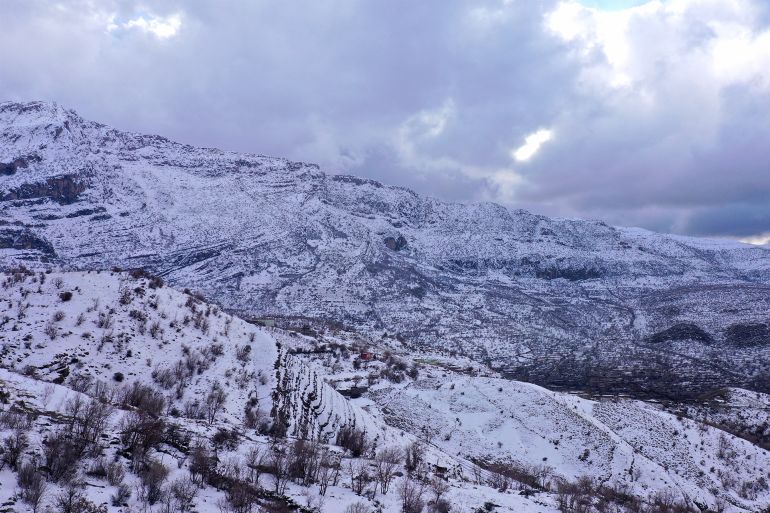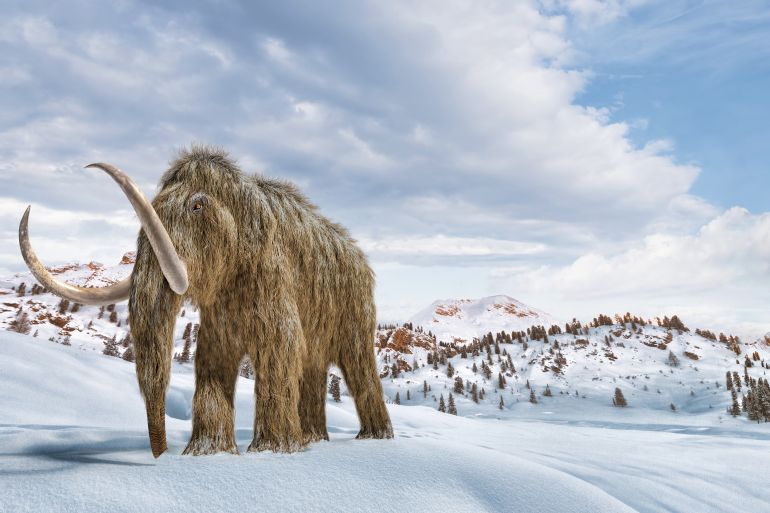
In 2010, the nearly complete frozen carcass of a young mammoth was found in the Oyogos Yar cliff on the coast of the Dmitry Laptev Strait near the Arctic coast of Siberia. It was named “Yuka” after the nearby village of Yukagir.
The animal remained frozen for approximately 40,000 years, with the Siberian permafrost preserving its form in astonishing detail. Its reddish-brown fur was still attached to the skin, its trunk was curled, and even its brain remained intact, which is extremely rare.
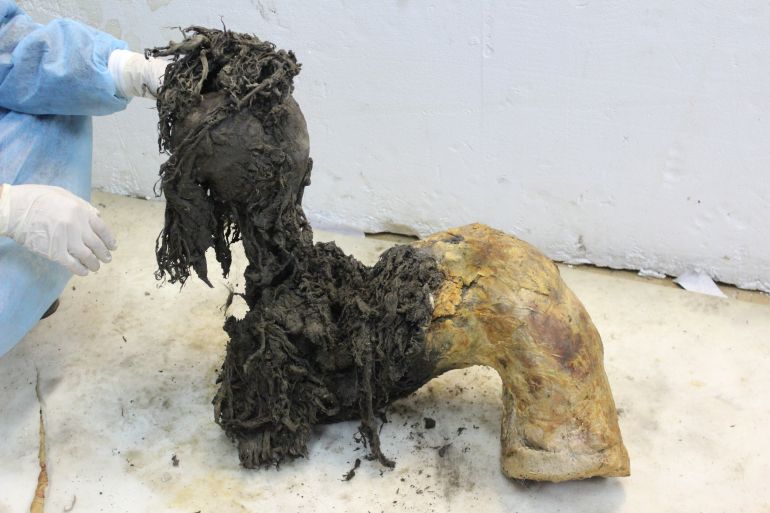
A Young Mammoth
The reason its body was almost completely preserved is explained: “The young mammoth’s body was buried and frozen quickly after death, halting decomposition in the soft tissues. Its remaining in permanently frozen conditions for thousands of years contributed to its remarkable preservation.”
It is added that this ice “if it had thawed at any point in history, only bones would have remained. But the stability of the freezing allowed for near-perfect preservation of the body until the moment of its discovery and transfer to research facilities for scientific studies.”
This young mammoth – which was between 6 and 8 years old at death, standing 3 meters tall and weighing 5 tons despite its young age – has since provided scientists with new insights into these extinct species.
Today, 15 years later, a team of researchers has taken a significant step closer to understanding these “legendary” creatures that roamed the Earth thousands of years ago.
For the first time in history, the team successfully extracted the oldest RNA molecules ever discovered, revealing traces of genetic activity preserved in the mammoth’s tissues since the last Ice Age.
RNA is a vital biological molecule that performs multiple roles in the cell, from transferring instructions from DNA to make proteins, to controlling and regulating gene activity. However, it typically degrades rapidly after death.
The results were published, showing that DNA and proteins, in addition to RNA, can remain preserved for very long periods, providing new information about the biology of species that went extinct long ago, and potentially aiding de-extinction efforts.
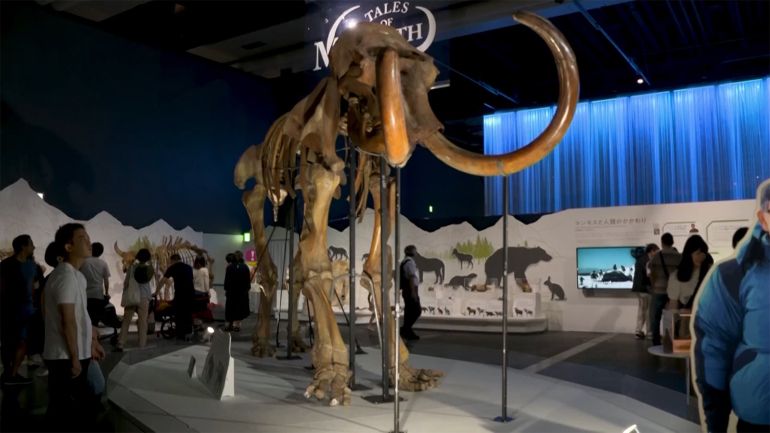
RNA from the Distant Past
The woolly mammoth – a relative of the modern elephant – is one of the most iconic extinct creatures in human memory, with its long curved tusks and thick fur symbolizing the Ice Age.
This giant, which reached about 4 meters in height and weighed up to 6 tons, roamed the plains of northern Europe, Asia, and North America during the last ice ages. It represents one of the last mammoth lineages that persisted until its extinction only about 4,000 years ago, after the pyramids of Giza in Egypt were built.
Mammoths coexisted with early humans who hunted them for food and used their bones and tusks to make tools and art. Despite thousands of years passing, the cause of their extinction remains debated, between human hunting and harsh climate changes.
For years, scientists have worked to decode ancient DNA from well-preserved mammoths like “Yuka” to reconstruct their genome, history, and close relationship to modern elephants.
But unlike DNA, finding ancient RNA – the molecule that reveals which genes were active before death – and extracting it has always been an extremely difficult task.
It is stated: “Researchers long believed that RNA from living organisms is extremely fragile, degrading due to enzymes and environmental changes within minutes or hours of cell death if not preserved. This made them hesitant to explore these molecules rich in biological information in mammoths and other long-extinct species
Yuka
– **優花** (gentle, flower)
– **結花** (binding, flower)
– **由香** (reason, fragrance)
– **友佳** (friend, good)
It can also be written in hiragana (ゆか) or katakana (ユカ). The name is popular in Japan and sometimes used internationally.
If you’re referring to something else (like an app, product, or character), let me know, and I can provide more specific information!