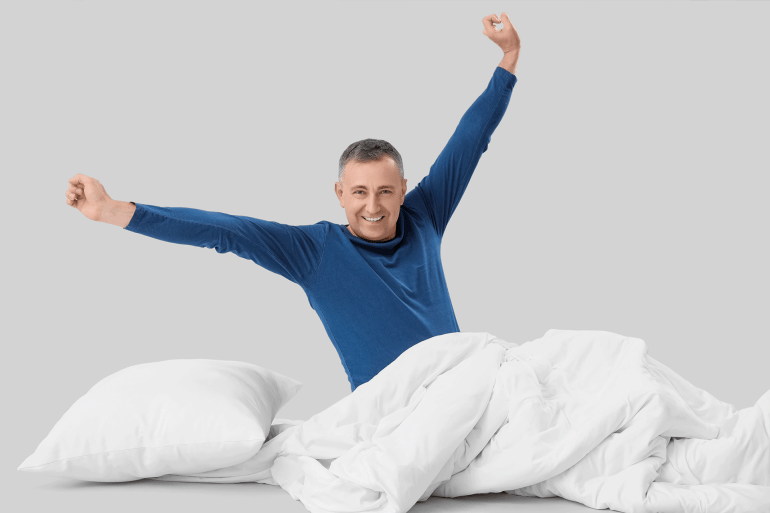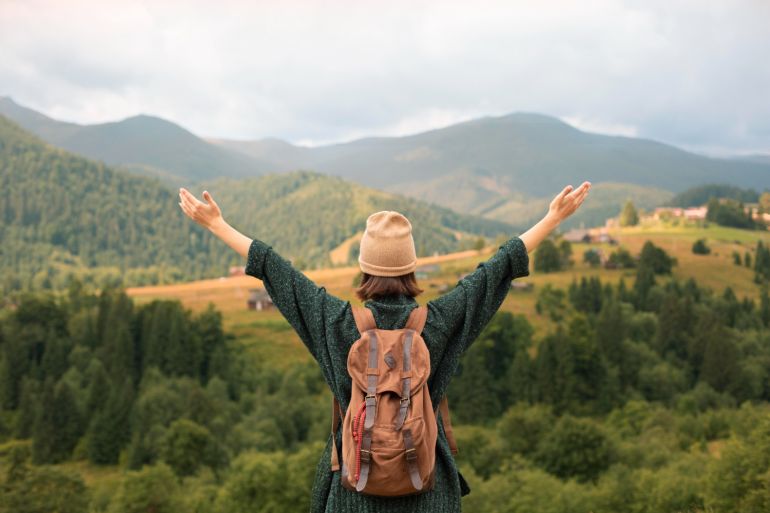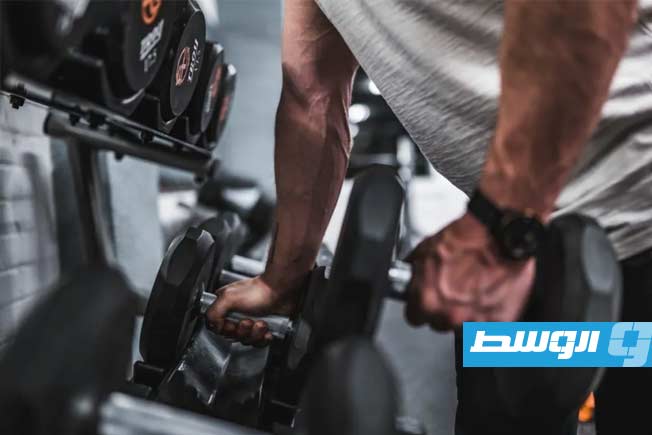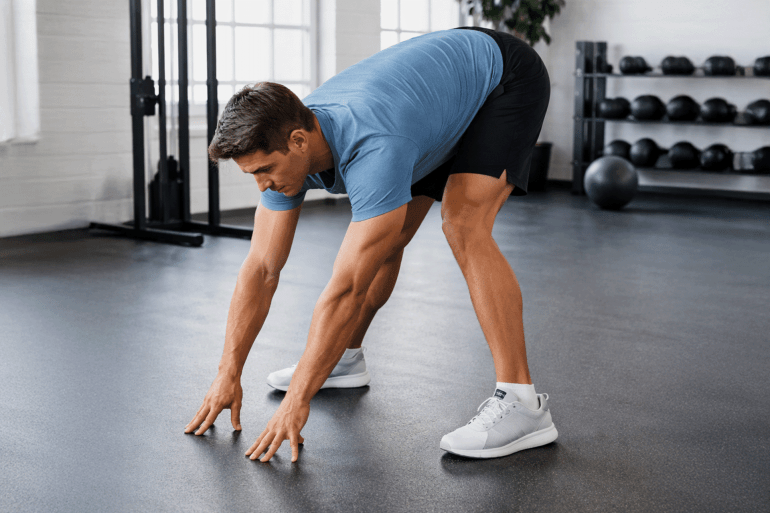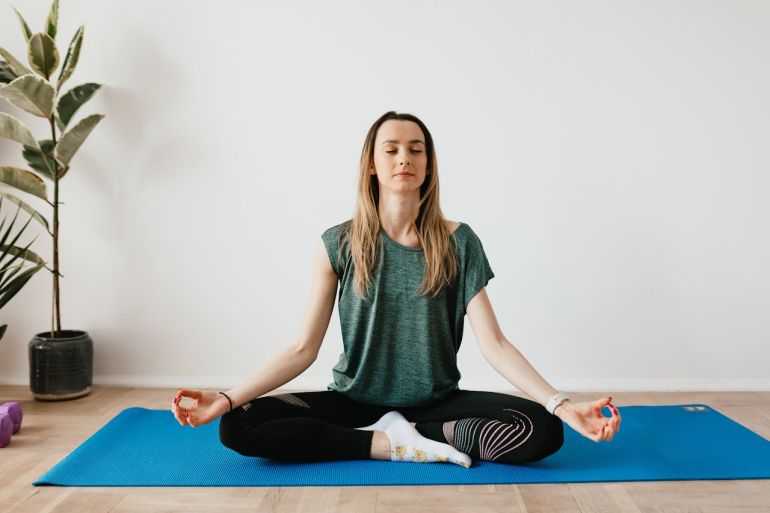
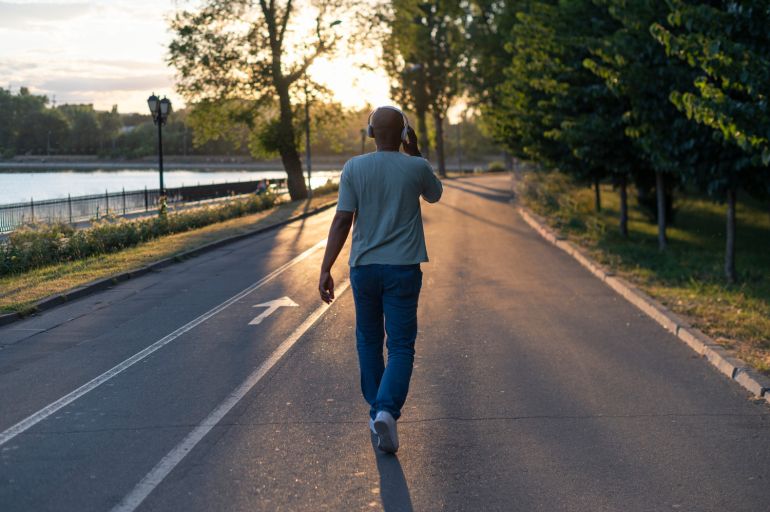
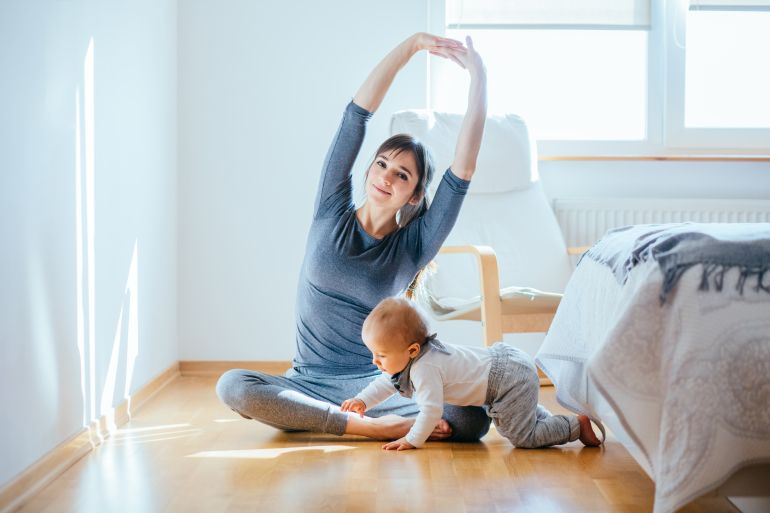
Light walking, easy yoga, or stretching exercises are activities referred to as “zero-point exercises.” These are exercises that keep the heart rate low during practice. The rate that fitness devices classify as “Zone 1” typically means 50% to 60% of the maximum heart rate, while Zone Zero is below that. Recently, these exercises have gained significant popularity due to the benefits they offer.
Who Practices Them?
Moderate and high-intensity exercises have long been the subject of studies to understand their benefits, while low-intensity exercises have not received the same attention. Performing moderate or high-intensity activities can be difficult for some, such as the elderly. This leads to discussions about the benefits of low-intensity exercises (less than 100 steps) and whether they indeed provide health benefits.
The truth is that sitting for long periods threatens our overall health, and light exercises do have an impact. They are also important even for those who engage in intense workouts, as athletes cannot perform high-intensity exercises every day either.
While we might think that exercising after a long day of sitting is enough, the reality is that our bodies need movement throughout the day for intense exercises to be effective. Zero-zone exercises are beneficial on rest days and on days when you want to recover your strength after intense training.
They also suit those facing work and family pressures who cannot find time to go to the gym. Instead of doing nothing, you can practice light exercises to gain greater benefits over time, and they also help establish the habit of exercising.
Health Benefits
These exercises improve blood circulation, help regulate blood sugar levels, support mental health, and reduce the risk of heart disease.
In a study published in 2014, a number of participants with an average age of 76 took part in a test to measure activity levels. Participants wore step-counting watches, and it was found that frequent low-intensity activity was associated with better performance in physical functions, improved life conditions, reduced symptoms of depression, and provided significant health benefits that helped participants be self-reliant in their daily lives.
In another study conducted on approximately 85,000 adults, results revealed that people who recorded the highest total physical activity were 26% less likely to develop cancer compared to those who recorded lower levels of activity.
The results also indicated that increasing the number of daily steps, regardless of walking speed, was associated with a reduced risk of cancer. Therefore, researchers recommended incorporating walking—at any speed—into the daily routine.
A 2021 study suggests that inactivity and reducing daily steps diminish the effect of high-intensity exercises. Other research indicates that low-intensity movement causes structural changes in the body that help improve endurance and prepare it for intense training.
Another important benefit is maintaining consistency during long workdays. When we are unable to perform strenuous exercises, it is better, instead of canceling the workout plan, to practice zero-point exercises. They do not require much effort, yet they give us energy, improve mental state, keep exercise in our daily schedule, and make it easier to return to moderate and low-intensity exercises.
These exercises suit everyone and are easy to stick to. They are also enjoyable, reduce stress, alleviate muscle pain, and aid in relaxation. They are not a complete fitness program and are not sufficient for building muscle strength and improving fitness, but they are still better than nothing. They also represent a foundation for building the habit, after which exercise intensity can be gradually increased.
Ideas to Integrate into the Daily Routine
Some habits will help you practice zero-zone exercises:
- Instead of lying on the couch after returning from a hard day’s work, walking for half an hour may have a greater impact on your feeling of physical comfort and relieving stress.
- Instead of watching
Yoga
Of course. “Yoga” is a multifaceted term that can refer to a physical practice, a philosophical system, a state of being, or a modern wellness trend. Here’s a breakdown of its key aspects:### 1. **Origins & Meaning**
* **Etymology:** The word “yoga” comes from the Sanskrit root “*yuj*,” meaning “to yoke,” “to unite,” or “to join.” This signifies the union of the individual self (*jiva*) with the universal consciousness (*Brahman*), or the integration of body, mind, and spirit.
* **Historical Text:** One of the most foundational texts is Patanjali’s **Yoga Sutras** (c. 400 CE), which outlines an eight-limbed path (*Ashtanga*) to spiritual enlightenment.### 2. **The Eight Limbs of Yoga (Ashtanga Yoga)**
The physical postures are just one part of this comprehensive system:
1. **Yama:** Ethical restraints (non-violence, truthfulness, etc.).
2. **Niyama:** Personal observances (cleanliness, contentment, etc.).
3. **Asana:** The physical postures (what is most commonly practiced in the West).
4. **Pranayama:** Breath control.
5. **Pratyahara:** Withdrawal of the senses.
6. **Dharana:** Concentration.
7. **Dhyana:** Meditation.
8. **Samadhi:** State of blissful union/enlightenment.### 3. **Modern Yoga Practice (Primarily Asana)**
Today, “yoga” often refers to styles focusing on physical postures, breathwork, and sometimes meditation. Popular styles include:
* **Hatha:** A general term for physical yoga; often gentle and foundational.
* **Vinyasa:** Dynamic, flow-based sequences linking breath with movement.
* **Ashtanga:** A rigorous, set sequence of postures.
* **Iyengar:** Precision-focused, using props for alignment.
* **Bikram/Hot Yoga:** A set series of 26 postures practiced in a heated room.
* **Yin:** Passive, floor-based poses held for several minutes to target connective tissues.
* **Restorative:** Deeply relaxing poses fully supported by props.### 4. **Key Components of a Typical Class**
* **Asanas (Postures):** From standing poses to seated twists, inversions, and balances.
* **Pranayama (Breathing):** Techniques like Ujjayi (“ocean breath”) to regulate energy.
* **Dhyana (Meditation):** Often included at the beginning or end for mindfulness.
* **Savasana:** Final relaxation, a crucial pose for integration.### 5. **Benefits (Supported by Modern Science)**
* **Physical:** Improves flexibility, strength, balance, and joint health.
* **Mental:** Reduces stress, anxiety, and depression; enhances focus and sleep quality.
* **Physiological:** Can lower blood pressure, improve heart health, and aid in pain management.### 6. **Important Nuances**
* **Not Just Exercise:** While often marketed as fitness, its traditional goal is spiritual liberation (*moksha*).
* **Non-Religious:** While rooted in Hindu, Jain, and Buddhist philosophy, modern practice is often secular and accessible to all, regardless of spiritual beliefs.
* **Adaptability:** It can be modified for all ages, body types, and abilities (e.g., chair yoga, prenatal yoga).In essence, **yoga is a holistic discipline** that can be approached as:
* A **spiritual path** to self-realization.
* A **mind-body practice** for mental and physical well-being.
* A **form of exercise** for fitness and flexibility.**Would you like to know more about a specific style, the philosophy, or how to get started?**
Deep breathing exercises
Of course. “Deep breathing exercises” are simple, powerful techniques to calm the nervous system, reduce stress, and improve focus. They are a cornerstone of practices like meditation, yoga, and mindfulness.Here’s a breakdown of what they are, why they work, and how to do a fundamental exercise.
### Why It Works (The Science in a Nutshell)
* **Fights the Stress Response:** When stressed or anxious, you tend to take shallow, rapid chest breaths (triggering the “fight-or-flight” sympathetic nervous system).
* **Activates Relaxation:** Deep, slow breathing from the diaphragm stimulates the vagus nerve, which activates the “rest-and-digest” (parasympathetic) nervous system. This slows your heart rate, lowers blood pressure, and promotes a state of calm.### Benefits
* Reduces stress and anxiety
* Lowers blood pressure and heart rate
* Improves focus and mental clarity
* Helps manage pain
* Improves sleep quality
* Increases energy levels by enhancing oxygen exchange### A Simple Starter Exercise: **Diaphragmatic Breathing (Belly Breathing)**
This is the most foundational technique. Aim for 5-10 minutes daily, or whenever you feel overwhelmed.
**Instructions:**
1. **Position:** Sit or lie down in a comfortable position. Place one hand on your chest and the other on your belly.
2. **Inhale Slowly:** Breathe in slowly and deeply through your nose for a count of **4**. Feel your belly expand under your hand. The hand on your chest should move very little.
3. **Hold:** Gently hold your breath for a count of **4** (optional, skip if uncomfortable).
4. **Exhale Completely:** Exhale slowly and fully through your mouth (pursing your lips as if whistling) for a count of **6**. Feel your belly fall as you empty your lungs.
5. **Repeat:** Continue this cycle for several minutes.**Visual Aid:** Imagine filling a balloon in your belly as you inhale, and slowly deflating it as you exhale.
—
### Other Popular Techniques
Once comfortable with belly breathing, you can explore:* **4-7-8 Breathing:** Inhale for 4, hold for 7, exhale for 8. Excellent for falling asleep.
* **Box Breathing (4×4):** Inhale for 4, hold for 4, exhale for 4, hold for 4. Used by athletes and military for focus.
* **Alternate Nostril Breathing (Nadi Shodhana):** A yogic practice that balances the left and right hemispheres of the brain.### Key Tips for Success
* **Consistency Over Duration:** 2-3 minutes daily is better than 20 minutes once a week.
* **Focus on the Exhale:** The exhale is key to triggering relaxation. Make it longer than your inhale.
* **Don’t Force It:** If deep breaths cause dizziness, shorten the count or breathe more gently.
* **Find a Cue:** Pair it with a daily activity (e.g., after brushing your teeth, during your morning coffee, before a meeting).**In essence, deep breathing is a portable, always-available tool to reset your mind and body.** It’s the fastest way to signal to your physiology that you are safe, moving you from a state of stress to a state of calm.
Would you like a guided step-by-step for one of the other techniques, or tips for incorporating this into a busy schedule?
Light walking
“Light walking” typically refers to a form of low-intensity, gentle walking that focuses on ease, relaxation, and minimal strain. It’s often recommended for:– **Beginners** starting a fitness routine
– **Recovery** after injury or intense exercise
– **Stress relief** and mental relaxation
– **Older adults** or those with joint concerns
– **Mindful movement** practices like walking meditationKey features include:
✅ Comfortable, moderate pace
✅ Shorter duration (e.g., 10–30 minutes)
✅ Focus on posture and breathing
✅ Often done in pleasant, calm environmentsWould you like tips on how to incorporate light walking into your routine, or are you curious about specific benefits?
Stretching exercises
Of course. “Stretching exercises” is a broad term for physical movements designed to improve flexibility, increase range of motion in joints, and prepare muscles for activity or aid in recovery.Here’s a comprehensive breakdown, from the basics to a sample routine.
### **Key Principles (Important First!)**
* **Warm Up First:** Never stretch cold muscles. Do 5-10 minutes of light cardio (jogging, jumping jacks) to increase blood flow.
* **No Bouncing:** Perform **static stretches** (hold a position) smoothly. Avoid ballistic (bouncing) stretches, which can cause injury.
* **Feel Tension, Not Pain:** You should feel a gentle pull, not sharp pain. Discomfort is okay; pain is not.
* **Hold and Breathe:** Hold each stretch for 15-30 seconds, breathing deeply and evenly. Repeat 2-3 times per muscle group.
* **Be Consistent:** Regular stretching (3-5 times per week) yields better results than occasional intense sessions.—
### **Types of Stretching**
1. **Static Stretching:** Holding a stretch at its end-range. *Best for cooling down.*
2. **Dynamic Stretching:** Moving parts of your body through a full range of motion in a controlled way (e.g., leg swings, arm circles). *Best for warming up before activity.*
3. **PNF (Proprioceptive Neuromuscular Facilitation):** Often involves a partner; combines contracting and relaxing muscles. *Very effective for increasing flexibility.*
4. **Active Stretching:** Using the strength of your agonist muscles to hold a stretch (e.g., lifting and holding a leg straight out). *Great for improving active flexibility.*—
### **Sample Full-Body Static Stretching Routine (Do after a workout or on rest days)**
**Neck & Shoulders:**
* **Neck Tilt:** Gently tilt your head towards one shoulder until you feel a stretch. Hold. Repeat on the other side.
* **Cross-Body Shoulder Stretch:** Bring one arm across your chest, gently pulling it with the other arm. Hold. Repeat.**Arms & Chest:**
* **Triceps Stretch:** Reach one arm overhead, bend the elbow, and gently pull the elbow with your other hand.
* **Chest Stretch in Doorway:** Place forearms on either side of a doorway and step forward until you feel a stretch across your chest.**Back & Core:**
* **Cat-Cow Stretch:** On hands and knees, alternate between arching your back upward (Cat) and dipping it downward (Cow).
* **Seated Forward Fold:** Sit with legs straight, hinge at hips to reach toward your toes.
* **Knee-to-Chest:** Lie on your back, pull one knee at a time towards your chest.**Hips & Glutes:**
* **Figure-Four Stretch (Pigeon Pose):** Sitting or lying down, cross one ankle over the opposite knee and gently press down on the bent knee.
* **Hip Flexor Stretch (Lunge):** In a lunge position, tuck your pelvis and gently push hips forward.**Legs:**
* **Quadriceps Stretch:** Standing, pull one heel towards your glute, keeping knees close together.
* **Hamstring Stretch:** Sit or stand, extend one leg, and hinge at the hip to reach toward your toes.
* **Calf Stretch:** Place hands on a wall, step one foot back, press the heel into the ground, and keep the leg straight.—
### **Benefits of Regular Stretching**
* **Improves Flexibility & Range of Motion:** Essential for daily activities and athletic performance.
* **Reduces Injury Risk:** Prepares muscles for activity and improves joint health.
* **Decreases Muscle Soreness & Tension:** Aids in recovery and relieves stiffness.
* **Improves Posture:** Counteracts tightness from sitting (e.g., in hips, chest).
* **Promotes Relaxation:** Can reduce stress and calm the mind.### **When to Stretch**
* **Dynamic Stretching:** **Before** exercise (as part of your warm-up).
* **Static Stretching:** **After** exercise (as part of your cool-down), or as a separate session on rest days.**Important Note:** If you have any injuries or chronic conditions, consult a physical therapist or doctor for a personalized stretching plan.
Would you like a sample dynamic warm-up routine, or more details on stretches for a specific activity (like running, desk work, or weightlifting)?
Walking
“Walking” is a simple yet profound human activity. It can be:– **Physical exercise** — improves cardiovascular health, strengthens muscles, and aids in weight management.
– **Mental refreshment** — reduces stress, boosts mood, and can enhance creativity.
– **A mode of transportation** — an eco-friendly way to travel short distances.
– **A social activity** — walking with friends or family can strengthen relationships.
– **A form of mindfulness** — walking meditations help in grounding and being present.Whether it’s a leisurely stroll in the park, a brisk walk for fitness, or part of a daily commute, walking is accessible to most people and offers numerous benefits for both body and mind.
Would you like tips on starting a walking routine, or are you interested in a specific aspect of walking?