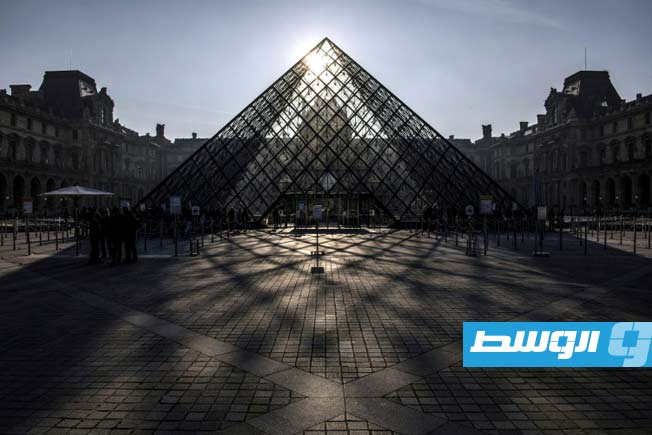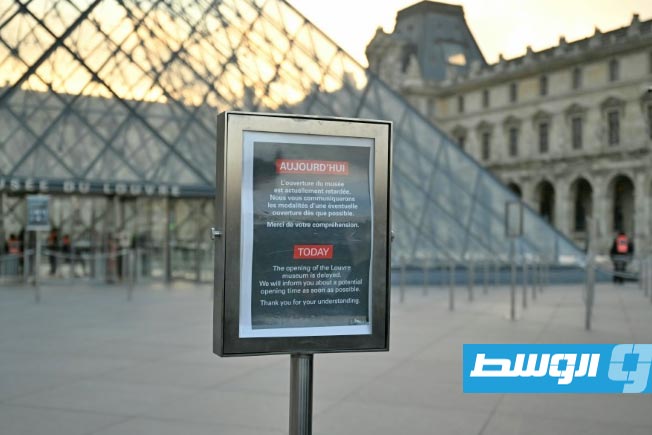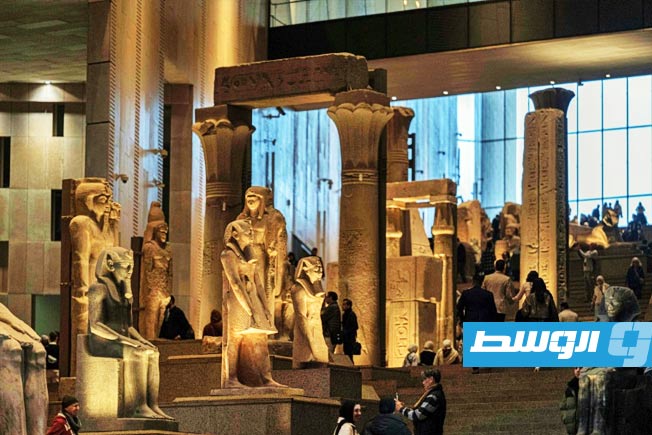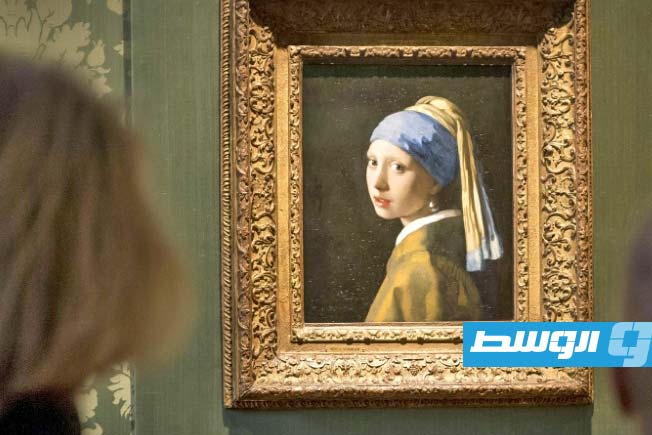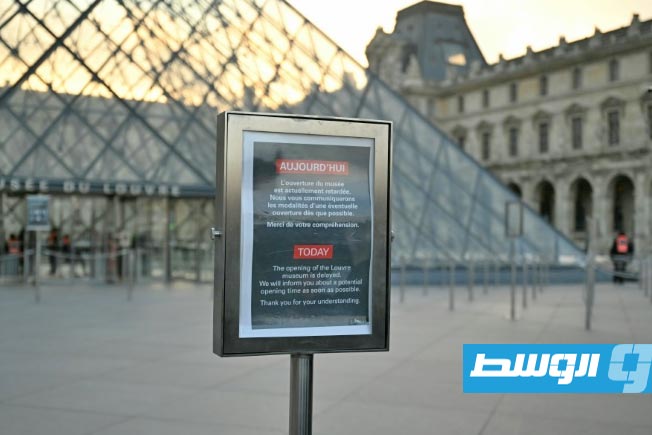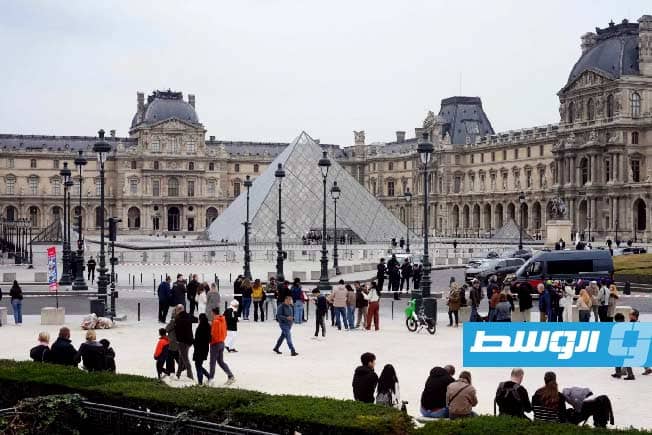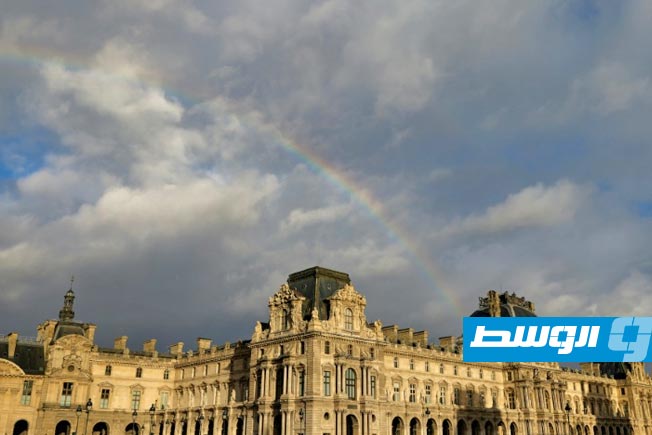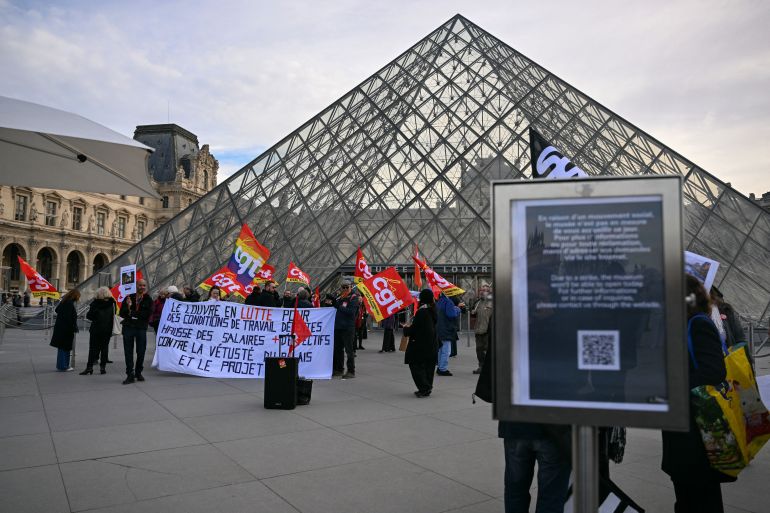
Workers voted “unanimously” to extend the strike at the world’s most visited museum, while the museum stated it had partially reopened, with only some sections accessible.
The unionized workers are protesting persistent staff shortages, the deterioration of the building, recent management decisions, and increasing pressures following a theft the museum experienced last October.
The decision was made during a general assembly meeting this Wednesday morning, after workers unanimously adopted the strike decision at the beginning of this week.
Partial Reopening
Visitors holding tickets lined up outside the museum in the morning, while the museum announced a partial reopening today despite the ongoing strike. A museum spokesperson said, “Not all sections are available, but the museum is open and currently receiving visitors.”
The unions stated that anger is rising due to staff shortages, deteriorating infrastructure, and the planned increase in ticket prices for non-Europeans.
Tensions have escalated due to the aftermath of the theft of jewelry from the museum during daylight hours on October 19 of last year, which revealed major security gaps at the museum.
French CGT union
—
### **1. Historical Background**
– **Founded:** 1895, making it the oldest major union in France.
– **Original purpose:** Unite workers across different trades and industries to advocate for labor rights, better wages, and social justice.
– **Historical ties:** Traditionally aligned with the French Communist Party (PCF), especially after World War II, though it maintains organizational independence.
—
### **2. Ideology & Positioning**
– **Political stance:** Left-wing, with a strong focus on social justice, workers’ rights, anti-capitalism, and opposition to neoliberal policies.
– **Membership base:** Strong in the public sector (transport, energy, education, healthcare) and some industrial sectors.
– **Known for:** Militant activism, organizing strikes, and mass demonstrations.
—
### **3. Key Roles & Activities**
– **Collective bargaining:** Negotiates labor agreements at national and sectoral levels.
– **Strikes & protests:** Frequently mobilizes members for strikes, especially against pension reforms, labor law changes, and austerity measures.
– **Social movements:** Often participates in broader social justice campaigns (e.g., climate justice, anti-racism).
—
### **4. Influence & Public Perception**
– **Membership:** Around 600,000 members (exact figures vary; France has low union density but high union influence).
– **Impact:** Despite declining membership, the CGT remains powerful due to its ability to mobilize workers in key sectors (e.g., railways, energy).
– **Criticism:** Sometimes seen as too rigid or politically dogmatic by critics; faces competition from other unions like **CFDT** (more reformist) and **FO**.
—
### **5. Notable Recent Actions**
– **Pension reform protests (2023):** The CGT was a leading force in strikes and demonstrations against raising the retirement age.
– **Labor law reforms:** Opposed the *El Khomri law* (2016) and other pro-business labor reforms.
– **Cost-of-living protests:** Active in movements against inflation and for wage increases.
—
### **6. Structure**
– Organized by industry (e.g., CGT-Rail, CGT-Energy) and region.
– Holds a congress every 3–4 years to elect leadership and set policy.
—
### **7. International Affiliation**
– Part of the **International Trade Union Confederation (ITUC)** and the **European Trade Union Confederation (ETUC)**.
—
### **Why the CGT Matters in France**
– It plays a central role in France’s **social dialogue** model, where unions, employers, and the state negotiate labor policies.
– Its ability to mobilize can disrupt the economy (transport, energy), giving it significant leverage in political debates.
– Represents a tradition of **class struggle unionism**, contrasting with more moderate or collaborative unions.
If you’re interested, I can also explain how the CGT compares to other French unions or its role in a specific historical event.
Louvre Museum
### Key Facts:
– **Location:** Right Bank of the Seine, Paris (1st arrondissement).
– **Collection:** Over 600,000 works, with around 35,000 on display.
– **Famous works:** *Mona Lisa* (Leonardo da Vinci), *Venus de Milo*, *Winged Victory of Samothrace*, *Liberty Leading the People* (Delacroix).
– **Architecture:** Iconic glass pyramid entrance (designed by I. M. Pei, 1989).
– **History:** Opened to the public in 1793 after the French Revolution.
– **Visitors:** Pre-pandemic, it attracted around 10 million visitors annually.
### Tips for Visitors:
– **Book tickets online** to skip long queues.
– **Plan your route**—the museum is enormous; focus on specific sections if short on time.
– **Free entry** on the first Saturday of the month (evening) and for visitors under 18/EU residents under 26.
Would you like details on specific artworks, history, or visiting advice?