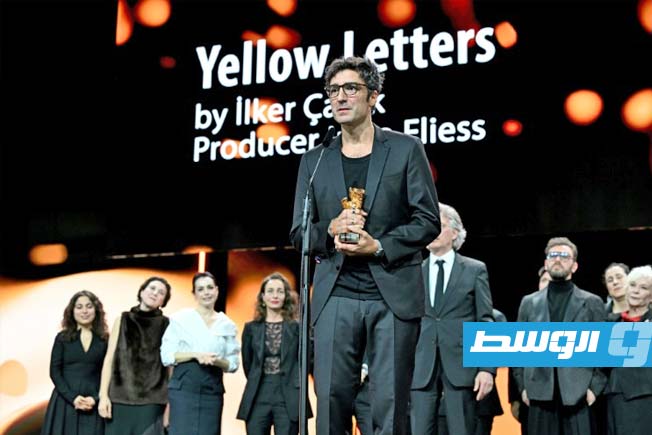
The “Golden Bear” awards, the highest prize given to the best film at the Berlin International Film Festival.
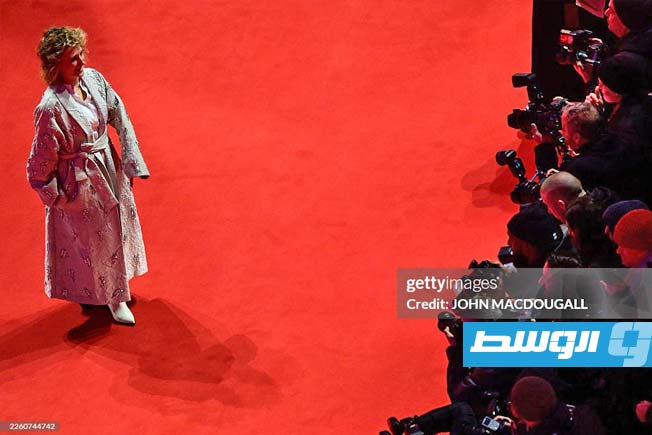
The stages of the 76th Berlin International Film Festival (Berlinale 2026) turned into an intellectual and political battleground that did not calm down until the closing night on Saturday.
As the awards ceremony began, presided over by a German director, the administration faced widespread pressure due to its stance on the war in Gaza. This led a prominent Palestinian actress to take center stage, affirming in her press conferences and dialogue sessions that an artist has a moral responsibility to be political, rejecting the notion of “art for art’s sake in times of existential crises.”
The festival director considered the prevailing state of division and anger as proof that the Berlinale still fulfills its function as a mirror reflecting issues of democracy and human rights.
Independent and Side Jury Awards
Amid this polarization, the outlines of the winners began to emerge with the announcement of the independent and side jury awards. The documentary “If Pigeons Turned to Gold” won the award for best documentary.
–
–
–
Meanwhile, Marie Rose Osta was awarded the Golden Bear for Best Short Film for her film “Someday a Child,” and Fanny Texier won the Silver Bear for “A Woman’s Place is Everywhere.”
In the official competition, notable films such as “Rosebush Pruning,” “Yellow Letters,” and “Queen at Sea” awaited to snatch the gold from the main jury.
Other works also won important awards, including the film “Prosecution,” which won the Audience Award in the Panorama section and the Heiner Carow Award, and the film “Flies,” which won the Ecumenical Jury Prize and the Berliner Morgenpost Readers’ Award.
As the results are announced one after another, the question remains of how the jury will balance pure artistic value with the political messages that imposed themselves as an element that cannot be ignored in an edition that will remain etched in memory as the most clashing with reality.
Generation 14plus Section Awards
Crystal Bear for Best Film: “Sad Girlz.”
Special Mention: “A Family.”
Crystal Bear for Best Short Film: “Memories of a Window.”
Grand Prix of the International Jury
“Sad Girlz.”
Special Mention (International Jury): “Matapanki.”
Special Award for Best Short Film (International Jury): “The Thread.”
Generation Kplus Section Awards
Crystal Bear for Best Film: “Gugu’s World.”
Special Mention: “Not a Hero.”
Crystal Bear for Best Short Film: “Whale 52.”
International Jury Award
“Gugu’s World.”
Special Award for Best Short Film (International Jury): “Spi.”
Special Mention (International Jury): “Under the Wave off Little Dragon.”
Teddy Awards for “Queer Cinema”
Best Feature Film: “Ivan & Hadoum.”
Best Documentary Film: “Barbara Forever.”
Best Short Film: “Taxi Moto.”
Jury Award: “Trial of Hein.”
Special Award: Céline Sciamma.
International Federation of Film Critics (FIPRESCI) Awards
Official Competition: “Soumsoum, the Night of the Stars.”
Panorama Section: “Narciso.”
Forum Section: “AnyMart.”
Berlin International Film Festival
The Berlin International Film Festival, commonly known as the Berlinale, is one of the world’s leading film festivals. It was founded in West Berlin in 1951, initially with Allied support, as a “showcase of the free world” during the Cold War era.
Berlinale
The Berlinale, or Berlin International Film Festival, is one of the world’s leading public film festivals, founded in 1951 in West Berlin. It was established in the post-war era as a “showcase of the free world” and is renowned for its prestigious competition section and the international jury that awards the Golden and Silver Bears.
Golden Bear
The Golden Bear is a historic independent cinema located in Brighton, England, which first opened in 1910. It is renowned for its distinctive Art Deco interior and has operated continuously for over a century, establishing itself as a cultural landmark for film enthusiasts.
Gaza
Gaza is a historic coastal city in the Palestinian territories, with a history dating back over 3,000 years as a strategic hub for various empires, including the Egyptians, Philistines, Romans, and Ottomans. Today, it is a densely populated urban center and the principal city of the Gaza Strip, a territory that has been a focal point of the Israeli-Palestinian conflict.
Berlin
Berlin is the capital of Germany, historically significant as the divided epicenter of the Cold War following World War II, symbolized by the Berlin Wall. It has since been reunified and is now a major European hub known for its museums, vibrant arts scene, and landmarks like the Brandenburg Gate.
Heiner Carow Award
The Heiner Carow Award is a German film prize named after director Heiner Carow, established in 1997 and presented annually at the Berlin International Film Festival. It honors outstanding German documentary films that demonstrate a strong social or political commitment, continuing Carow’s own cinematic legacy of addressing critical societal issues.
Berliner Morgenpost Readers’ Award
The Berliner Morgenpost Readers’ Award is an annual prize presented by the Berlin newspaper of the same name, where the publication’s readers vote for their favorite local businesses and services across various categories. It was established to highlight and celebrate popular establishments within the Berlin community based directly on public opinion.
Crystal Bear
The Crystal Bear is a top award given by the Generation section of the Berlin International Film Festival (Berlinale), chosen by a youth jury. It was introduced in 1995 and is awarded to the best feature film and best short film in the Generation Kplus and Generation 14plus competitions.
Teddy Awards
The Teddy Awards are a series of prizes presented annually at the Berlin International Film Festival, honoring films with LGBTQ+ themes. Established in 1987, they were created to increase visibility and recognition for queer cinema within the mainstream film industry.
International Federation of Film Critics
The International Federation of Film Critics (FIPRESCI) is a global association of professional film critics and journalists founded in 1930 in Paris. It is best known for presenting its own awards at major international film festivals, such as Cannes and Venice, to promote artistic filmmaking and film criticism.
FIPRESCI
FIPRESCI, or the International Federation of Film Critics, is an organization founded in 1930 in Paris to promote and develop film culture and safeguard the professional interests of film critics. It is best known for its prestigious awards, presented by juries of critics at major international film festivals like Cannes, Berlin, and Venice.