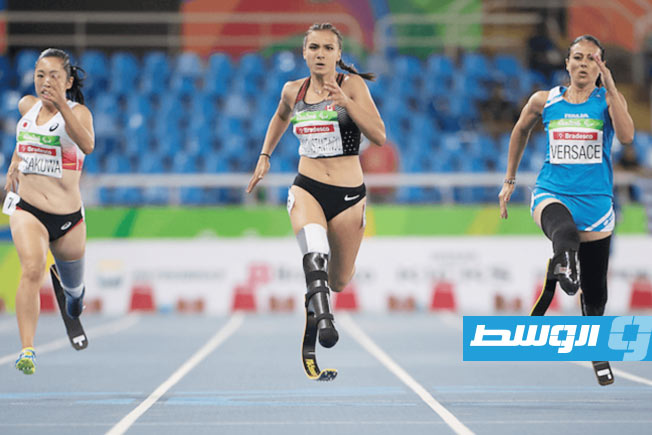
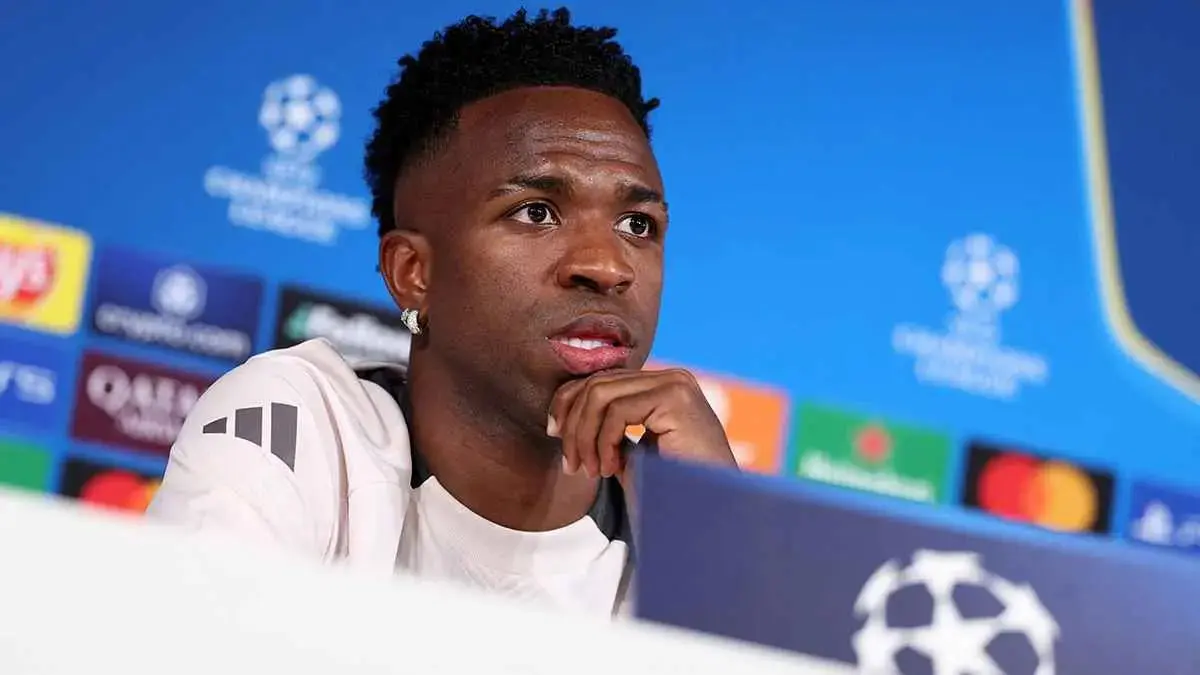
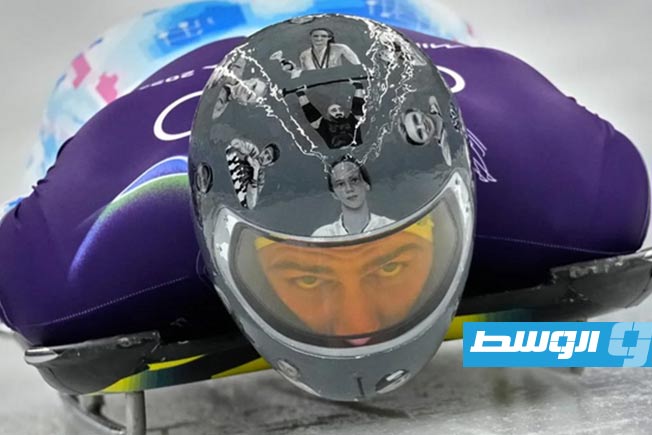
The International Paralympic Committee said on Friday that it understands the dissatisfaction of several countries after allowing Russian citizens to officially participate in the 2026 Games, but emphasized that this decision was the result of a “democratic” vote by the organization’s members.
A committee representative added: “We understand the dissatisfaction of many countries with this decision, but it was made through a highly democratic process. We put this decision to a vote of all our members, who supported the return of Russia and Belarus,” following the announcement by Czechia and Ukraine that they would boycott the opening ceremony.
Return of Russian and Belarusian flags
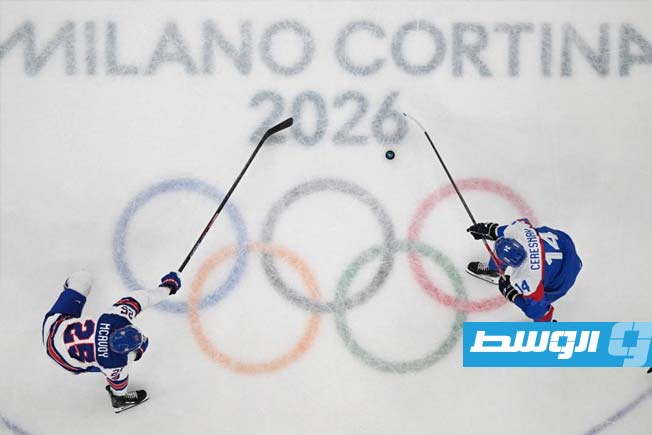
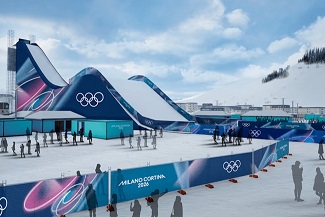
Russian and Belarusian flags and symbols were banned at the current Winter Olympic Games in northern Italy due to the war in Ukraine, where a small number of neutral athletes from both countries are participating on the condition they prove they do not support the conflict.
However, the Paralympic competitions, to be held from March 6 to 15, will allow six Russian and four Belarusian athletes to participate under their national flags.
– International Paralympic Committee lifts sanctions on Russian and Belarusian athletes
The International Paralympic Committee had remained silent on this issue since the vote held last September, which paved the way for the return of Russian and Belarusian flags.
International Paralympic Committee
The International Paralympic Committee (IPC) is the global governing body for the Paralympic Movement, founded in 1989 to organize the Paralympic Games and support para-athletes worldwide. It evolved from earlier efforts that began with the 1948 Stoke Mandeville Games, which were organized for veterans with spinal cord injuries and later grew into an international competition.
Russia
Russia is the world’s largest country by area, spanning Eastern Europe and Northern Asia. Its history is marked by the rule of the Tsars, the rise and fall of the Soviet Union in the 20th century, and its establishment as the modern Russian Federation in 1991. It is renowned for its vast landscapes, rich literary and artistic traditions, and globally influential cities like Moscow and Saint Petersburg.
2026 Games
The 2026 FIFA World Cup will be the first edition of the tournament to feature 48 teams and will be jointly hosted by 16 cities across three countries: the United States, Canada, and Mexico. This makes it the first World Cup hosted by three nations and marks Mexico’s third time as a host, following 1970 and 1986.
Czechia
Czechia, also known as the Czech Republic, is a Central European country with a rich history shaped by the medieval Kingdom of Bohemia, the Habsburg Monarchy, and its peaceful 1993 split from Slovakia. Its cultural landscape is famously marked by historic sites like the Prague Castle complex, a UNESCO World Heritage site and one of the largest ancient castles in the world, reflecting over a thousand years of architectural and political development.
Ukraine
Ukraine is a country in Eastern Europe with a long history of statehood dating back to the medieval Kyivan Rus’. It has faced periods of foreign rule and conflict, most recently including Russia’s full-scale invasion in 2022, and is known for its distinct cultural identity, Orthodox Christian heritage, and agricultural tradition.
Belarus
Belarus is a landlocked Eastern European nation with a history deeply shaped by its position between larger powers, having been part of the Grand Duchy of Lithuania, the Polish-Lithuanian Commonwealth, and the Soviet Union before gaining independence in 1991. Culturally, it is known for its preserved castles, vast forests like the Belavezhskaya Pushcha, and strong traditions in folk arts and crafts. The country’s capital, Minsk, was extensively rebuilt after World War II and features notable examples of Soviet-era architecture.
Winter Olympic Games
The Winter Olympic Games are a major international multi-sport event held every four years for sports practiced on snow and ice. First held in 1924 in Chamonix, France, the Games have evolved to include a wide variety of disciplines and have been hosted across three continents.
northern Italy
Northern Italy is a historically rich region that was the heart of the Roman Empire and later the cradle of the Renaissance, with cities like Florence, Venice, and Milan serving as major centers of art, commerce, and culture. Its landscape features the Alps, the Po Valley, and the Italian Riviera, contributing to its diverse economic and culinary traditions.
Ukraine
Ukraine is a country in Eastern Europe with a rich history dating back to the medieval state of Kyivan Rus. It has experienced periods of independence as well as rule by various empires, before re-establishing its sovereignty with the dissolution of the Soviet Union in 1991. The country is known for its diverse cultural heritage, Orthodox Christian cathedrals, and the Black Sea coastline.