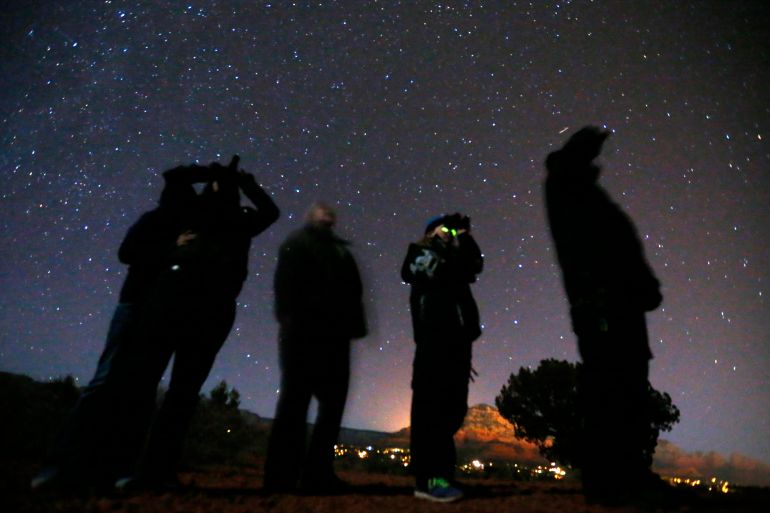
Benghazi, February 12, 2026 – The Libyan Remote Sensing Center reported that the Earth will witness the first solar eclipse phenomenon of this year next Tuesday, scientifically known as an “annular eclipse” or “ring of fire.”
The center explained that monitoring such phenomena falls within its tasks of documenting astronomical events and spreading scientific awareness among citizens.
This phenomenon occurs when the moon aligns between the Earth and the Sun at the point known as “lunar apogee,” which is the farthest point of the moon in its orbit around the Earth.
Due to this distance, the moon’s disk appears smaller than the sun’s disk, preventing it from completely blocking the sun’s light. This causes the sun’s edges to appear as a bright ring surrounding the moon’s disk, scientifically known as the “ring of fire.”
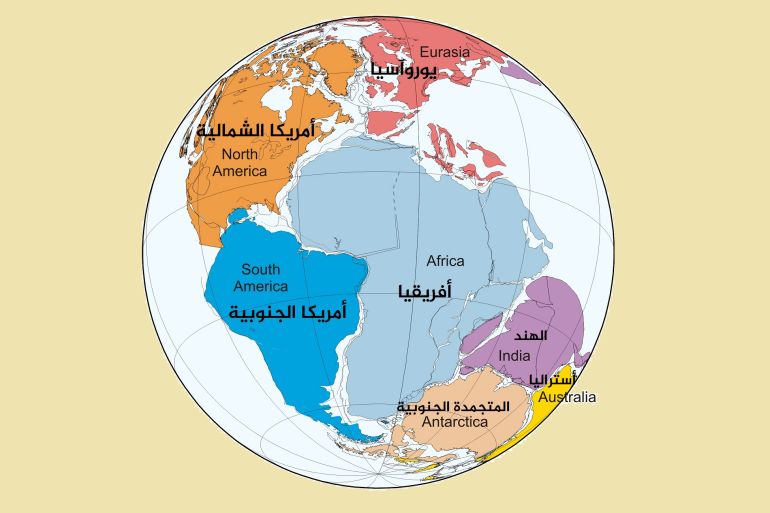
The center indicated that the path of the annular eclipse will be limited to the Southern Hemisphere, where it will appear completely in specific areas of southern Chile and Argentina, and parts of Antarctica. It will appear as a partial eclipse in the rest of South America and southern Africa.
The center noted that Libya and Arab countries lie outside the path of the moon’s shadow cone during this event, making the phenomenon invisible there.
Benghazi
Benghazi is a major city in eastern Libya, historically significant as a center of trade and culture since its founding as the Greek colony of Euesperides. It played a pivotal role in the 2011 Libyan Civil War as a key base for the uprising against Muammar Gaddafi.
Libyan Remote Sensing Center
The Libyan Remote Sensing Center is a national institution established in the late 1980s, focused on utilizing satellite imagery and geospatial data for environmental monitoring, urban planning, and resource management. It plays a key role in supporting scientific research and governmental decision-making across various sectors in Libya.
Earth
Earth is the third planet from the Sun and the only known astronomical object to harbor life. Its geological history spans over 4.5 billion years, with the evolution of life beginning at least 3.7 billion years ago, leading to the diverse ecosystems and human civilizations present today.
Moon
The Moon is Earth’s only natural satellite, believed to have formed approximately 4.5 billion years ago from debris after a massive collision between Earth and a Mars-sized body. Culturally, it has been a central object in mythology, timekeeping, and human exploration, most notably with the first crewed landing by Apollo 11 in 1969.
Sun
The Sun is the star at the center of our solar system, a massive sphere of hot plasma that formed approximately 4.6 billion years ago from the gravitational collapse of a region within a large molecular cloud. It provides the essential light and heat that sustains life on Earth and drives our planet’s climate and weather systems.
Southern Hemisphere
The Southern Hemisphere refers to the half of Earth that lies south of the Equator, containing continents like South America, Australia, and Antarctica, as well as vast oceans. Historically, its exploration and mapping accelerated during the Age of Discovery, with European voyages charting its lands and navigational routes.
Chile
Chile is a long, narrow country stretching along South America’s western edge, known for its diverse landscapes ranging from the Atacama Desert to Patagonian glaciers. Its history is marked by pre-Columbian cultures like the Mapuche, Spanish colonization beginning in the 16th century, and independence achieved in 1818. Modern Chile is recognized for its stable democracy and significant cultural contributions in literature and the arts.
Argentina
Argentina is a South American nation with a rich cultural heritage shaped by indigenous traditions, Spanish colonization, and later waves of European immigration. Its history includes the May Revolution of 1810 leading to independence, followed by periods of economic prosperity, political instability, and the development of a distinct national identity famed for tango, gaucho culture, and literature.
Antarctica
Antarctica is Earth’s southernmost continent, characterized by its extreme cold, vast ice sheets, and unique ecosystems. Historically, it has no indigenous human population, but its exploration began in the early 20th century following expeditions like those of Roald Amundsen, who first reached the South Pole in 1911. Today, it is governed internationally by the Antarctic Treaty System, which dedicates the continent to peace and scientific research.
South America
South America is a continent known for its diverse landscapes, ranging from the Amazon rainforest to the Andes mountains. Its history is marked by ancient civilizations like the Inca, followed by European colonization primarily by Spain and Portugal, which led to a complex cultural heritage blending indigenous, European, and African influences.
Africa
Africa is the world’s second-largest continent and the cradle of humankind, with fossil evidence tracing the origins of our species back millions of years. It is home to countless diverse cultures and historic civilizations, such as ancient Egypt, the Mali Empire, and Great Zimbabwe, which have all profoundly shaped human history.
Libya
Libya is a North African country with a rich history rooted in ancient civilizations like the Phoenicians and Romans, followed by centuries of Arab and Ottoman influence. In the modern era, it was an Italian colony before gaining independence in 1951, later becoming known for Muammar Gaddafi’s lengthy rule from 1969 until the 2011 revolution. The country is home to UNESCO World Heritage sites, such as the ruins of Leptis Magna, which testify to its significant historical legacy.