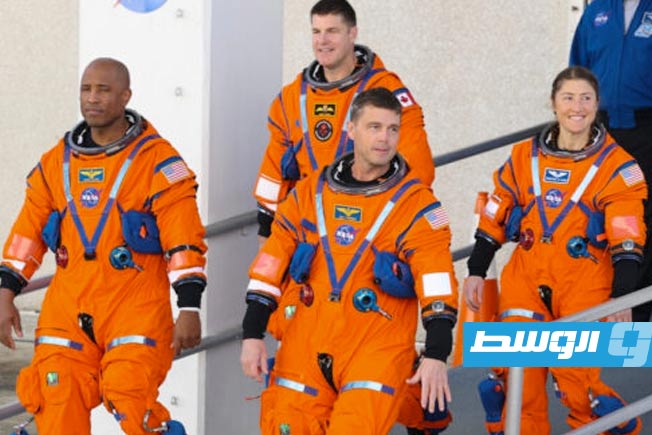
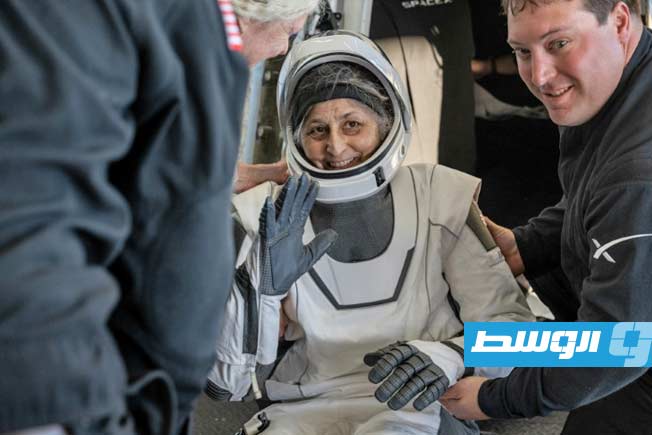
The Artemis 2 crew (from left to right): Pilot Victor Glover, Mission Specialist Jeremy Hansen, Commander Reid Wiseman, and Mission Specialist Christina Koch.
The US space agency NASA began a new test countdown on Tuesday for its first crewed mission to the Moon in decades, after completing essential repairs to address dangerous fuel leaks that caused the flight to be postponed to next March.
The first test attempt was halted two weeks ago due to liquid hydrogen leaks, the same problem that hindered the first uncrewed Artemis mission three years ago.
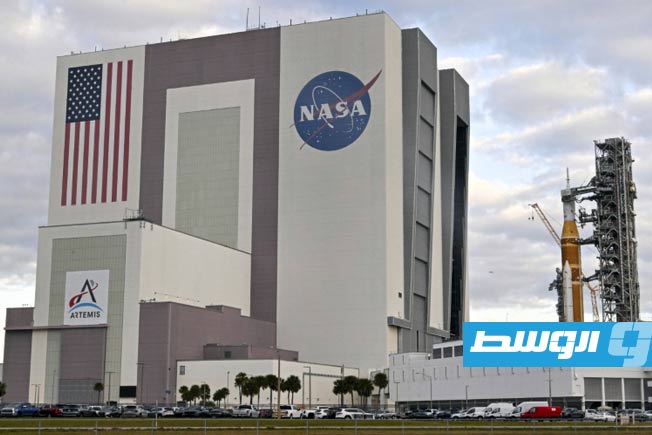
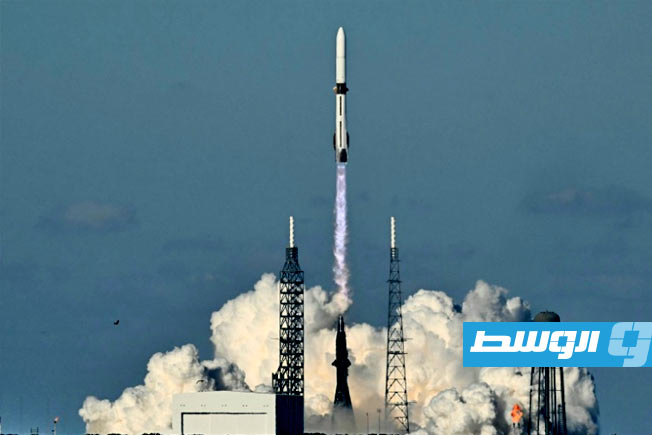
Launch teams at the Kennedy Space Center replaced a pair of seals and a clogged filter on the launch platform where the giant Moon rocket stands, before restarting the countdown clocks.
This two-day test is scheduled to culminate on Thursday with an attempt to fully fill the rocket’s fuel tanks, while the four astronauts of the Artemis 2 mission—Reid Wiseman, Victor Glover, Christina Koch, and Jeremy Hansen—observe this critical rehearsal remotely.
The Mysterious Far Side of the Moon
The mission, which will last approximately ten days, aims to send the astronauts behind the Moon, specifically around its mysterious far side, before returning directly to Earth to test the capsule’s life support and other vital systems.
NASA confirms that a successful test free of leaks is a prerequisite before setting a final launch date, with forecasts indicating March 6th as the earliest possible date for the Space Launch System (SLS) rocket liftoff.
–
–
Although officials considered moving the date forward by three days, they decided to give the teams additional time to analyze the results of the fueling test.
NASA
NASA, or the National Aeronautics and Space Administration, is the United States government agency responsible for the nation’s civilian space program and aerospace research. It was established in 1958 in response to the Soviet Union’s launch of Sputnik, marking the beginning of the U.S.-Soviet space race. NASA is renowned for landmark achievements such as the Apollo moon landings and the operation of the Space Shuttle and International Space Station.
Moon
The Moon is Earth’s only natural satellite, formed approximately 4.5 billion years ago from debris after a giant impact between Earth and a Mars-sized body. It has been a central object in human mythology, timekeeping, and exploration, most notably with the first crewed landing by Apollo 11 in 1969.
Artemis 2
Artemis 2 is the first crewed mission of NASA’s Artemis program, scheduled to launch no earlier than September 2025. It will carry four astronauts on a approximately 10-day journey to orbit the Moon, testing systems for future lunar landings and serving as a critical step toward establishing a sustainable human presence on the lunar surface.
Victor Glover
Victor Glover is an American NASA astronaut and U.S. Navy test pilot who made history as the pilot of the SpaceX Crew-1 mission, becoming the first Black astronaut to embark on a long-duration stay aboard the International Space Station in 2020. His career represents a significant milestone in the diversification of human spaceflight.
Jeremy Hansen
Jeremy Hansen is a Canadian astronaut and member of the Canadian Space Agency, selected in 2009. He is scheduled to become the first Canadian to orbit the Moon as a crew member on NASA’s Artemis II mission.
Reid Wiseman
Reid Wiseman is a NASA astronaut who served as commander of the SpaceX Crew-8 mission to the International Space Station, launching in March 2024. He was previously a flight engineer on Expedition 41 to the ISS in 2014 and served as NASA’s Chief of the Astronaut Office from 2020 until 2023.
Christina Koch
Christina Koch is not a place or cultural site, but a NASA astronaut and engineer. She set a record for the longest single spaceflight by a woman, spending 328 days aboard the International Space Station from 2019 to 2020. During this mission, she also participated in the first all-female spacewalk.
Kennedy Space Center
The Kennedy Space Center, located on Florida’s Merritt Island, is NASA’s primary launch center for human spaceflight. Established in 1962 as the Launch Operations Center, it was renamed in 1963 to honor President John F. Kennedy and served as the launch site for the historic Apollo missions to the Moon. Today, it remains a working spaceport and a major visitor complex for public education.
Earth
Earth is the third planet from the Sun and the only known astronomical object to harbor life. Its geological history spans over 4.5 billion years, with the development of a biosphere that has significantly altered its atmosphere and surface conditions. Human cultures and civilizations have emerged and evolved across its diverse continents and ecosystems.
Space Launch System
The Space Launch System (SLS) is NASA’s super heavy-lift launch vehicle, developed to enable human exploration beyond Earth orbit, including planned missions to the Moon and Mars. Its design, authorized by Congress in 2010, leverages legacy technology from the Space Shuttle program, such as its core stage engines and solid rocket boosters. The SLS achieved its first successful launch with the uncrewed Artemis I mission in November 2022.
SLS
The SLS (Space Launch System) is NASA’s deep space exploration rocket designed for missions beyond Earth orbit, including the Artemis program aimed at returning humans to the Moon. Its development, leveraging technology from the Space Shuttle and Constellation programs, began in 2011, with its first successful uncrewed test flight, Artemis I, launching in November 2022.