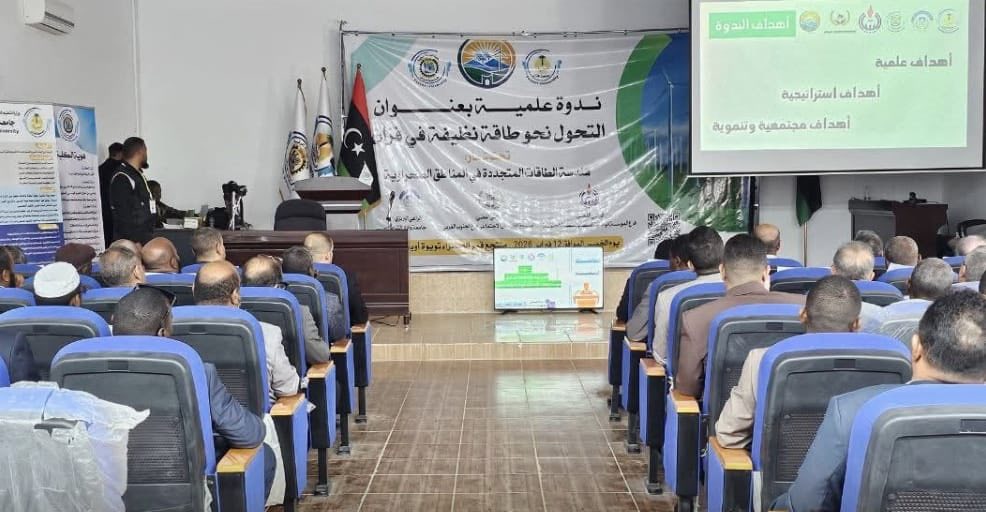
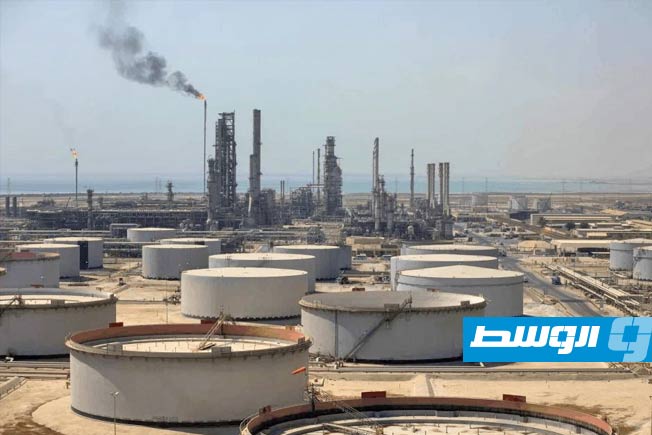
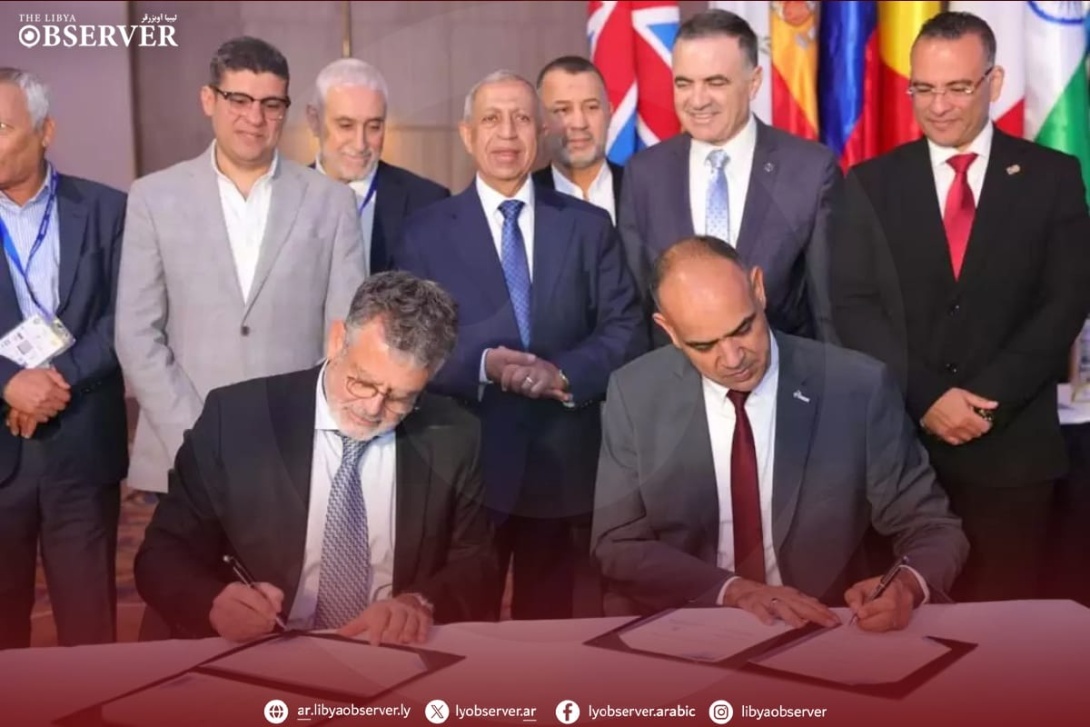
Fezzan, February 16, 2026 – Participants in the scientific symposium “Transition to Clean Energy in Fezzan,” organized by Fezzan University, emphasized the importance of investing in the region’s natural resources to achieve sustainable development. They also stressed the need to enhance partnerships between the oil sector and Libyan academic institutions to develop innovative solutions in the field of clean energy.
They added that organizing this symposium aligns with supporting the national shift towards clean energy and promoting scientific research in renewable energy fields.
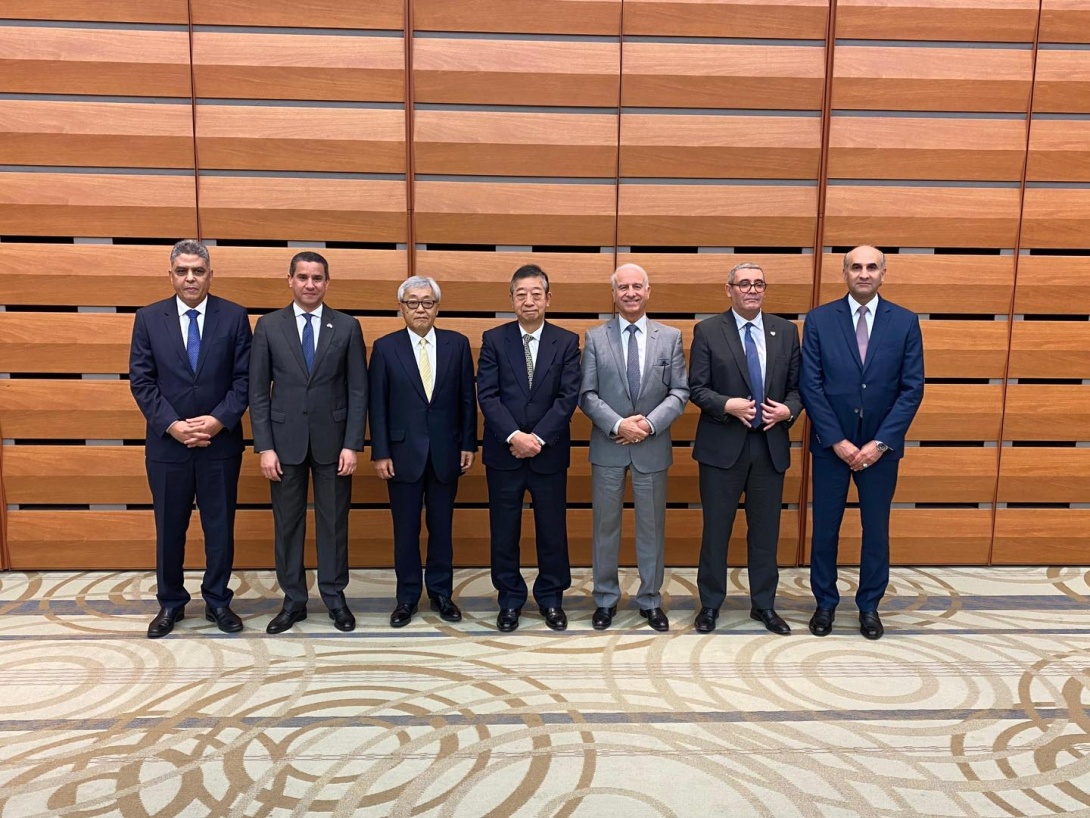
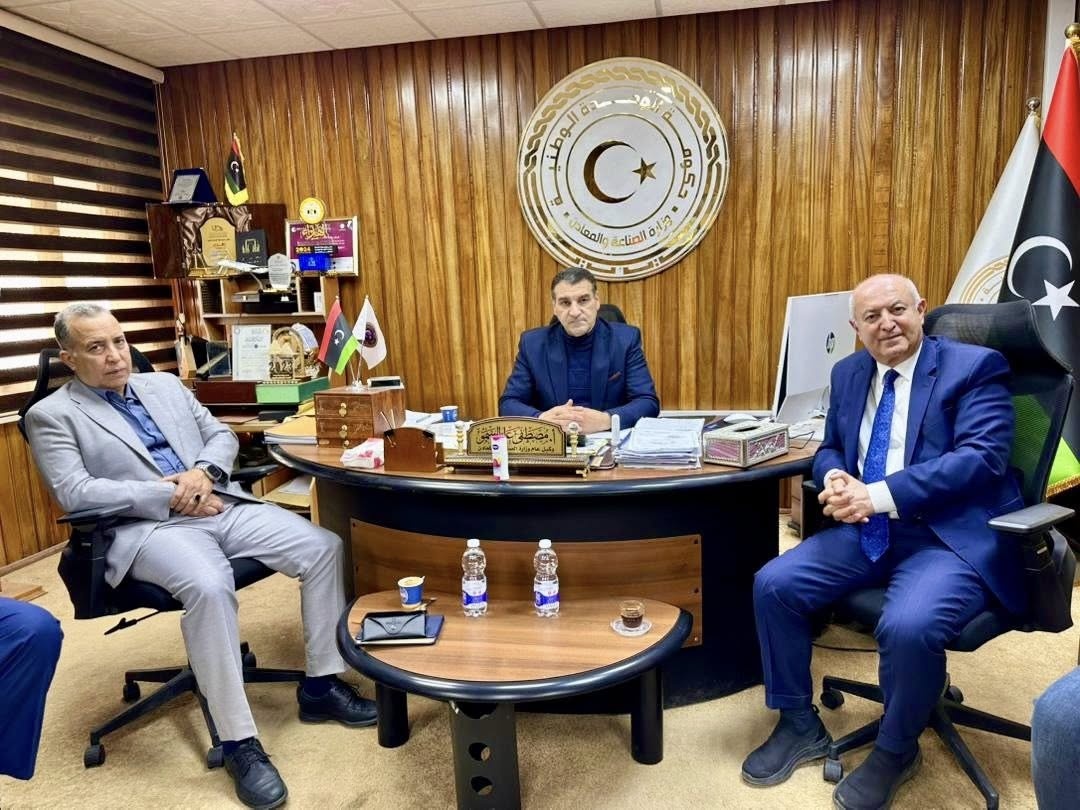
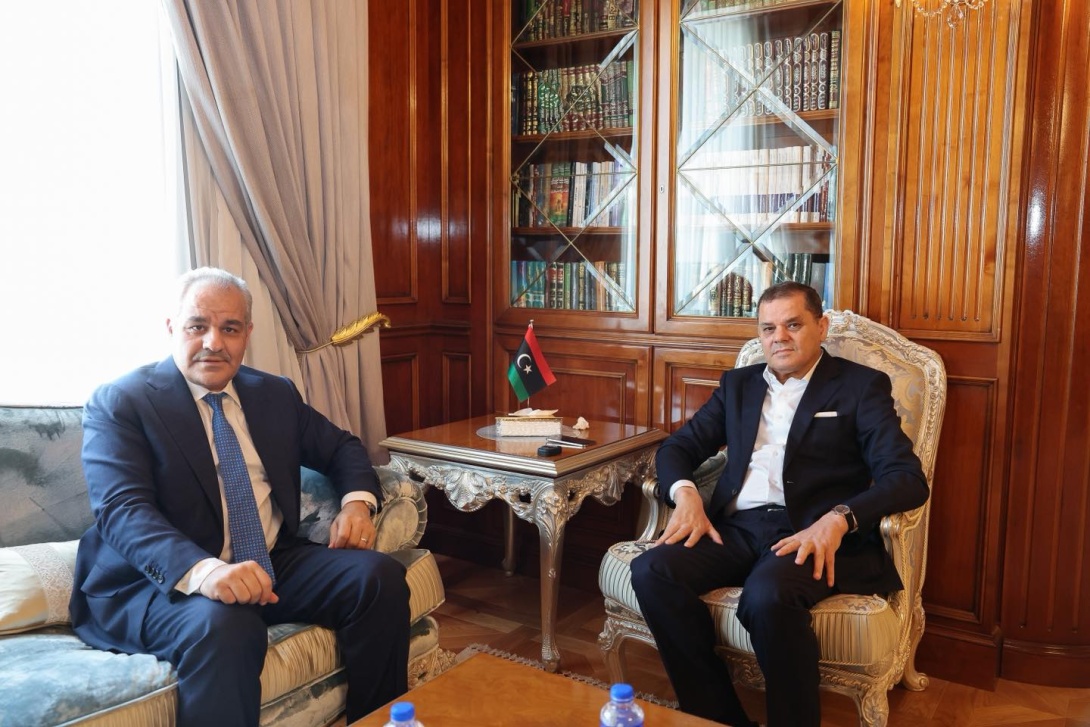
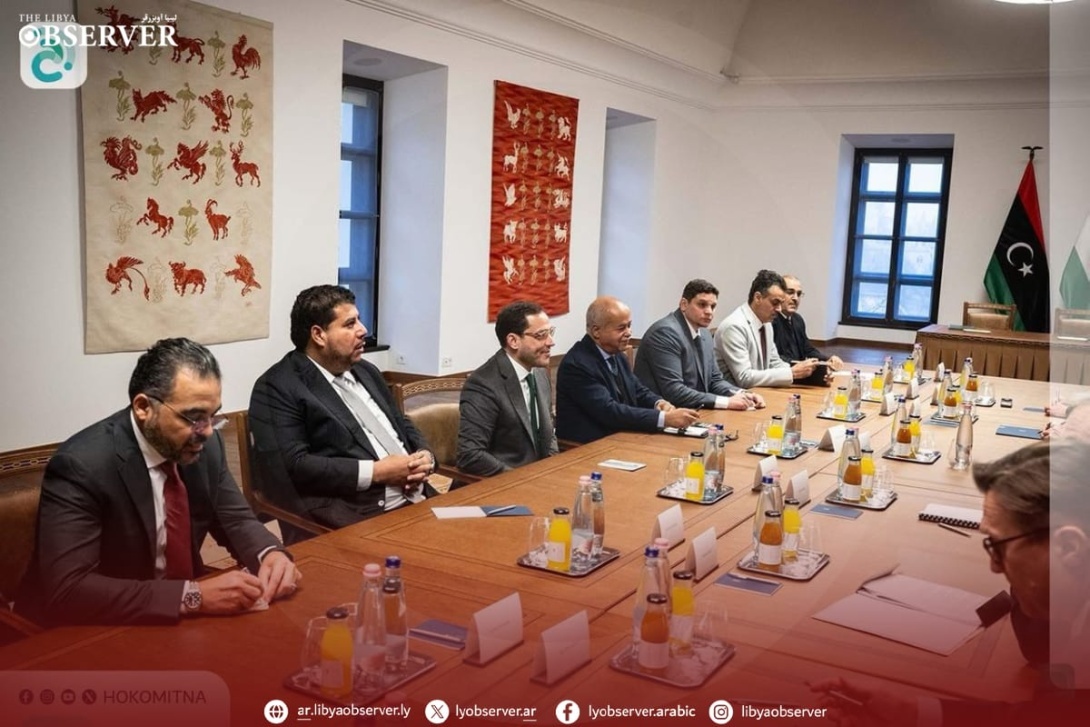
The symposium was held at the “Desert Moon” resort in the “Tuyuha” area, with high-level attendance including the Director General of the National Oil Corporation branch, the President of Fezzan University, the President of Wadi Al-Shati University, the Director of the Social Security Fund branch for the Southwest, along with faculty deans, members of the IEEE organization, and a select group of academics, researchers, and energy specialists from within Libya and abroad.
…
.
Fezzan
Fezzan is a historical region in southwestern Libya, characterized by its vast desert landscapes and ancient oases. It was once home to the Garamantes civilization, which flourished from around 500 BCE to 700 CE and developed a sophisticated network of underground irrigation tunnels (foggaras) to support its settlements. The area later became a crucial crossroads for trans-Saharan trade routes.
Fezzan University
Fezzan University is a public university located in Sabha, Libya, established in 1983 to serve the Fezzan region. It was founded to advance higher education and research in southern Libya, evolving from earlier educational institutes in the area.
Desert Moon
Desert Moon is a fictional or unspecified cultural site, so no definitive history exists. If it refers to a real location, it might be a modern festival, art installation, or tourism venture inspired by desert landscapes. Without specific context, its background cannot be detailed.
Tuyuha
“Tuyuha” does not correspond to a widely recognized historical place or major cultural site. It may be a misspelling, a very localized location, or a term from a specific context not documented in mainstream historical or cultural resources. Without more precise information, a substantive summary of its history is not possible.
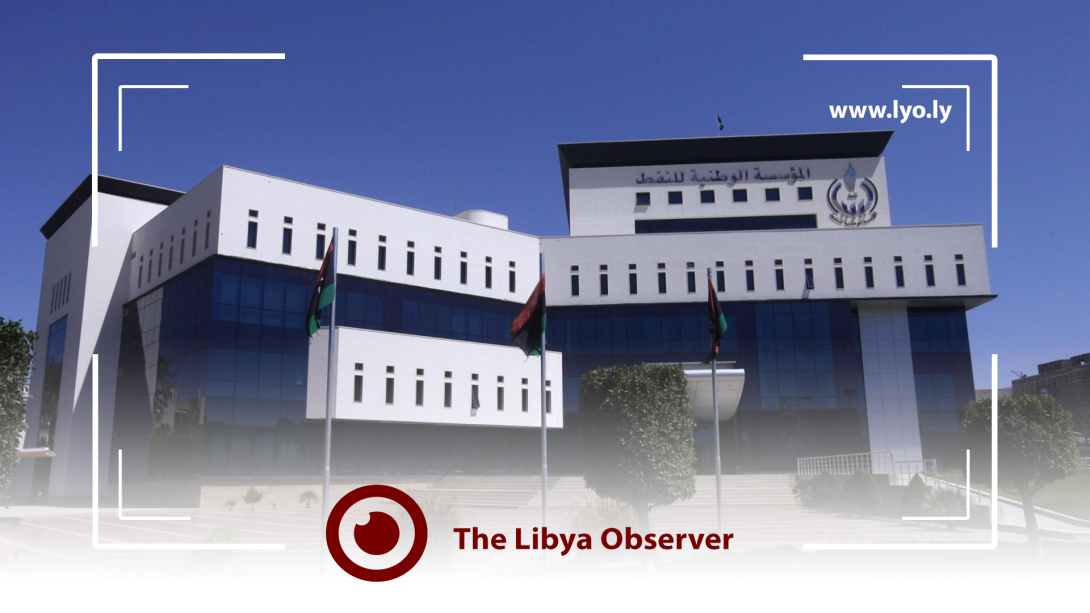
National Oil Corporation
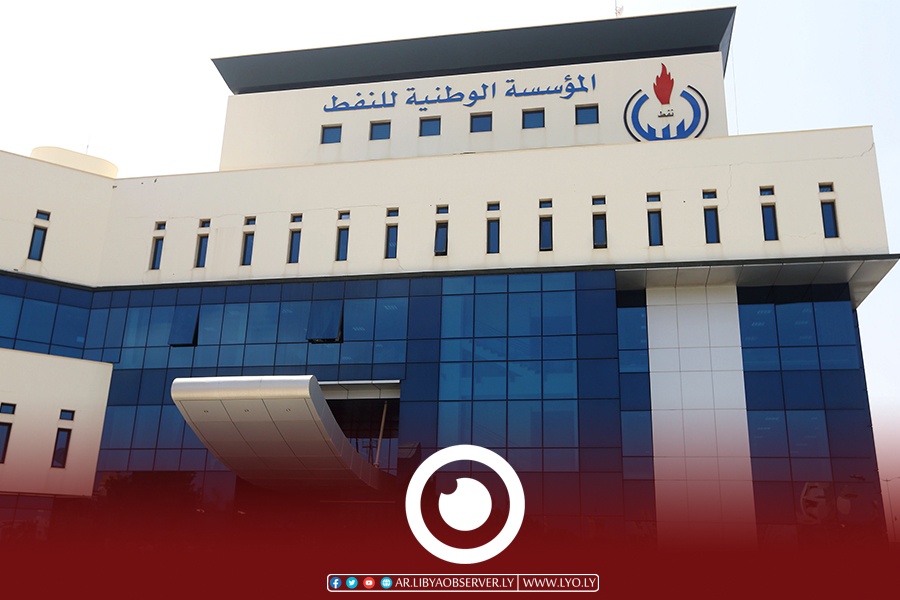
The National Oil Corporation (NOC) is the state-owned oil company of Libya, established in 1970 to oversee the country’s petroleum resources and manage all phases of oil production. It was founded following the nationalization of the Libyan oil industry under Muammar Gaddafi’s government.
Wadi Al-Shati University
Wadi Al-Shati University is a public university located in the Wadi al-Shati district of southwestern Libya. It was established in 1991 to serve the educational needs of the region’s population, evolving from earlier technical and teacher training institutes. The university focuses on providing higher education in fields such as arts, sciences, and engineering to the local communities.
Social Security Fund
The Social Security Fund is a public institution in Peru responsible for managing pensions and providing social insurance benefits to workers. It was established in 1936 during the government of President Óscar R. Benavides, making it one of the oldest social security systems in Latin America. Its primary function is to ensure economic protection for employees through retirement, disability, survivorship, and healthcare programs.
IEEE
The Institute of Electrical and Electronics Engineers (IEEE) is a professional association founded in 1963 from the merger of the American Institute of Electrical Engineers and the Institute of Radio Engineers. It is dedicated to advancing technology for humanity, producing over 30% of the world’s literature in electrical, electronics, and computer engineering, and setting widely used industry standards.
Libya
Libya is a North African country with a rich history rooted in ancient civilizations like the Phoenicians and Romans, followed by centuries of Arab and Ottoman influence. In the modern era, it was an Italian colony before gaining independence in 1951, later becoming known for Muammar Gaddafi’s lengthy rule from 1969 until the 2011 civil war. Its cultural sites include the well-preserved Roman ruins of Leptis Magna, a UNESCO World Heritage site.