Gaza – Amidst war, siege, and escalating humanitarian and environmental crises, community initiatives are emerging that attempt to break the cycle of pain through unconventional tools, including art, storytelling, and recycling, as means to build awareness and enhance community participation. Among these initiatives stands out the “Al-Bahr Ilna” cooperative, which seeks to transform daily issues into stories capable of creating real change in the behavior of individuals and society.
Enhancing Environmental and Community Awareness
The initiative is based on employing storytelling, theater, music, and various arts to simplify environmental and social issues and convey them to people in a way that is close to their daily lives. Transforming issues into stories helps facilitate understanding and deepen their impact, while simultaneously enhancing the sense of shared responsibility towards the environment and place.
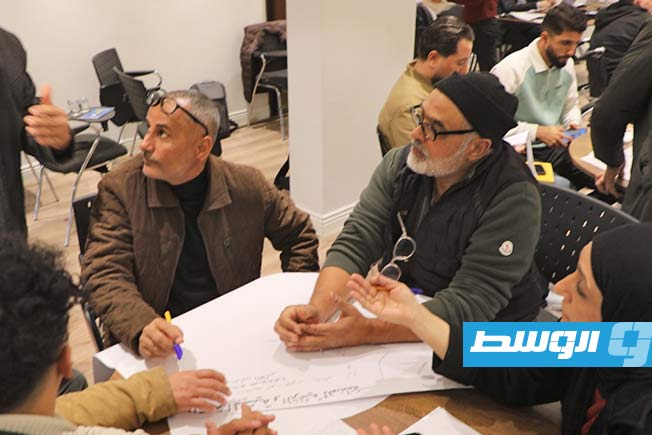
The cooperative relies on a methodology of participatory leadership and community organizing in forming teams, identifying problems, and working to address them, through the use of community arts as effective tools to highlight local issues and stimulate community participation. The cooperative includes about 35 young men and women who have been trained in this methodology and operates through multiple sections including recycling, an art studio, a library, theater, drama, storytelling, visual arts, folk poetry, and music.
The “Al-Bahr Ilna” cooperative was founded in 2019. Its headquarters was on the Gaza seashore, in a space created in cooperation with the Gaza municipality using about 350 tons of solid waste that was recycled, to serve as a living model of creativity, sustainability, and the green economy. The place became a vibrant space, hosting artistic workshops and community activities, alongside the production of gifts and artistic products with a humanitarian and environmental spirit.
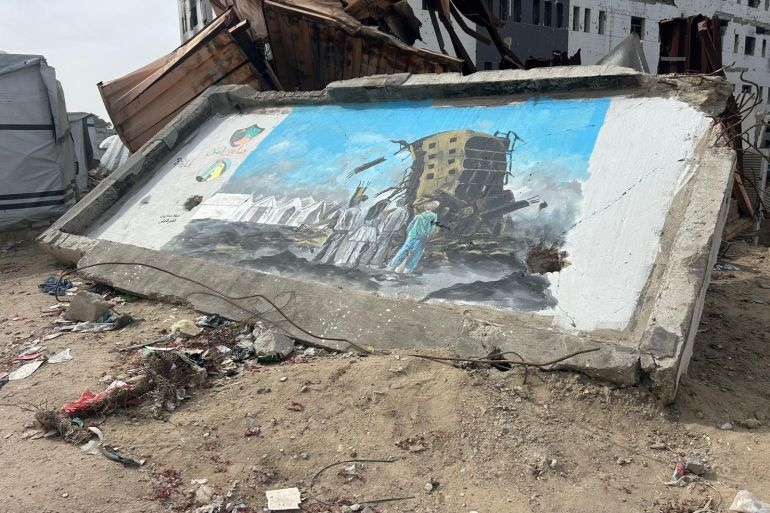
“During the war, the place was completely destroyed. The sections, workshops, and everything they contained in terms of tools and works were destroyed, and the space that was full of colors and life turned into rubble. Despite this loss, the message did not stop.”
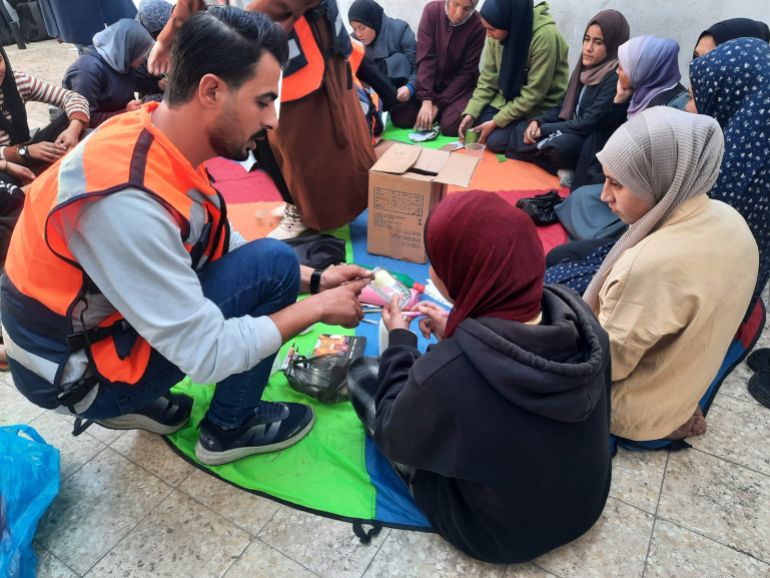
The “Al-Bahr Ilna” cooperative is currently implementing activities, lectures, and workshops inside displacement camps, targeting children, youth, and women. These include recycling workshops, artistic performances, music, and storytelling, aiming to provide safe spaces for self-expression, alleviate the psychological effects of war, and enhance environmental awareness while instilling the values of community responsibility.
The initiative seeks to transform camps from temporary places of harsh living into spaces for learning, creativity, and participation, where art becomes a means of communication, storytelling a tool for building awareness, and recycling an entry point for instilling a culture of responsibility towards the environment, despite the difficult conditions in the sector. These activities also contribute to involving the displaced in formulating solutions to their daily problems, enhancing the spirit of teamwork, and rebuilding trust and the ability to take initiative.
Recycling and Production
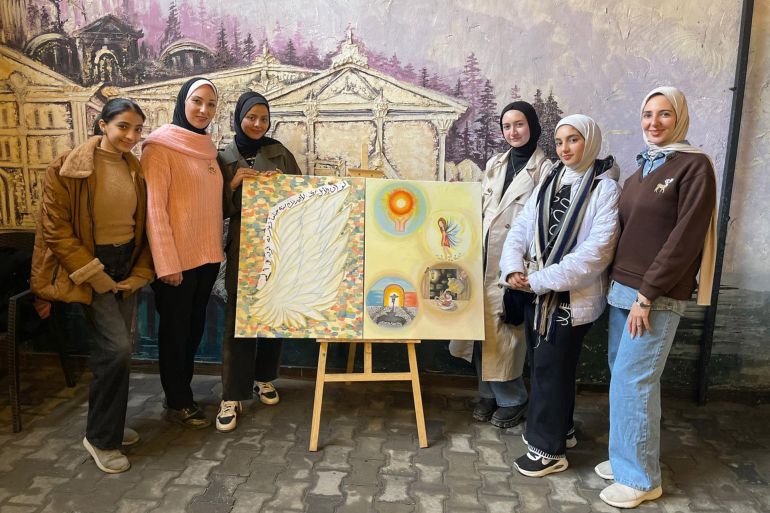
In this context, alongside her team, continues to implement artistic workshops with women inside tents and shelter centers, working to recycle solid environmental waste and transform it into paintings and artistic pieces.
The idea of recycling came in response to the difficult environmental reality in the Gaza Strip, where waste accumulates amid weak capabilities and the absence of sustainable solutions, which pushed towards searching for innovative ways to reuse this waste and transform it into artistic works carrying environmental and humanitarian dimensions.
The goal is not limited to producing artistic works but extends to redefining the value of discarded objects, transforming what is viewed as useless into tools of beauty and hope. Art is not just an aesthetic practice, but a means to confront the ugliness imposed by war, and a message affirming life’s ability to rise from the rubble.
The workshops also seek to raise the level of environmental awareness in the community, encouraging children, youth, and women to participate in protecting the environment and reconsidering their relationship with the place they live in.