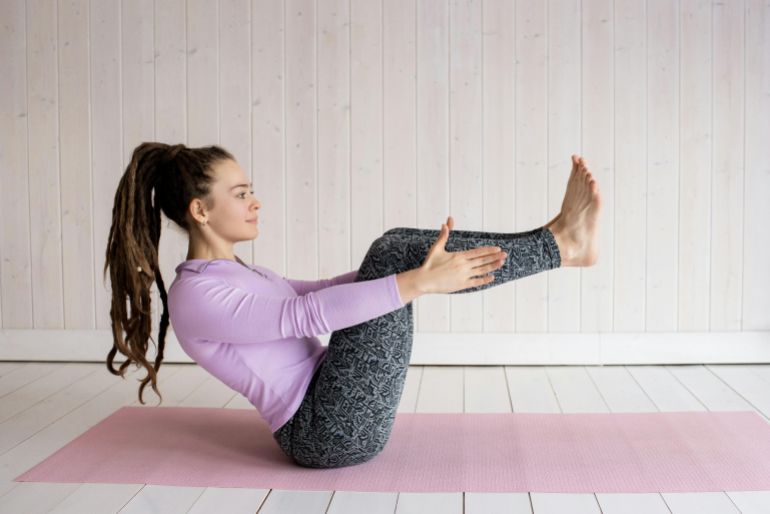
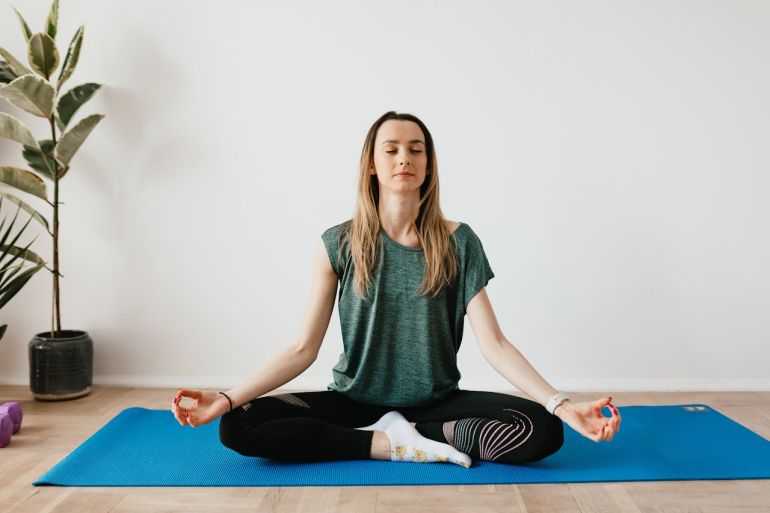
Yoga mats accumulate a huge amount of germs due to practicing barefoot and sweating during the session, as well as being exposed to dust and moisture if the yoga session is held outdoors. Therefore, home care experts recommend cleaning the yoga mat after each use to maintain its quality and extend its lifespan.
It is recommended to wipe the mat after each session with a mild cleaner or a damp cloth, then let it dry completely in a well-ventilated room, before rolling it loosely and storing it horizontally in a dry place.
It is also advised to avoid exposing it to direct sunlight, as this may cause the color to fade or the material to warp. The type of cleaner varies depending on the mat’s material.
Choosing the Right Cleaner
According to the material, using unsuitable cleaning agents may cause long-term damage to the mat, and the user may have to replace it.
Therefore, it is always preferable to refer to the manufacturer’s instructions, as deviating from them is done at the user’s own risk.
If suitable instructions are not available, you can use the following as a guide:
Polyethylene mats: Can be cleaned with a multi-purpose cleaner or dish soap diluted with water, using concentrated cleaner for stubborn stains.
TPE (Thermoplastic Elastomers) mats: Clean with warm water, soap, and a soft brush, avoiding coarse scrubbing tools due to their sensitivity to friction.
PVC mats: Durable and economical, they can be cleaned with warm water, soap, and a microfiber cloth. They feature a water-resistant structure, making them suitable for outdoor use, although their texture may lose some softness with frequent use and cleaning.
Natural materials: Wool, cotton, and natural cork wool: It is recommended to use cleaners specifically designed for wool, paying attention to the care symbols on the label to determine the appropriate temperature and washing type.
Cotton: Cotton mats can often be machine washed at 30 degrees Celsius using natural detergents without fabric softener. It is preferable to air dry them away from direct sunlight to preserve the rubber layer.
Cork mats: Wiping with a damp cloth is sufficient. You can use a diluted cleaner designed for cork floors or a multi-purpose cleaner diluted with water.
A practical tip for effective cleaning is offered: Dampen a cloth and wring it out well, then place it on top of a dry cloth of the same size. Roll them together tightly while pressing, which distributes moisture evenly and makes the cloth ready for effective cleaning.
By following these guidelines, you can maintain the cleanliness and quality of your yoga mat, ensuring its safe and comfortable use for a longer period.
Yoga mats
Yoga mats are portable, cushioned surfaces used primarily for yoga practice, originating from the need for stable, non-slip flooring. Their modern history began in the 1980s with the introduction of PVC sticky mats by yoga teacher Angela Farmer, revolutionizing practice safety and comfort.
Polyethylene mats
Polyethylene mats are not a specific place or cultural site, but rather a type of modern synthetic flooring material. They are typically made from petroleum-based polymers and have no significant historical background as a cultural landmark.
TPE (Thermoplastic Elastomers) mats
TPE mats are floor coverings made from Thermoplastic Elastomers, a versatile material combining the properties of rubber and plastic. They are a modern product, developed from advanced polymer science in the latter half of the 20th century, designed to be durable, flexible, and easy to clean.
PVC mats
PVC mats are versatile, synthetic floor coverings made from polyvinyl chloride, which became widely popular in the mid-20th century as mass production of plastics advanced. They are commonly used for practical purposes in homes, gyms, and play areas due to their durability, ease of cleaning, and affordability.
Wool
Wool is not a specific place or cultural site but a natural animal fiber historically vital to textile production. Its use dates back thousands of years, with regions like England and Spain building significant economic and cultural identities around sheep farming and wool trade during the medieval period.
Cotton
Cotton is a soft, fibrous material that grows around the seeds of cotton plants and has been cultivated for fabric for thousands of years, with evidence of its use in ancient civilizations like the Indus Valley and Peru. Its large-scale production, historically linked to the labor of enslaved people in the Americas, fundamentally shaped global trade and industrialization. Today, it remains one of the world’s most important natural fibers, used in a vast array of textile products.
Natural cork wool
“Natural cork wool” refers to an innovative, sustainable material made from cork oak bark, primarily harvested in the Mediterranean region, especially Portugal. Its history is tied to the ancient use of cork, but modern processing techniques now granulate and bind the cork to create a wool-like insulation product. This development leverages cork’s traditional qualities of durability and renewability for contemporary eco-friendly construction.
Cork mats
Cork mats are functional items traditionally woven from the bark of cork oak trees, a practice with roots in Mediterranean regions like Portugal and Spain where cork harvesting has been historically significant. They are valued for their durability, water resistance, and natural insulation properties.