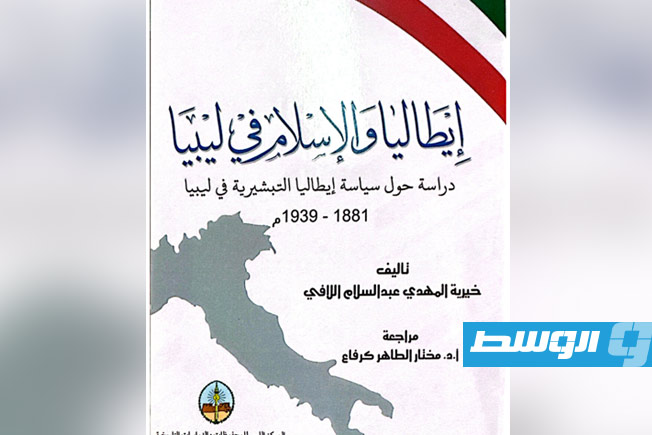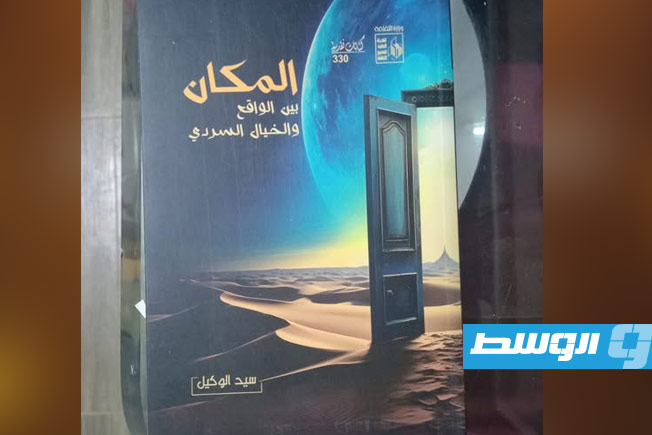
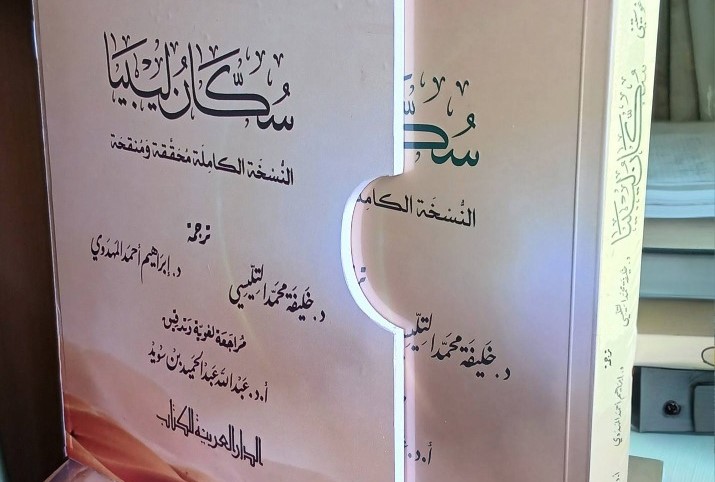
Tripoli, February 15, 2026 – The Arab House for Books announced the publication of a revised and corrected edition of the book “The People of Libya” by the Italian author Enrico de Agostini, following two and a half years of review, verification, and comparison with the original Italian text.
It was explained that the new edition comes in implementation of the Board of Directors’ decisions to reprint reference books that are out of print, foremost among them this work, due to its significance as a historical source documenting the tribes, clans, and demographic components in Libya.
It was clarified that the project began in August 2023, with the initial verification task assigned to Abdullah bin Suwaid (may he rest in peace). The reviews later revealed shortcomings and errors in previous translations, necessitating an extensive comparison between the translation by Khalifa al-Tilisi (in two parts) and the translation by Ibrahim al-Mahdawi (in three volumes), covering more than 2,800 pages.
The comparative work revealed the omission of dozens of pages in translation, including information concerning 38 neighborhoods in the city of Zliten, data on the geographical homelands of the Barqa tribes, as well as the failure to mention the name of Omar al-Mukhtar as it appeared in the Italian text. Additionally, maps, tables, and statistics not included in previous editions were identified. It was confirmed that al-Mahdawi’s translation was used, with his permission, to fill the gaps, with explicit credit given to him.
To resolve the discrepancies between the two translations, the publisher returned to the original Italian version, obtained after considerable research effort, and embarked on a precise comparison of the three texts. This included translating the two introductions, which had not been translated before, with the assistance of specialized translators.
It was noted that the new version was published in a single comprehensive volume, despite its size, to affirm the historical and geographical unity of Libya and to enable readers to access information about all regions in one edition. A special appendix containing maps of the geographical locations of the inhabitants of Tripoli and Fezzan was added, which had been omitted from previous editions for technical reasons.
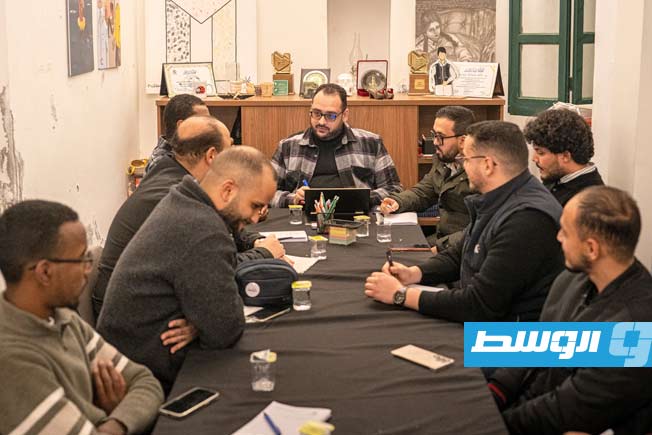
A specialized team participated in completing the work, involving review, correction, and technical production.
In conclusion, it was emphasized that the book, although originally created in the context of serving the Italian colonial administration in 1911 and beyond, is today considered an important historical reference that confirms the presence of Libyans on their land and documents the depth of their belonging and their struggle, offering a new reading of a source that has sparked wide debate over the decades.
..(WAL)..