The European Copernicus Observatory reported on Tuesday that the first month of the year ranked as the fifth warmest January on record, despite a cold wave in the Northern Hemisphere.
A monthly report from the observatory published Tuesday noted that “January 2025 was the fifth warmest January globally, with the average surface air temperature reaching 12.95 degrees Celsius, which is 0.51 degrees Celsius above the January average for the 1991-2020 period.”
The observatory indicated that the temperature in January 2025 was only 0.28 degrees lower than that of January 2024, which holds the record for the warmest January in history. The temperature at the start of this year exceeded the 1850-1900 pre-industrial average by 1.47 degrees.
High Temperatures Alongside Severe Cold
A statement from the observatory noted that “January 2025 is a reminder that the climate system can sometimes produce extremely cold weather in one region and extreme heat in another at the same time.”
–
–
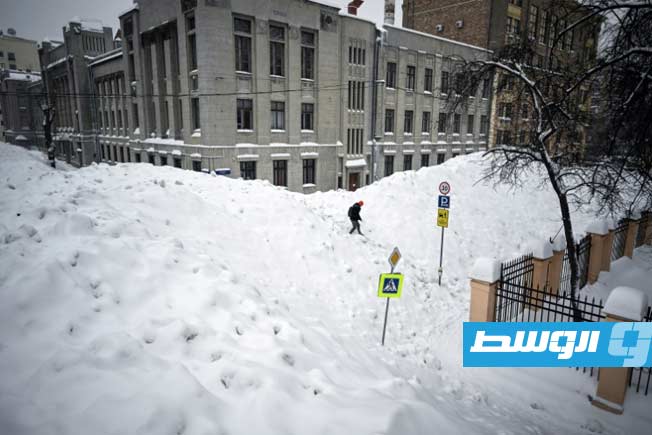
Alongside these high temperatures, severe cold waves have multiplied in recent weeks across the Northern Hemisphere, particularly in North America, Siberia, and Europe. This made January the coldest in Europe since 2010, with an average land temperature of -2.34 degrees Celsius.
European Copernicus Observatory
The European Copernicus Observatory is a major astronomical facility located in the Andes Mountains of Chile, inaugurated in 1998. It was built and is operated by the European Southern Observatory (ESO) and is named in honor of the astronomer Nicolaus Copernicus, reflecting its mission to advance our understanding of the universe.
Northern Hemisphere
The Northern Hemisphere is the half of Earth that lies north of the equator, encompassing a vast array of continents, countries, and cultures. It is historically significant as the location where many of the world’s earliest civilizations, such as those in Mesopotamia, the Indus Valley, and China, developed and flourished.
North America
North America is a continent comprising countries such as Canada, the United States, and Mexico, with a human history spanning thousands of years from its indigenous civilizations to European colonization beginning in the late 15th century. It is defined by its diverse landscapes and cultures, shaped by complex historical processes including migration, conflict, and the formation of modern nations.
Siberia
Siberia is a vast region in northern Asia, historically known as its harsh climate and use as a place of exile within the Russian Empire and later the Soviet Union. It is rich in natural resources and has been a focal point for exploration, industrialization, and settlement over centuries. Culturally, it is home to diverse indigenous peoples as well as communities shaped by waves of Russian expansion.
Europe
Europe is a continent with a rich and complex history, shaped by ancient civilizations like Greece and Rome, the transformative periods of the Middle Ages and the Renaissance, and the profound impacts of two World Wars. Culturally, it is renowned for its diverse artistic heritage, architectural landmarks, and as the birthplace of influential movements in philosophy, science, and politics.