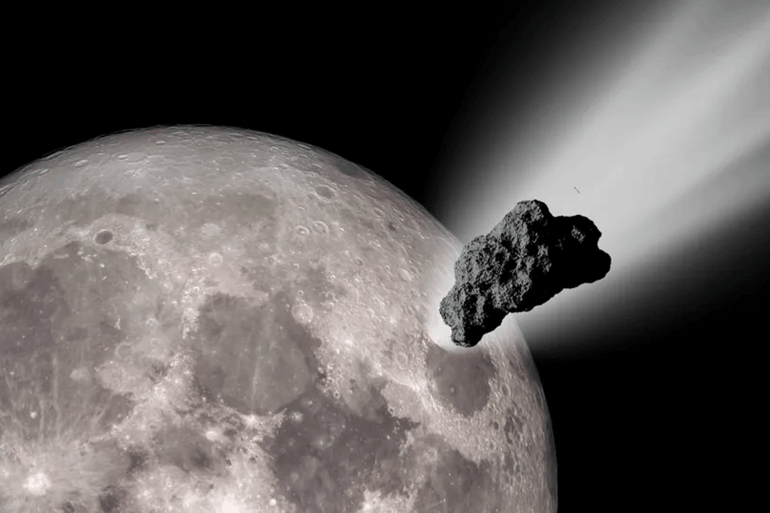
According to sources, SpaceX has informed its investors that it will prioritize reaching the Moon first and will attempt a mission to Mars later.
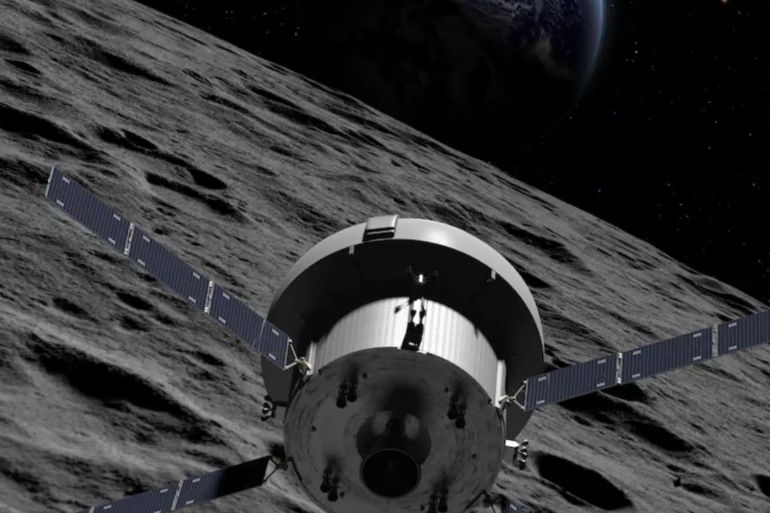
The report added that the company is targeting March 2027 for an uncrewed landing on the lunar surface.
This comes after approval was granted for the acquisition of X.AI in a landmark deal that merges the rocket and satellite company with the manufacturer of the “Gro” chatbot.
The rocket and satellite company is valued at one trillion dollars, while the artificial intelligence company is valued at 250 billion dollars.
It was stated last year that the goal is to send an uncrewed mission to Mars by the end of 2026.
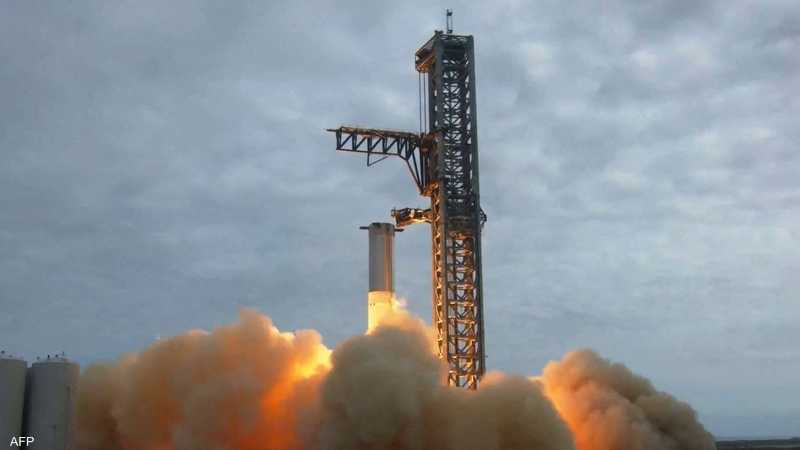
SpaceX is developing the next-generation “Starship” rocket, a massive stainless-steel vehicle designed to be fully reusable and to serve a range of missions, including flights to the Moon and Mars.
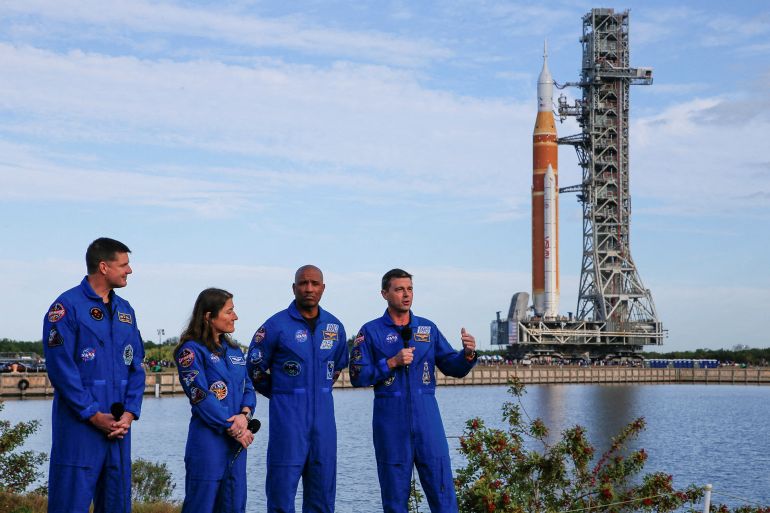
The United States faces intense competition this decade in its quest to return astronauts to the Moon, as no human has set foot there since the last crewed mission of the American Apollo program in 1972.
SpaceX
SpaceX, founded by Elon Musk in 2002, is a private American aerospace manufacturer and space transportation company. Its history is defined by pioneering reusable rocket technology, drastically reducing the cost of access to space, and achieving milestones like being the first private company to send astronauts to the International Space Station.
Moon
The Moon is Earth’s only natural satellite, formed approximately 4.5 billion years ago from debris after a giant impact between Earth and a Mars-sized body. It has been a central object in human mythology, timekeeping, and scientific study throughout history, with the first human landing occurring in 1969 during NASA’s Apollo 11 mission.
Mars
Mars is the fourth planet from the Sun and is often called the “Red Planet” due to its iron oxide-rich surface. It has been a subject of human fascination and scientific study for centuries, with ancient cultures observing it as a wandering star and modern missions revealing its geology and potential for past habitability.
X.AI
X.AI is a private artificial intelligence company founded by Elon Musk in 2023, with the stated goal of building AI systems that pursue maximum truth-seeking and understanding of the universe. It emerged as part of a broader initiative to develop what Musk has described as a “maximum truth-seeking AI” that is rigorously curious and less constrained by commercial or political biases.
Gro
Gro is a small village in Norway, historically known for its medieval stone church, Gripestad stavkirke, which dates back to the 12th century. The church is one of the country’s oldest stave churches and reflects early Christian architecture in Scandinavia. The village itself has maintained a quiet, rural character tied to Norway’s coastal and agricultural heritage.
Starship
Starship is a fully reusable super heavy-lift launch vehicle developed by SpaceX, designed for missions to the Moon, Mars, and beyond. Its development history began with initial concepts in the 2010s, leading to a series of prototype tests and iterative designs aimed at creating a spacecraft capable of carrying both crew and cargo to deep space destinations.
United States
The United States is a federal republic founded in 1776 after declaring independence from Great Britain, with its modern government established by the Constitution in 1789. Its history encompasses westward expansion, the Civil War, industrialization, and its emergence as a global superpower in the 20th century. The nation is defined by its diverse population, democratic institutions, and significant cultural influence worldwide.
Apollo
Apollo is a major deity in ancient Greek and Roman mythology, associated with music, prophecy, healing, and the sun. Historically, he was worshipped at significant sites like the Oracle of Delphi, where his priestess, the Pythia, delivered prophecies.