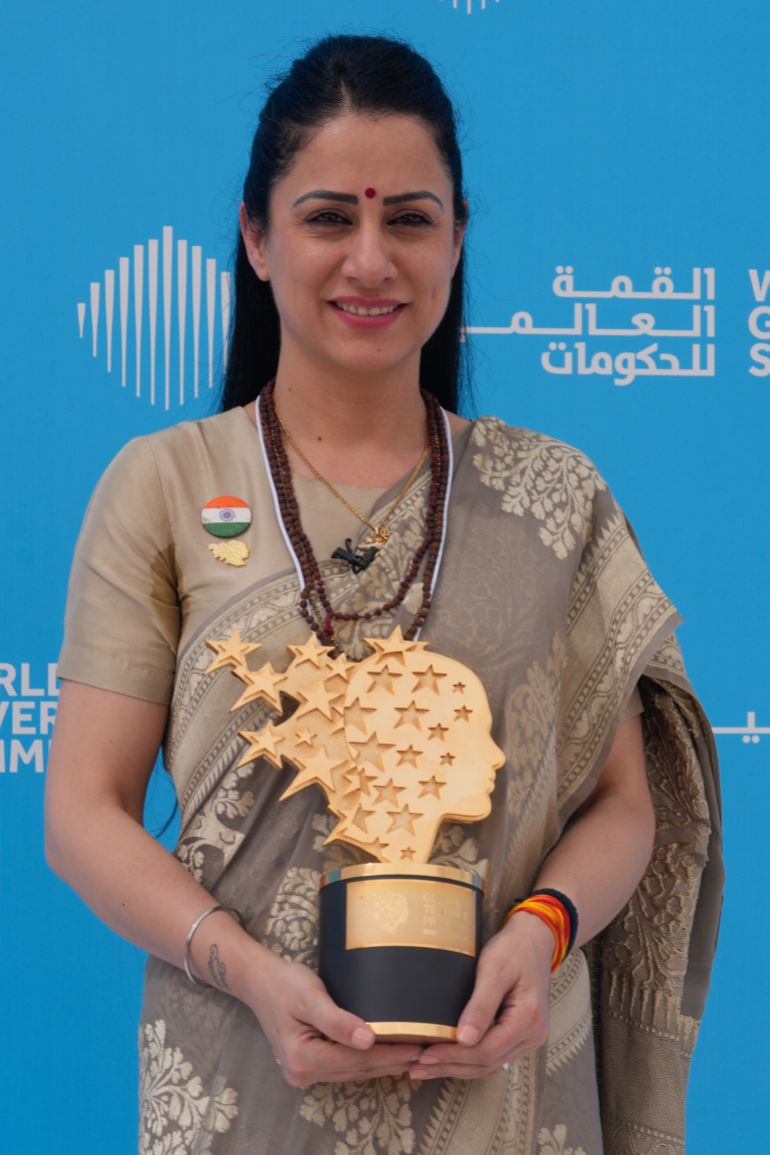
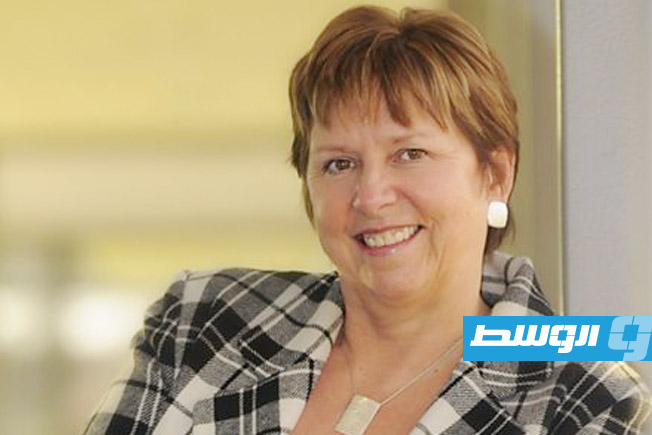
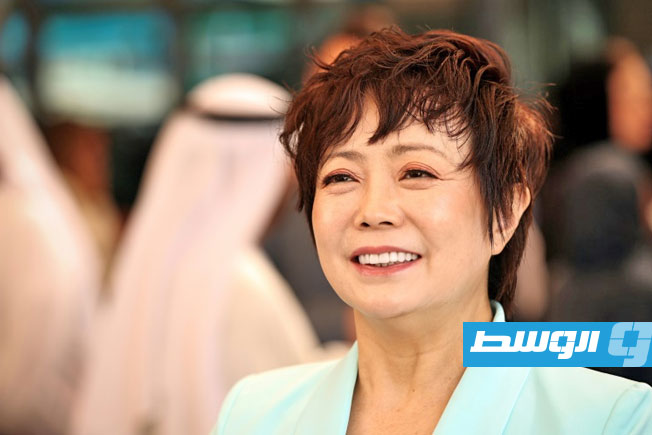
An Indian teacher and activist, renowned for creating hundreds of educational centers and painting educational murals on the walls of impoverished neighborhoods, won the one-million-dollar Global Teacher Prize yesterday, Thursday.
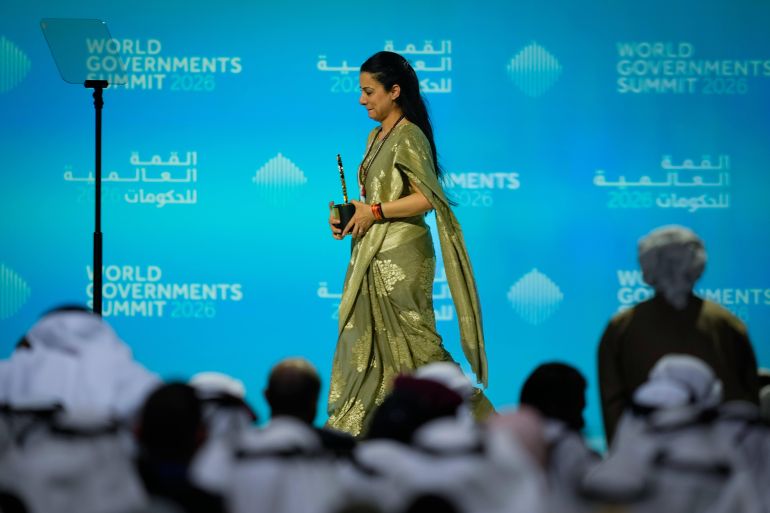
Rouble Nagi received the award during the “World Government Summit” held in Dubai, United Arab Emirates, an annual event that attracts leaders from around the world.
Her “Rouble Nagi Art Foundation” has established more than 800 educational centers across India, aiming to provide structured education for children who have never attended school, as well as for children already enrolled in schools.
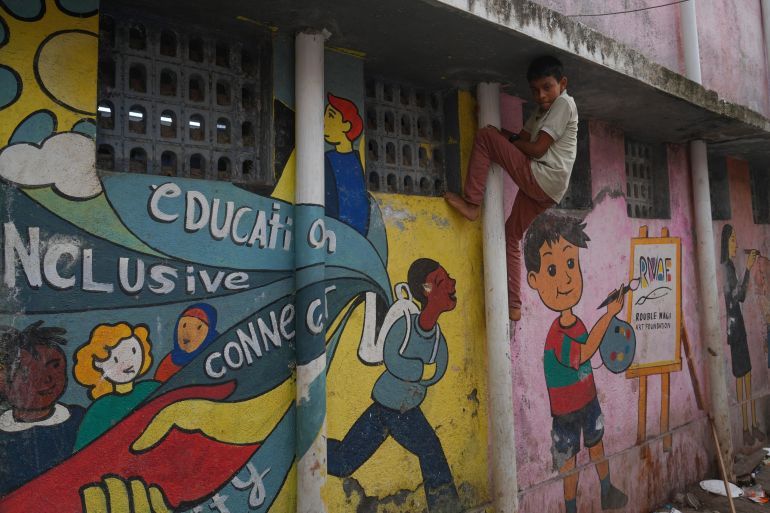
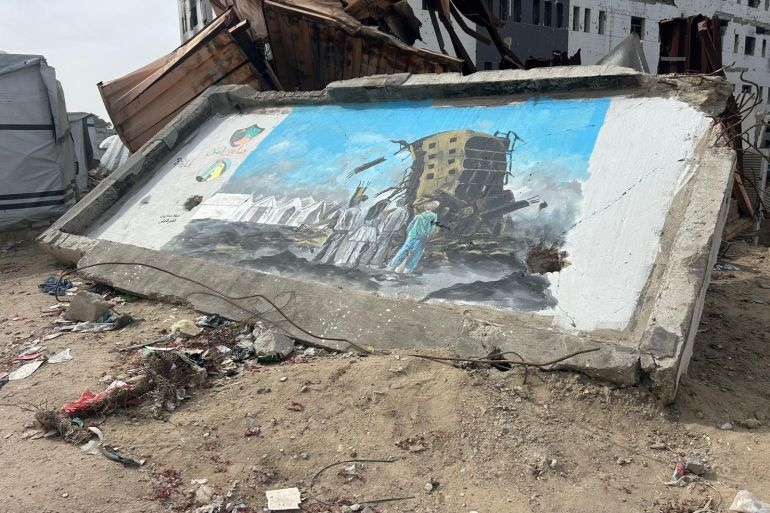
Nagi also paints murals that teach literacy, science, mathematics, history, and other subjects.
A mural designed by the Rouble Nagi Art Foundation in the Dhobi Ghat area of Mumbai, India.
The prize is awarded by the Varkey Foundation.
Nagi plans to use the one-million-dollar prize to build an institute that provides free vocational training.
Nagi is the tenth teacher to win this award since the foundation began granting it in 2015.
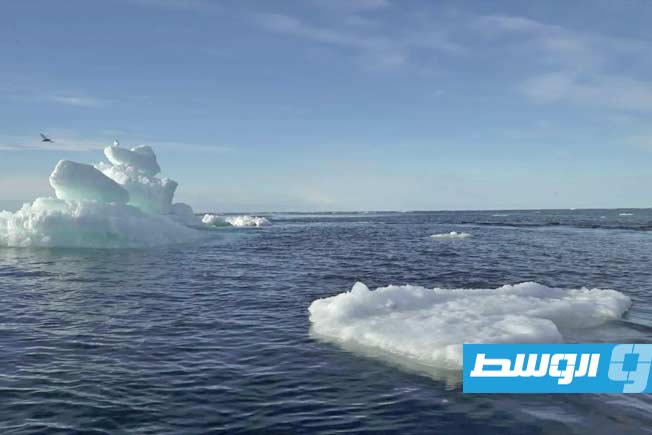
Previous winners of the award include a Kenyan teacher from a remote village who donated most of his income to the poor, a Palestinian elementary school teacher, and a Canadian teacher who taught Inuit students in a remote Arctic village.
Last year’s award winner was Saudi teacher Mansour Al-Mansour, known for his work with the poor.
GEMS Education, or Global Education Management Systems, is one of the world’s largest private school operators, believed to be worth billions of dollars.
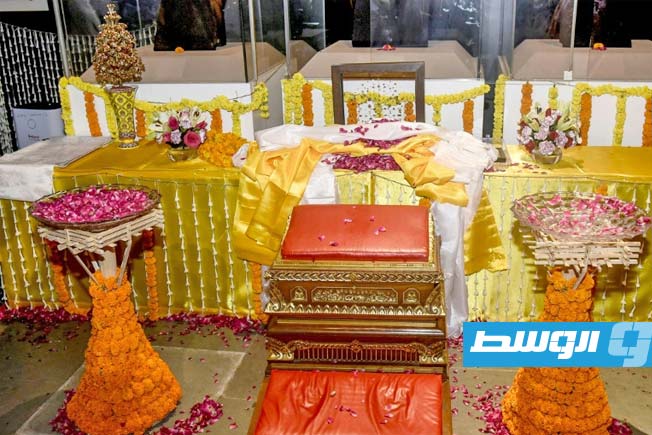
Global Teacher Prize trophy
The Global Teacher Prize trophy is an award presented annually by the Varkey Foundation to an exceptional educator. Its design, a helix-like shape that unfolds to reveal a shining crystal, symbolizes the unfolding of human potential through teaching. The prize was established in 2014 to highlight the importance of teachers worldwide.
Dubai
Dubai is a major global city and emirate in the United Arab Emirates, historically known as a small fishing and pearling village. Its modern transformation began with the discovery of oil in the 1960s, but it has since strategically diversified into a hub for tourism, finance, and trade, symbolized by landmarks like the Burj Khalifa.
United Arab Emirates
The United Arab Emirates is a federation of seven emirates on the Arabian Peninsula, established in 1971 following the end of British protection. Its modern history is defined by rapid transformation from a region of pearl diving and trade into a global economic hub, fueled by the discovery of oil in the mid-20th century. Today, it is known for its iconic modern architecture, such as the Burj Khalifa, and its blend of traditional Bedouin heritage with cosmopolitan culture.
World Government Summit
The World Government Summit is an annual global forum held in Dubai, United Arab Emirates, established in 2013. It serves as a platform for world leaders, policymakers, and experts to discuss future trends, governance, and innovation, aiming to shape future governments and improve life for citizens worldwide.
Rouble Nagi Art Foundation
The Rouble Nagi Art Foundation is a non-profit organization in Mumbai, India, founded in 2010 by artist Rouble Nagi. It is dedicated to social change through art, primarily known for its “Misaal Mumbai” initiative which has transformed over 170 public spaces, including slums and schools, with murals and community art projects.
India
India is a South Asian nation with a rich and ancient history, spanning thousands of years and encompassing major civilizations like the Indus Valley, as well as empires such as the Maurya and Mughal. It is the birthplace of four major world religions—Hinduism, Buddhism, Jainism, and Sikhism—and gained independence from British colonial rule in 1947. Today, it is the world’s largest democracy and is renowned for its vast cultural, linguistic, and geographical diversity.
Dhobi Ghat
Dhobi Ghat is Mumbai’s iconic open-air laundry, where washermen, known as *dhobis*, have manually cleaned clothes for generations. Established during the British colonial era, it is one of the world’s largest human-powered laundering operations, with hundreds of concrete wash pens. The site remains a vital, bustling example of Mumbai’s traditional urban economy and community.
Mumbai
Mumbai, originally a collection of seven islands inhabited by fishing communities, was developed into a major port city under British colonial rule after being ceded to the East India Company in the 17th century. Today, it is India’s financial, commercial, and entertainment capital, known for landmarks like the Gateway of India and the bustling film industry, Bollywood.
Varkey Foundation
The Varkey Foundation is a global charitable organization established in 2010 by Sunny Varkey, focusing on improving education for underprivileged children worldwide. It is best known for founding the Global Teacher Prize, which aims to elevate the status of the teaching profession. The foundation’s work is built on the legacy of the GEMS Education network started by the Varkey family in the 1950s.
Kenyan
Kenya is a country in East Africa known for its diverse landscapes, wildlife, and rich cultural heritage. Historically, it was a British colony until gaining independence in 1963, and it is renowned as the cradle of humankind with some of the oldest archaeological sites. Today, it is a vibrant nation famous for its national parks, the Maasai Mara, and the cultural traditions of its many ethnic groups.
Palestinian
Palestinian culture and heritage are deeply tied to the historic region of Palestine, which encompasses significant sites like the Dome of the Rock in Jerusalem and the Church of the Nativity in Bethlehem. Its history is marked by ancient civilizations, including Canaanite and Israelite kingdoms, followed by successive rule by various empires and, in the modern era, prolonged conflict over national sovereignty.
Canadian
“Canadian” is not a specific place or cultural site, but refers broadly to the culture and people of Canada. The nation’s history is marked by Indigenous habitation for millennia, followed by French and British colonization, leading to its establishment as a self-governing dominion in 1867. Modern Canadian culture is officially bilingual and multicultural, shaped by this diverse historical foundation.
Arctic
The Arctic is a polar region located at the northernmost part of Earth, characterized by its sea ice, tundra, and unique ecosystems. Historically, it has been inhabited for thousands of years by Indigenous peoples and has been a focus for exploration and scientific research, particularly regarding climate change.
Saudi
Saudi Arabia is a modern nation-state founded in 1932 by King Abdulaziz Al Saud, who unified the regions of the Arabian Peninsula. The country is home to Islam’s two holiest cities, Mecca and Medina, and its culture and legal system are deeply rooted in Islamic tradition.
GEMS Education
GEMS Education is a global network of private schools founded in Dubai in 1959 by Indian educators K.S. Varkey and Mariamma Varkey. It has grown from a single school into one of the world’s largest private K-12 education providers, operating schools across multiple continents that follow various international curricula.
Global Education Management Systems
Global Education Management Systems (GEMS) is a private education company founded in Dubai in 1980 by Sunny Varkey. It has grown from a single school into one of the world’s largest K-12 private school operators, managing a network of schools across multiple continents. The company’s history reflects the rapid expansion of for-profit private education, particularly in the Middle East and emerging markets.