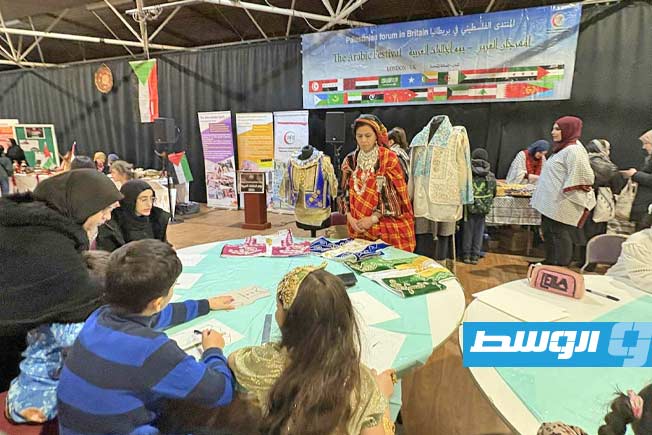
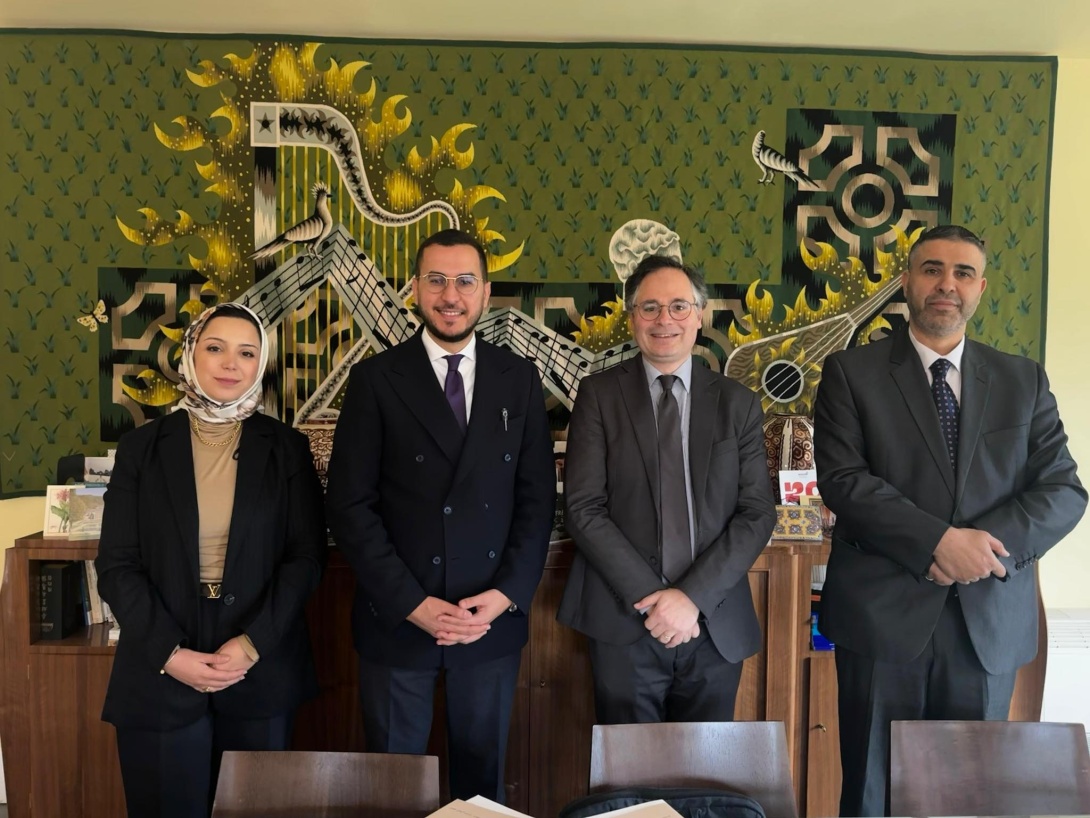
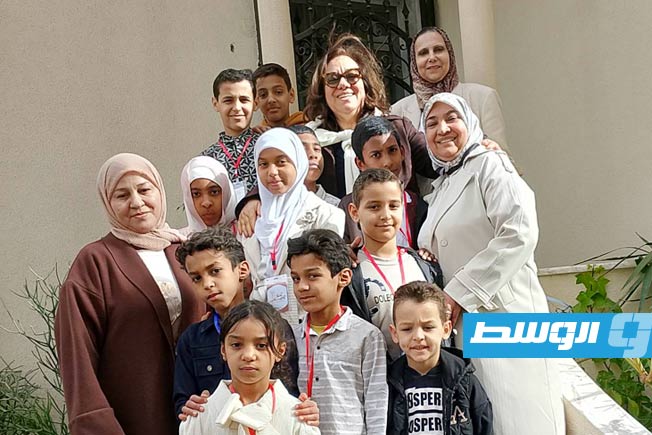
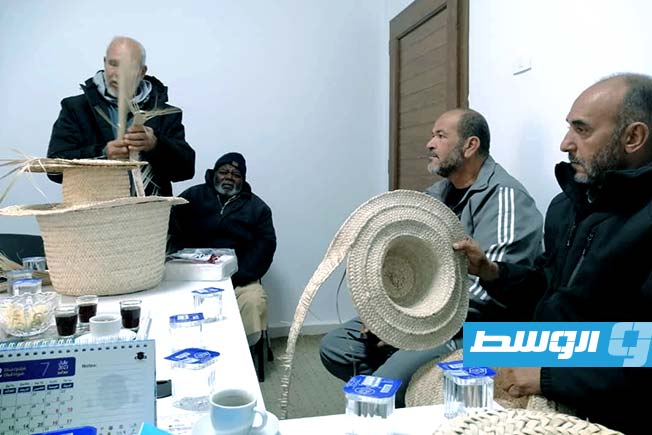
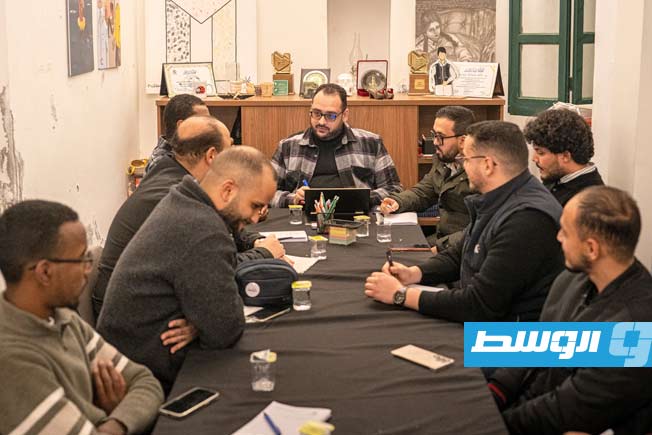
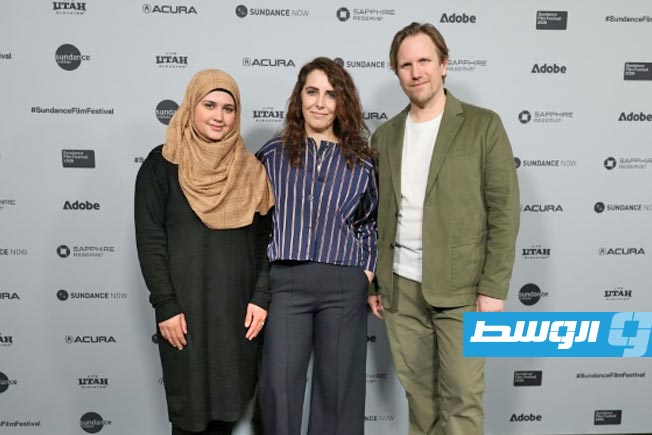
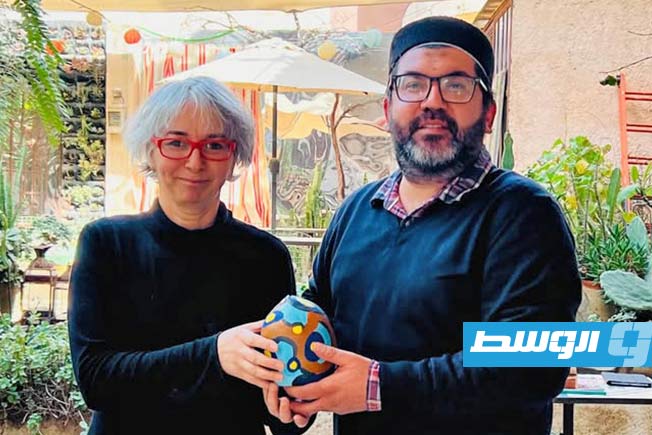
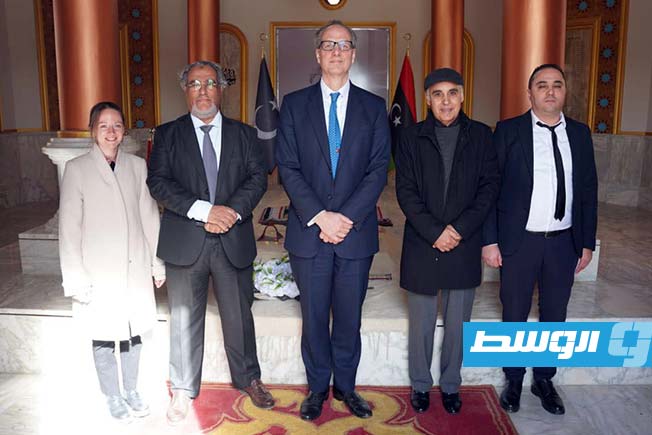
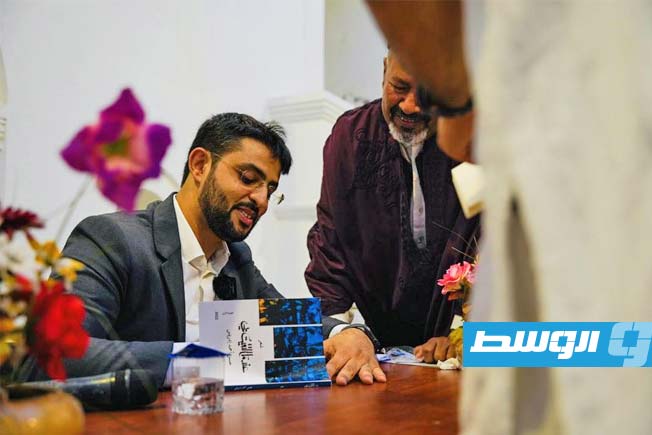
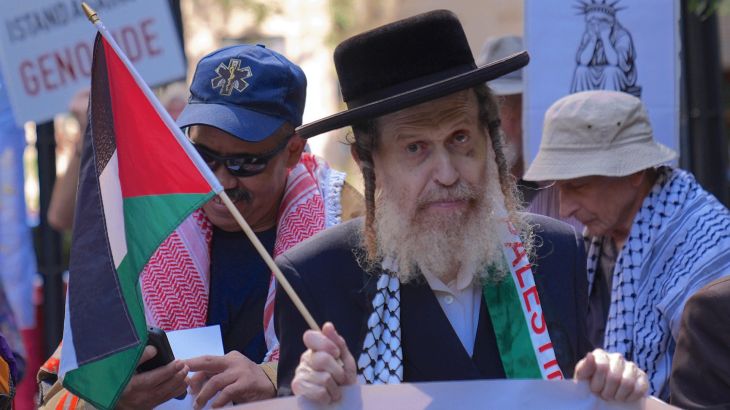
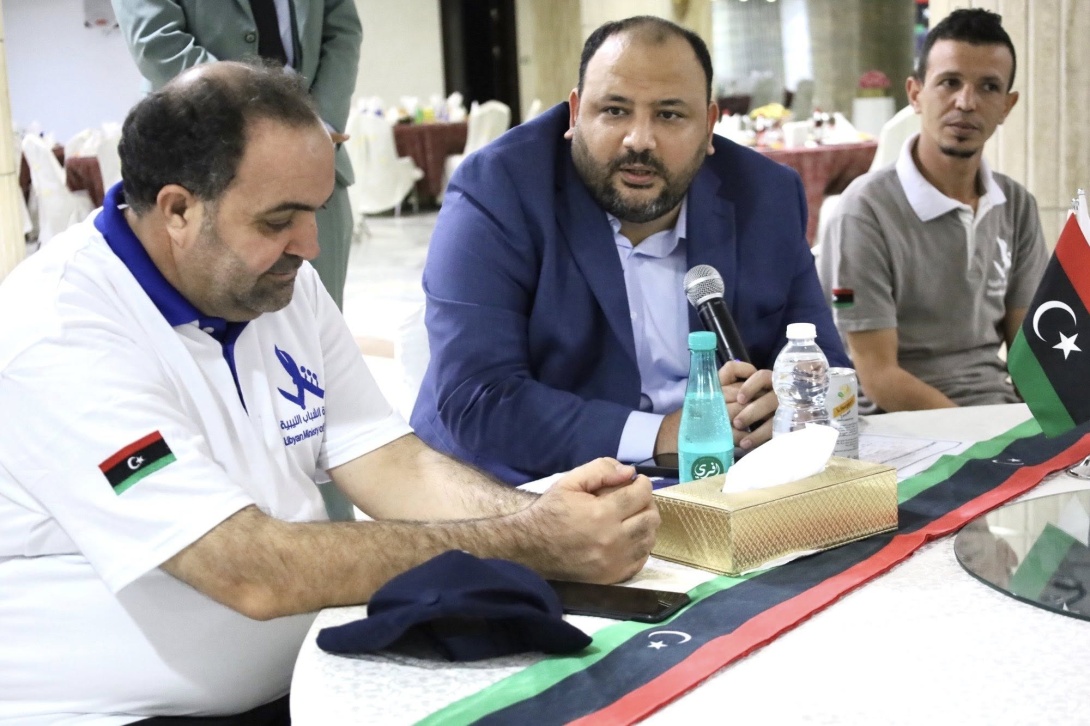
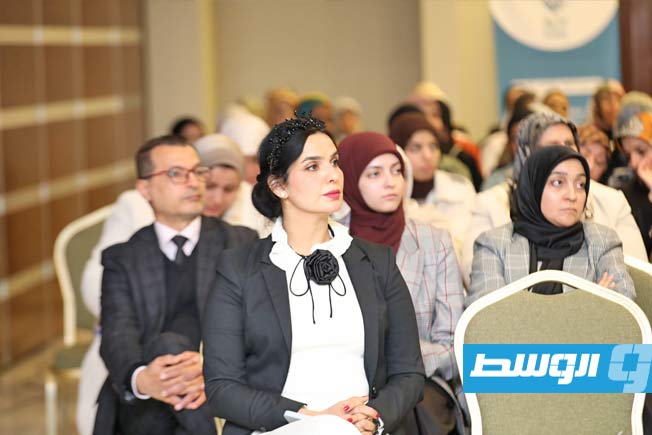
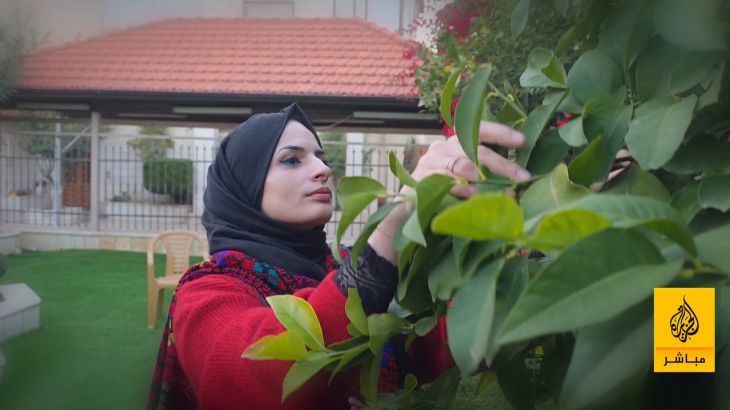
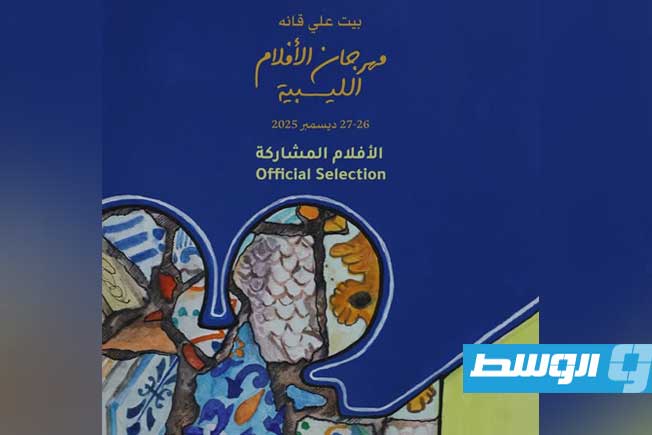
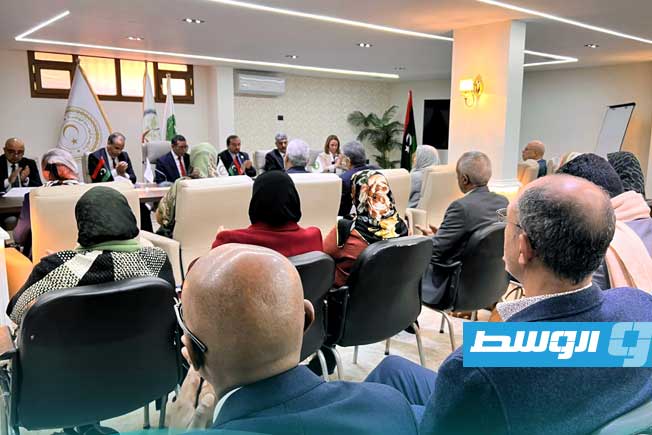
As part of the activities of the Palestinian Forum, the Arab community in Britain organized a workshop held on Monday in London, titled “Our Unity is the Headline, from Gaza to Sudan.”
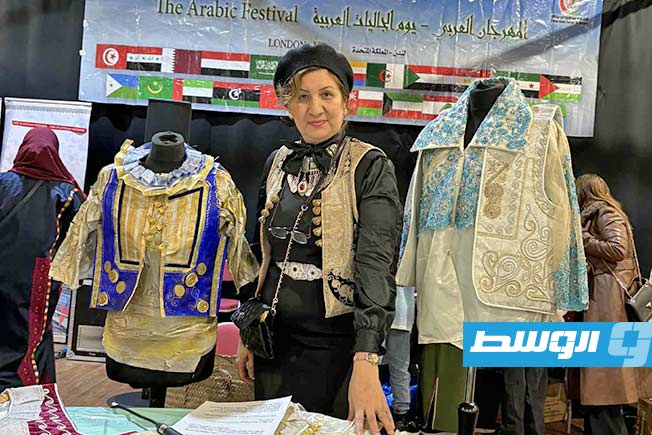
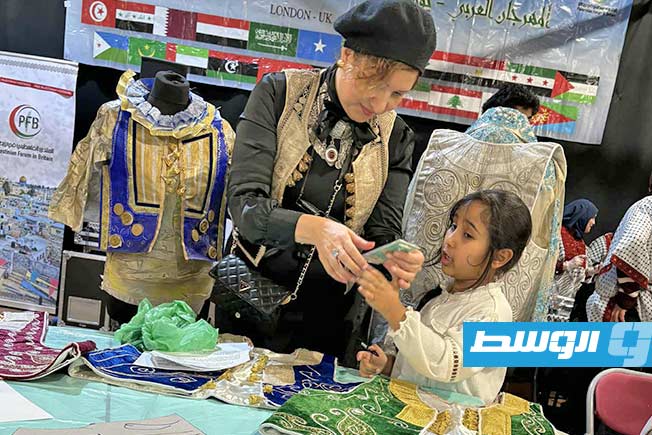
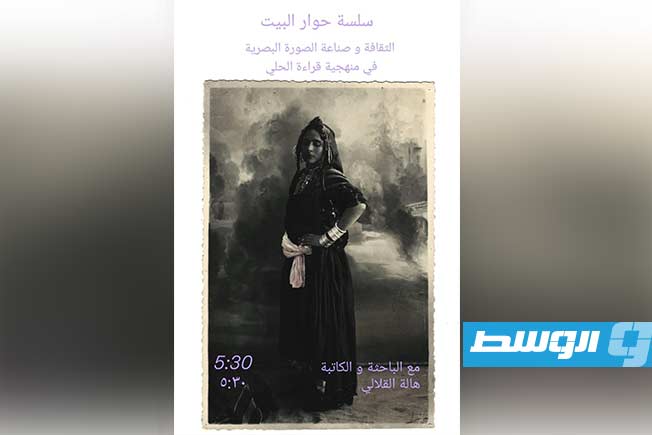
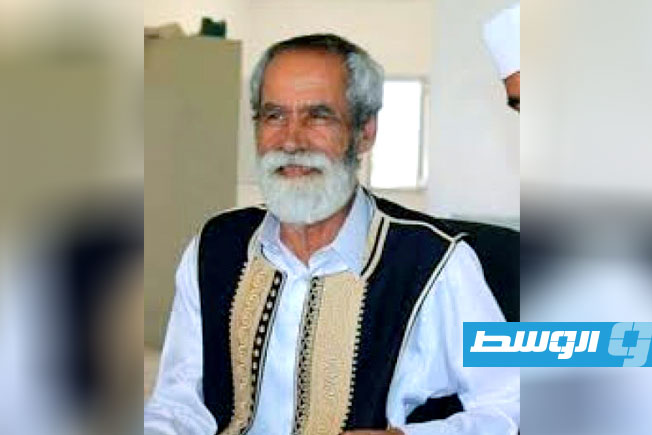
The Libyan side participated with a presentation on traditional Libyan dress, which included a practical demonstration. A special segment highlighted one of its most important heritage components: the embroidered vest, known in western Libya as “Al-Farmalah” and in eastern Libya as “Al-Kurdiyah.”
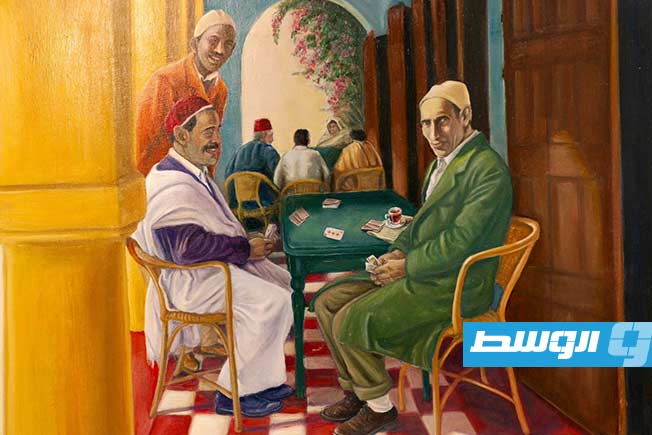
The workshop addressed the aesthetic and symbolic specificities of this garment. It was explained that “Al-Farmalah” in western Libya is often made in white and is an essential part of the “grand suit” worn by a bride. It is embroidered with silver and gold threads with a precision that reflects a high level of craftsmanship and local aesthetic taste. In eastern Libya, the same piece is known as “Al-Kurdiyah.” It is usually colorful, made from “katfa” or velvet fabric in bright colors like blue, red, and green, and decorated with silver thread embroidery featuring decorative motifs that express the region’s identity and the uniqueness of its popular taste.
The workshop also reviewed types of “Al-Farmalah/Al-Kurdiyah,” such as “Tripolitanian Farmalah,” “Jewish Farmalah,” “Qumrat Farmalah,” and “Elaborate (Malbakha) Farmalah.” It was noted that the style of wearing it differs between western and eastern Libya; in the west, it is typically worn under the outer robe, while in the east, it is worn over it, distinguished by gold buttons arranged in a pyramidal shape.
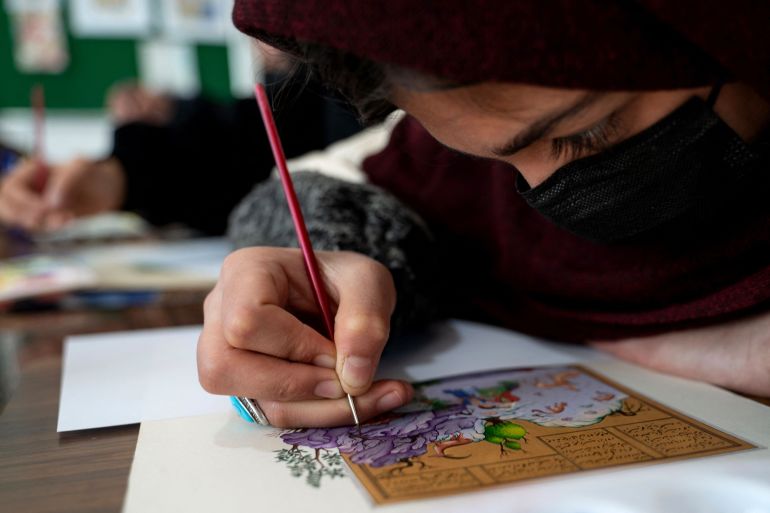
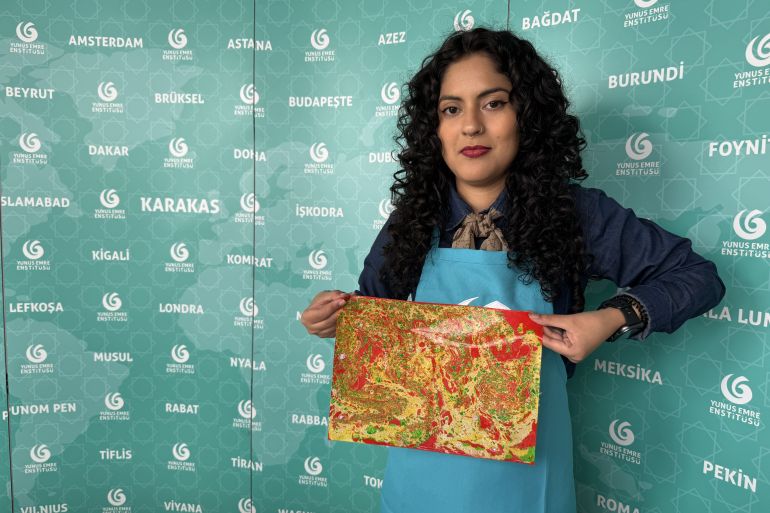
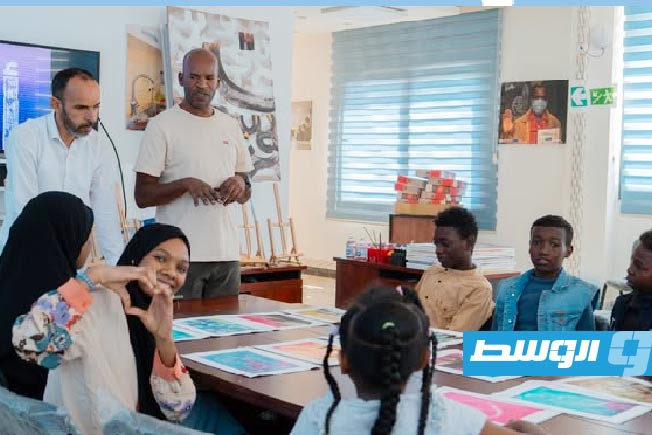
In the practical segment, attendees participated in an interactive artistic activity. This included drawing “Al-Farmalah,” adding traditional decorations to it, and then coloring it. The aim was to closely examine its aesthetic details and reinforce this cultural heritage through a creative method that connects art with identity.
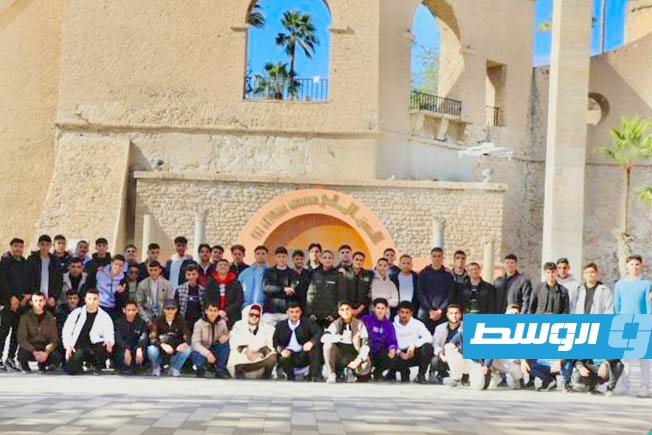
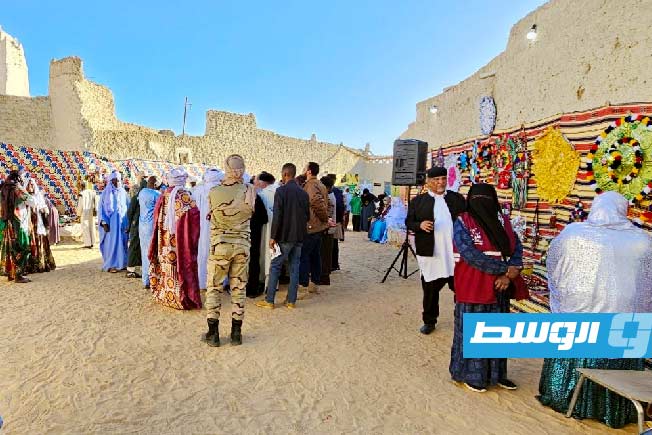
Workshop on ‘Al-Farmalah/Al-Kurdiyah’ Highlights the Aesthetics of Traditional Libyan Dress at ‘Arab Communities Day’ (Facebook)
Workshop on ‘Al-Farmalah/Al-Kurdiyah’ Highlights the Aesthetics of Traditional Libyan Dress at ‘Arab Communities Day’ (Facebook)
Britain
Britain is a sovereign island nation in northwestern Europe with a long and influential history, including its formation through the union of England, Scotland, and Wales, and later with Northern Ireland. It was the centre of the British Empire and the birthplace of the Industrial Revolution, shaping global politics, economics, and culture for centuries. Today, it is a constitutional monarchy with a rich heritage of historic landmarks, museums, and cultural traditions.
London
London is the capital of the United Kingdom, a major global city founded by the Romans as Londinium nearly two millennia ago. Its long history is reflected in landmarks like the Tower of London, Westminster Abbey, and the modern financial district, showcasing its evolution from a Roman settlement to a medieval powerhouse and a modern metropolis.
Libya
Libya is a North African country with a rich history rooted in ancient civilizations like the Phoenicians and Romans, followed by centuries of Arab and Ottoman influence. In the modern era, it was an Italian colony before gaining independence in 1951, later becoming known for Muammar Gaddafi’s lengthy rule from 1969 until the 2011 revolution. The country is home to UNESCO World Heritage sites, such as the ruins of Leptis Magna, which showcase its significant classical past.
western Libya
Western Libya is a historically significant region encompassing ancient sites like Leptis Magna, a prominent city of the Roman Empire whose well-preserved ruins attest to its past wealth and importance. The area has been shaped by various civilizations, including the Phoenicians and Romans, and played a key role in Mediterranean trade networks.
eastern Libya
Eastern Libya is a historically significant region encompassing the ancient Greek colony of Cyrene, a UNESCO World Heritage site, and the city of Benghazi, a center of the 2011 revolution. Its history spans from Phoenician and Greek settlements to Roman rule and later periods under Byzantine, Arab, and Ottoman influence. In the modern era, the area has been a focal point of conflict and political change following the fall of Muammar Gaddafi’s government.
Gaza
Gaza is a coastal city in the Palestinian territories with a history dating back over 3,000 years, having been ruled by various empires including the Egyptians, Philistines, Romans, and Ottomans. It is a densely populated urban center and holds significant cultural and religious importance in the region. In recent decades, it has been the focus of intense political conflict and humanitarian crises.
Sudan
Sudan, located in Northeast Africa, is home to ancient civilizations, most notably the Kingdom of Kush, which ruled from the city of Meroë and was a major rival to ancient Egypt. The modern nation gained independence from Anglo-Egyptian rule in 1956 and has since been marked by a complex history of civil conflict and cultural diversity, with numerous significant archaeological sites reflecting its deep historical roots.
Tripolitanian Farmalah
The Tripolitanian Farmalah refers to a traditional agricultural estate or farmstead in the region of Tripolitania, western Libya. Historically, these farmalahs were vital economic and social units, often centered around oasis cultivation, and played a key role in the local feudal-like system during the Ottoman and later colonial periods.
Jewish Farmalah
The Jewish Farmalah refers to a historical agricultural settlement established by Jewish immigrants in the late 19th and early 20th centuries in the region of Palestine, particularly in the area known as the Sharon Plain. These settlements were part of the broader Zionist movement and early Jewish pioneering efforts, known as the First and Second Aliyah, to cultivate the land and build self-sufficient communities.
Qumrat Farmalah
Qumrat Farmalah is a historical site located in the Kurdistan Region of Iraq, believed to be an ancient Assyrian military outpost and settlement. Its ruins, including remnants of walls and structures, date back to the period of the Neo-Assyrian Empire, which flourished in the first millennium BCE. The site offers insight into the expansion and administration of one of the ancient world’s major empires in this region.
Elaborate (Malbakha) Farmalah
Elaborate Farm, also known as Malbakha Farmalah, is a historic agricultural site in the Kingdom of Saudi Arabia, recognized for its traditional Nabatean-era farming techniques. It represents a long history of human settlement and agricultural innovation in the AlUla region, utilizing ancient water management and cultivation methods adapted to the arid desert environment.
Facebook
Facebook is a social networking service founded in 2004 by Mark Zuckerberg and his Harvard University roommates. It began as a platform for college students before expanding globally, fundamentally changing online communication and becoming one of the world’s largest technology companies.