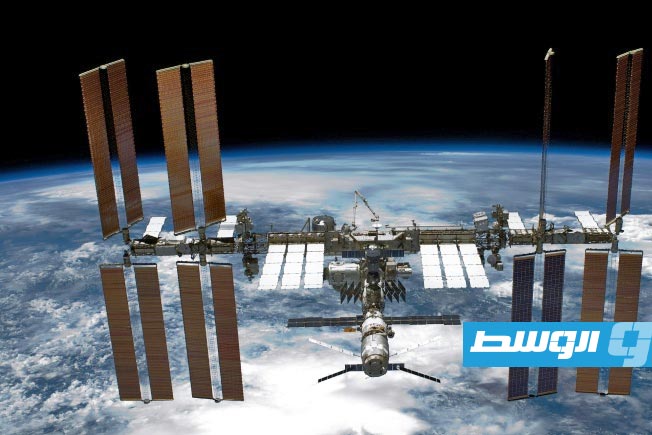
The anticipated return of the International Space Station to Earth in 2030 will conclude three decades of peaceful international cooperation, closing a chapter of “coordination transcending borders, languages, and cultures.”
Since November 2000, this massive scientific laboratory, comparable in size to a football field and orbiting Earth at a speed of eight kilometers per second, has never been without a human presence.
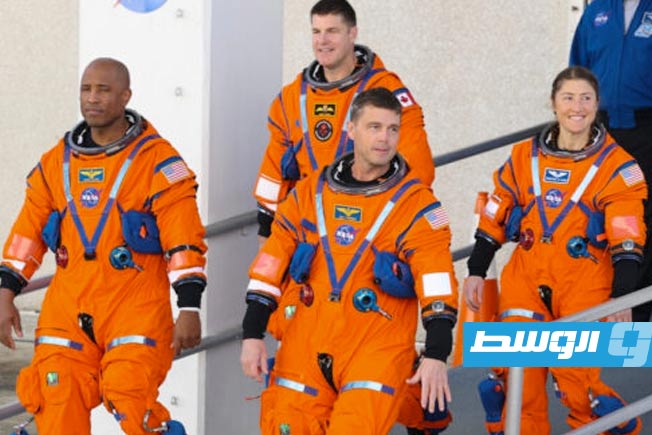
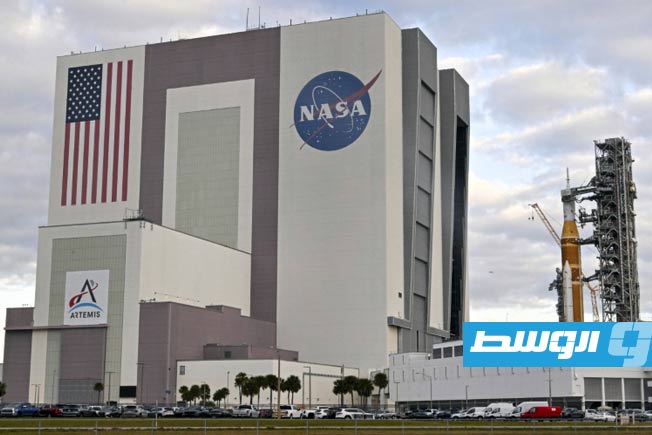
As a new crew of astronauts prepares to launch to the station next week, its impending end evokes a sense of nostalgia among some who contributed to its operation from Earth. The former director of NASA’s Office of Science and Mission Systems stated, “The International Space Station represents a space for human cooperation and coordination transcending borders, languages, and cultures.”
He added, “For more than 25 years, we have had humans in space around the clock, all year round,” considering this “a testament to our ability to find solutions rather than wage battles when we wish to interact with each other.”
From Race to Cooperation
The concept of the International Space Station was first proposed following the Cold War, embodying the new spirit of cooperation between Russia and the United States, the two rival powers in the space race. Despite many ties between Russia and the West being severed due to the war in Ukraine, cooperation has continued aboard the space station.
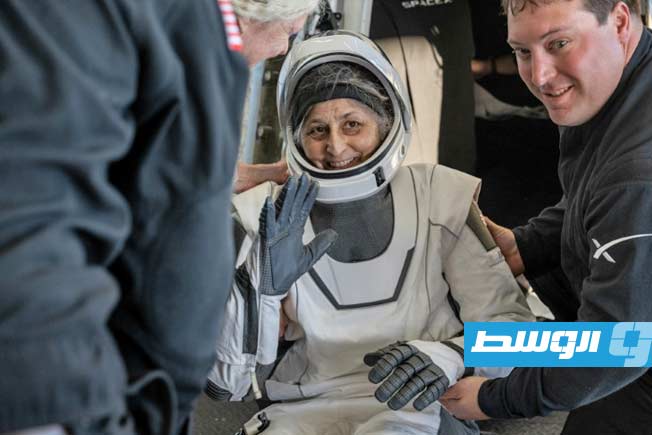
– <a>ISS Crew Returns to Earth Early in Historic First
– <a>NASA Selects SpaceX to Build Vehicle to Assist in Deorbiting ISS After 2030
An official from the French National Centre for Space Studies (CNES) stated, “The history of human spaceflight is primarily a space race.” He added, who coordinated many of the station’s early projects, “This is a crucial moment in the evolution of space exploration.”
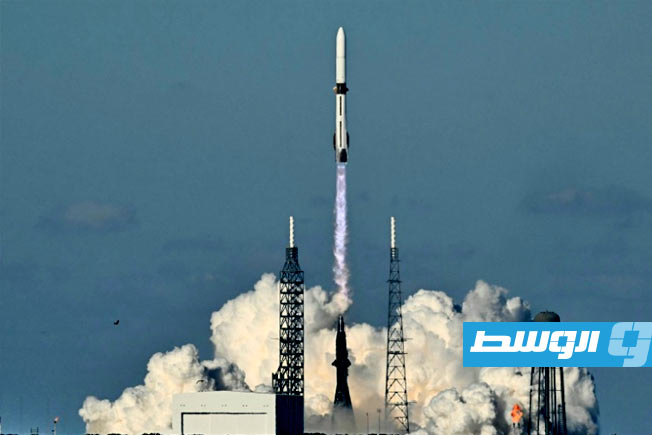
However, the station’s equipment is aging over time. NASA announced last year its selection of SpaceX, owned by billionaire Elon Musk, to build a vehicle capable of pushing the International Space Station into Earth’s atmosphere in 2030, where it will disintegrate.
It was explained that “this large rocket engine will slow the International Space Station, enabling it to re-enter the atmosphere precisely over the Pacific Ocean, away from land, people, and any other potential hazards.”
Many spacecraft and telescopes have met a similar fate in an isolated area called “Point Nemo.”
After 2030, China’s Tiangong station will be the only station orbiting Earth, while the United States focuses on space stations built and operated by private companies such as Blue Origin and Axiom Space.
For some, the end of the International Space Station can be considered “very sad,” but it will mark the beginning of a new era. A quote from a former president of the European Space Agency was cited: “If you want to go fast, go alone. If you want to go far, go together.”
International Space Station
The International Space Station (ISS) is a habitable artificial satellite in low Earth orbit, representing a multinational collaborative project primarily led by the United States and Russia. Its construction began in 1998, with continuous human occupation since 2000, serving as a microgravity and space environment research laboratory.
Earth
Earth is the third planet from the Sun and the only known astronomical object to harbor life, with a geological history spanning over 4.5 billion years. Its surface features diverse ecosystems and has been the cradle for the development of all known human cultures and civilizations.
NASA
NASA, or the National Aeronautics and Space Administration, is the United States government agency responsible for the nation’s civilian space program and aerospace research. It was established in 1958 in response to the Soviet Union’s launch of Sputnik, marking the beginning of the U.S.-Soviet space race. NASA is renowned for landmark achievements like the Apollo moon landings and the operation of the Space Shuttle and International Space Station.
Russia
Russia is the world’s largest country by area, spanning Eastern Europe and Northern Asia. Its history is marked by the rule of the Tsars, the Soviet Union era following the 1917 revolution, and its establishment as the Russian Federation in 1991. It is renowned for its vast landscapes, rich literary and artistic traditions, and influential cultural figures like Tolstoy and Tchaikovsky.
United States
The United States is a federal republic founded in 1776 after declaring independence from Great Britain, with its current government established by the U.S. Constitution in 1789. It grew from thirteen original colonies into a global power, with a history shaped by westward expansion, industrialization, and significant internal conflicts such as the Civil War. Its diverse culture is a product of immigration and the blending of numerous traditions from around the world.
Ukraine
Ukraine is a country in Eastern Europe with a rich history dating back to the medieval state of Kyivan Rus. It has experienced periods of independence as well as rule by various empires, before regaining its sovereignty in 1991 following the dissolution of the Soviet Union. The nation is known for its distinct cultural heritage, including traditions in music, dance, and Orthodox Christian architecture.
French National Centre for Space Studies
The French National Centre for Space Studies (CNES) is France’s government space agency, founded in 1961. It is responsible for shaping and implementing the country’s space policy, developing launch vehicles and satellites, and is a key contributor to European space programs through the European Space Agency.
CNES
CNES is the French National Centre for Space Studies, founded in 1961. It is responsible for shaping and implementing France’s space policy in Europe, notably through its key role in the European Space Agency (ESA).
SpaceX
SpaceX, founded by Elon Musk in 2002, is a private American aerospace manufacturer and space transportation company. Its history is defined by pioneering reusable rocket technology, drastically reducing the cost of space access, and achieving milestones like being the first private company to send astronauts to the International Space Station.
Elon Musk
Elon Musk is a South African-born entrepreneur and business magnate known for founding or leading companies such as SpaceX, Tesla, and X (formerly Twitter). His career is defined by a focus on advancing technologies like reusable rockets, electric vehicles, and neural interfaces, aiming to address global challenges like sustainable energy and multi-planetary colonization.
Pacific Ocean
The Pacific Ocean is the world’s largest and deepest ocean, covering more than 60 million square miles. It was named by the explorer Ferdinand Magellan in 1520 for its seemingly calm waters, though it has been a vital corridor for human migration, trade, and cultural exchange for millennia.
Point Nemo
Point Nemo is the oceanic pole of inaccessibility, located in the South Pacific Ocean, and is the point on Earth’s surface farthest from any landmass. It was officially calculated and named in 1992 by survey engineer Hrvoje Lukatela, with “Nemo” meaning “no one” in Latin. The area is also known as a spacecraft cemetery, as numerous decommissioned satellites and space stations, like *Mir*, have been deliberately deorbited there.
China
China is one of the world’s oldest continuous civilizations, with a recorded history spanning over four millennia. It is home to numerous UNESCO World Heritage sites, such as the Great Wall and the Forbidden City, which reflect its long imperial past and profound cultural achievements.
Tiangong
Tiangong, meaning “Heavenly Palace,” is the name for China’s modular space station, which has been operational in low Earth orbit since 2021. Its construction represents a major milestone in China’s manned space program, evolving from earlier Tiangong-1 and Tiangong-2 prototype space labs launched in 2011 and 2016, respectively.
Blue Origin
Blue Origin is an American private aerospace manufacturer and spaceflight services company founded in 2000 by Jeff Bezos. Its primary goal is to develop technologies to enable private human access to space, with notable achievements including the reusable New Shepard suborbital rocket and the development of the New Glenn orbital launch vehicle.
Axiom Space
Axiom Space is a private American aerospace company founded in 2016, focused on building the world’s first commercial space station. Its history includes launching the first fully private crewed mission to the International Space Station (ISS) in 2022, as a precursor to constructing its own independent modules and eventual station.
European Space Agency
The European Space Agency (ESA) is an intergovernmental organization dedicated to the exploration of space, established in 1975 through the merger of earlier European bodies. It coordinates the space programs of its member states to develop satellite, launch, and exploration technologies, with notable achievements including the Ariane rocket family and missions like Rosetta.