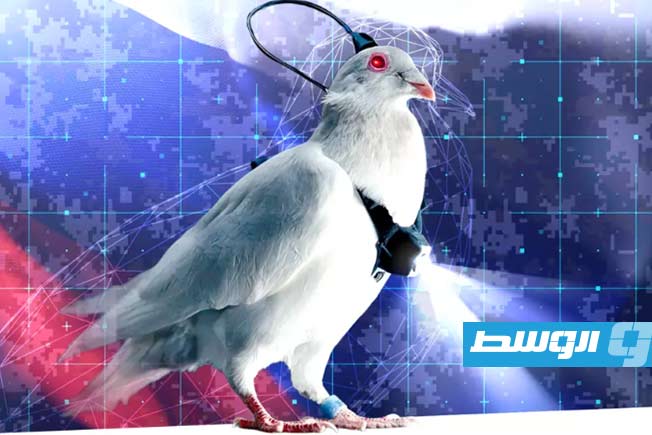
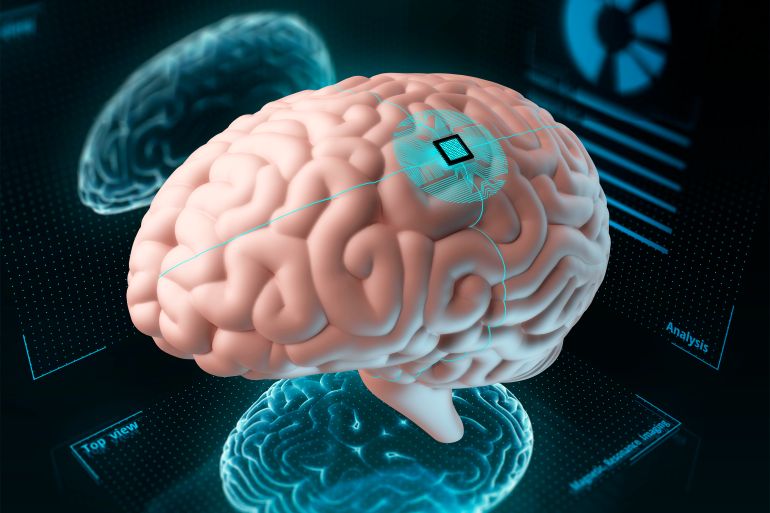
The Russian startup “Neiry” has announced the development of “biological” drones that rely on pigeons controlled remotely via brain implants and mounted cameras.
The project is supported by the Artificial Intelligence Research Institute at Moscow University and funded by entities linked to billionaire Vladimir Potanin.
While the company states the project’s goals are civilian, such as monitoring industrial sites and rescue operations, security experts believe the current context in Russia will inevitably turn this technology to military purposes, taking advantage of the pigeon’s natural camouflage and its ability to hide in urban areas.
– A scientific alliance creates the world’s smallest self-driving robots
– Study reveals shocking figures for AI’s environmental impact in 2025
– Humanoid robots manage border crossings in a pilot project in China
Despite this, specialists are skeptical of the project’s field effectiveness, pointing to similar previous Chinese experiments that did not yield tangible results.
Reprogramming Humans
The ambitions of the company’s founder, Alexander Panov, are raising concerns among human rights organizations; his goals go beyond birds to the idea of using brain implants to “reprogram” humans and sell their services to the state.
Panov proposes targeting Ukrainians with technical “Russification” programs, under the pretext of reintegrating them into Russian culture through technological means, which experts see as a reflection of a “dystopian” ideology aimed at producing human biological computers to serve the interests of the Kremlin.
Russian startup Neiry
Neiry is a Russian startup focused on developing brain-computer interface (BCI) technology, aiming to create devices that allow users to control digital systems with their thoughts. Founded in 2021, the company emerged from the Skolkovo innovation hub and has gained attention for its work on non-invasive neural interfaces intended for applications in healthcare, gaming, and communication.
pigeons
Pigeons, particularly the domestic rock dove, have a long history of association with human settlements, dating back over 5,000 years to ancient Mesopotamia where they were first domesticated for food. Their remarkable homing ability later made them invaluable as messengers for various empires and during wartime communications. Today, feral pigeon populations are a common sight in urban environments worldwide, often seen as both a cultural fixture and a nuisance.
brain implants
Brain implants, also known as neural implants, are electronic devices surgically connected to the brain’s neural tissue to interface with the nervous system. Their development accelerated in the late 20th century, building on early 20th-century neuroscience, with initial applications focused on therapeutic uses like cochlear implants and deep brain stimulation for Parkinson’s disease. Today, research continues to expand their potential for restoring sensory and motor functions and treating neurological conditions.
mounted cameras
“Mounted cameras” refers to the practice of installing stationary video recording devices in fixed locations for surveillance, broadcasting, or documentation. Historically, this concept evolved from early film and television production techniques and became widespread with the advent of closed-circuit television (CCTV) systems for security in the mid-20th century. Today, they are ubiquitous in public spaces, transportation, and live event coverage.
Artificial Intelligence Research Institute
The Artificial Intelligence Research Institute (IIIA) is a research center of the Spanish National Research Council (CSIC) located in Barcelona, established in 1994. It is dedicated to fundamental and applied research in artificial intelligence, with a focus on areas such as multi-agent systems, machine learning, and computational logic.
Moscow University
Moscow University, officially known as Lomonosov Moscow State University (MSU), was founded in 1755 by the Russian polymath Mikhail Lomonosov and Empress Elizabeth. It is Russia’s oldest and most prominent university, with its iconic main building on Sparrow Hills constructed under Stalin in the mid-20th century. The university has been a leading center for Russian science and education throughout its history.
Vladimir Potanin
Vladimir Potanin is a prominent Russian billionaire businessman and oligarch, best known as a co-founder of Interros, a major investment company. He played a key role in Russia’s controversial “loans-for-shares” privatization program in the 1990s, which allowed him to acquire a controlling stake in the mining giant Norilsk Nickel.
Russia
Russia is the world’s largest country by area, spanning Eastern Europe and Northern Asia. Its history is marked by the rule of the Tsars, the rise and fall of the Soviet Union in the 20th century, and its establishment as the modern Russian Federation in 1991. It is renowned for its vast landscapes, rich cultural heritage in literature, music, and art, and influential cities like Moscow and Saint Petersburg.
China
China is one of the world’s oldest continuous civilizations, with a recorded history spanning over four millennia. It is home to numerous UNESCO World Heritage sites, such as the Great Wall and the Forbidden City, which reflect its long imperial past and profound cultural achievements. In the modern era, it has developed into a major global power with a unique blend of ancient traditions and rapid technological advancement.
Alexander Panov
Alexander Panov is a Russian football coach and former professional player, best known for his time as a striker with Zenit Saint Petersburg and the Russian national team during the late 1990s and early 2000s. His career is most famously marked by scoring a crucial goal against France in a 1999 UEFA Euro qualifier, contributing to a memorable victory. After retiring, he transitioned into coaching, taking on roles with various Russian clubs.
Ukrainians
Ukrainians are an East Slavic ethnic group native to Ukraine, with a distinct cultural identity shaped by a long history of statehood, including the medieval Kyivan Rus’ and the Cossack Hetmanate. Their culture is expressed through language, Orthodox Christian traditions, and rich folk arts, while their modern national identity was solidified through periods of foreign rule and a sustained independence movement in the 20th century.
Kremlin
The Kremlin is a historic fortified complex in Moscow, Russia, serving as the official residence of the President. Its history dates to the 12th century, with its iconic walls and cathedrals largely constructed in the 15th and 16th centuries under Italian architects. It symbolizes Russian political power and houses significant government buildings, churches, and museums.