When wars end and the sounds of cannons fall silent, a different kind of suffering begins: the environmental footprint of military activity. This impact is felt not only by the populations who lived through the war but can also be inherited by future generations. This is what a recent Iraqi study revealed, examining the danger of uranium contamination transfer from pregnant women to their fetuses.
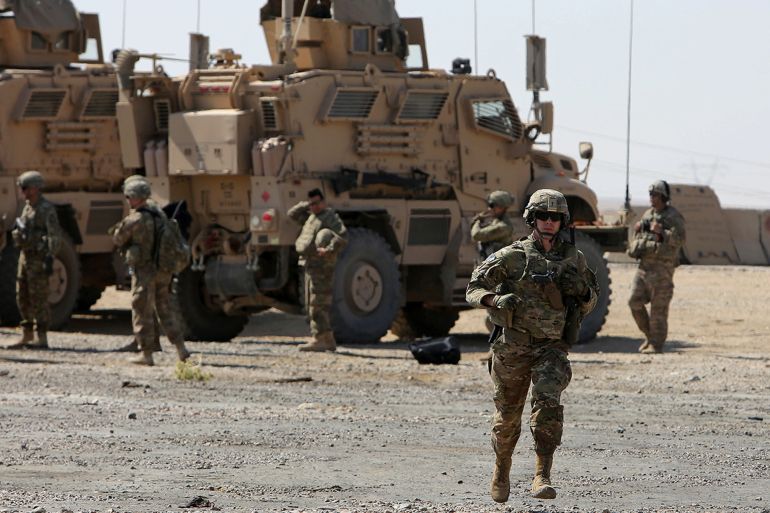
Iraq witnessed repeated use of depleted uranium during the American invasion of Iraq in 2003 and the subsequent intense battles in cities like Anbar and Fallujah. In these war-damaged environments, humans can be exposed to this material by inhaling contaminated dust, consuming contaminated water or food, or contact with contaminated materials.
Previous studies have linked uranium contamination in areas that witnessed intense military activity to the accumulation of this element in the blood of residents, as well as increased rates of birth defects and cancer. However, the new study published in the journal “Radiation Physics and Chemistry” is the first of its kind to monitor this element’s contamination reaching the mothers’ placentas.
How did researchers detect uranium in the placenta?
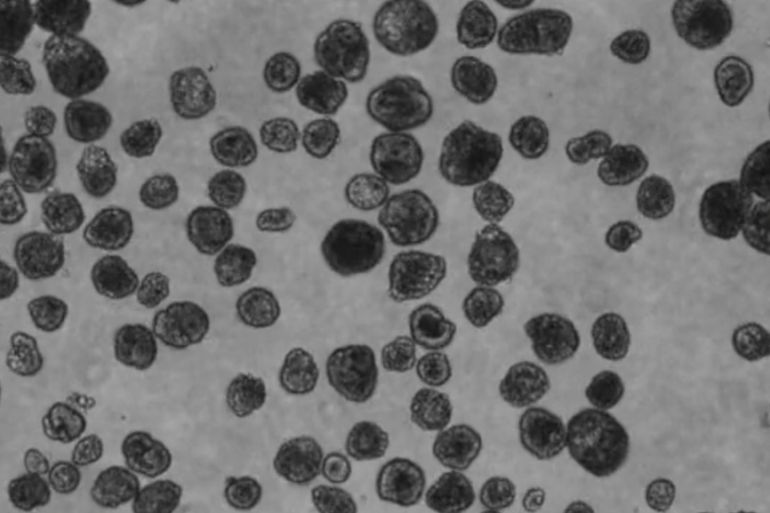
Studies focusing on pregnant women involve special procedures that prevent direct research during pregnancy for fear of negative effects on the fetus. Therefore, this study, conducted by researchers from the University of Baghdad in collaboration with a researcher from the University of Science, Malaysia, found its solution in the placenta. Sixty samples were collected after birth, including 30 from high-risk areas in Anbar—areas suspected of depleted uranium contamination—and 30 from Baghdad as a control group. Uranium concentration was measured using a precise nuclear technique known as the “Solid-State Nuclear Track Detector CR-39.”
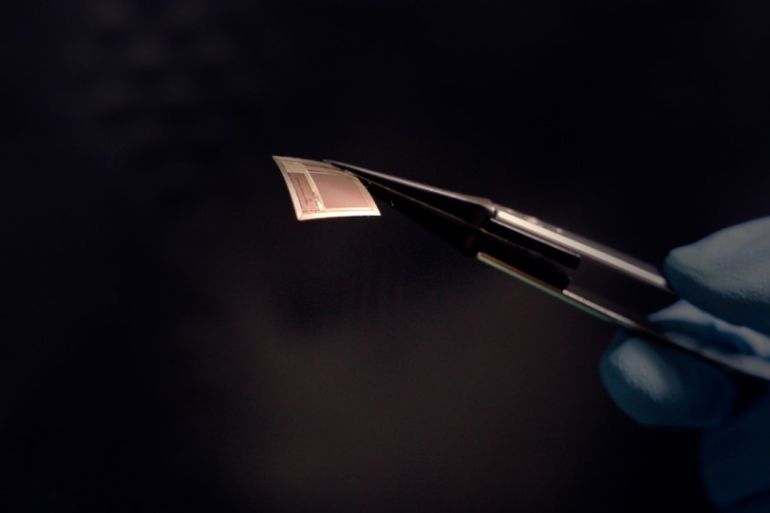
This technique relies on a simple principle: when alpha particles present in uranium are emitted from a contaminated material, they leave behind microscopic traces inside a sensitive solid material known as a “track detector.” The detector used in this study is a transparent plastic material known as “CR-39,” one of the most widely used materials globally in this field due to its high sensitivity to alpha particles.
The detection steps begin with drying the placenta sample, then placing the “CR-39” detector adjacent to or near it. If the sample contains uranium, the alpha particles emitted from it penetrate the detector and leave invisible tracks. The detector is then immersed in a chemical solution like sodium hydroxide, also known as caustic soda, to enlarge the microscopic tracks. These tracks are then counted using an optical or electron microscope, and the track density is mathematically converted into the uranium concentration in the sample.
In these war-damaged environments, humans can be exposed to this material by inhaling contaminated dust, consuming contaminated water or food, or contact with contaminated materials.
What did the researchers find?
Using this method, the researchers found that uranium concentration in the placenta was significantly higher in women from high-risk areas in Anbar, reaching 2.23 micrograms/kg, compared to 1.21 micrograms/kg.
The researchers then moved to a second phase, attempting to link those results to the immediate and past problems experienced by the mothers. They found a relationship between cases that suffered from increased uranium concentration in the placenta and an increased risk of premature birth. This can be explained by uranium causing chemical and radiation stress on placental cells, reducing their efficiency in supporting fetal growth. The result was giving birth before term—before completing 37 weeks of pregnancy—which is associated with complications for newborns, such as breathing problems or developmental delays.
The researchers also found a positive correlation between uranium concentration in the placenta and the number of children the mother had previously lost. This means that mothers exposed to higher levels of uranium in their current pregnancy often faced birth problems or deaths of previous children.
Recent or old exposure?
An important question remained about how uranium reached the mothers’ placentas: Was it related to recent exposure to uranium or old exposure whose effects appeared recently?
Answering this question, a professor from the College of Health and Human Sciences at an American university, who participated in a previous study that successfully monitored uranium levels in the bones of Iraqis using a revolutionary technique employed for the first time in human studies—the “X-ray fluorescence analyzer”—said, “The
Iraq
Iraq, historically known as Mesopotamia, is often called the “Cradle of Civilization” as it was home to ancient Sumerian, Babylonian, and Assyrian empires, which pioneered writing, law, and urban development. The modern state of Iraq was established in 1932, and its rich cultural heritage includes iconic sites like the ancient city of Babylon and the archaeological ruins of Ur. The region has faced significant challenges in recent decades due to conflict, which has impacted both its population and historical sites.
Anbar
Anbar is a historical region in western Iraq, centered along the Euphrates River, which served as a key frontier province of the Abbasid Caliphate. Its most famous early city, also called Anbar, was a significant capital and commercial hub before the foundation of Baghdad. In recent history, the name became widely known during the Iraq War due to intense fighting in cities like Fallujah and Ramadi within the province.
Fallujah
Fallujah is a city in Iraq’s Anbar Province, historically known as a center of Islamic scholarship and trade. It gained international notoriety during the Iraq War, particularly for two major U.S.-led battles in 2004 against insurgent forces, which caused extensive destruction and high casualties.
Baghdad
Baghdad is the capital of Iraq, founded in the 8th century by the Abbasid Caliph Al-Mansur. It became a major center of the Islamic Golden Age, renowned as a hub for science, culture, and commerce, though it has faced significant destruction and conflict in modern history.
University of Baghdad
The University of Baghdad is Iraq’s largest and most prominent university, founded in 1957. It was established as a national institution to advance higher education and research, evolving from earlier colleges dating back to the 1900s. The university has played a central role in the country’s academic and intellectual life throughout the 20th and 21st centuries.
University of Science, Malaysia
The University of Science, Malaysia (Universiti Sains Malaysia, or USM) is a public research university in Penang, founded in 1969 as the second university in Malaysia. It was established to promote science, technology, and applied fields, and it became the nation’s first “APEX University” in 2008, designated for accelerated academic excellence.
Radiation Physics and Chemistry
Radiation Physics and Chemistry is a peer-reviewed scientific journal, first published in 1969, that focuses on the research and applications of ionizing radiation in fields such as materials science, chemistry, and environmental technology. It serves as a key publication for studies on radiation effects, polymerization, and sterilization processes.
Solid-State Nuclear Track Detector CR-39
The Solid-State Nuclear Track Detector CR-39 is a type of plastic polymer, chemically known as polyallyl diglycol carbonate, that is used to detect and measure nuclear radiation. It was first developed in the 1970s and works by recording microscopic damage trails, or “tracks,” created when charged particles like alpha particles pass through its material. This makes it a crucial tool in fields such as radon monitoring, nuclear physics research, and personal radiation dosimetry.
CR-39
CR-39 is a type of optical plastic resin, developed by PPG Industries in the 1940s, primarily used in the manufacture of eyeglass lenses. Its name stands for “Columbia Resin 39,” referencing the 39th formulation attempted in the research project. It became a revolutionary material for eyewear due to being significantly lighter and more impact-resistant than glass.
sodium hydroxide
Sodium hydroxide, commonly known as lye or caustic soda, is not a place or cultural site but a highly caustic chemical compound. Historically, it has been produced for centuries, initially through methods like leaching ashes, and is now a fundamental industrial chemical used in soap making, paper production, and water treatment.
caustic soda
“Caustic soda” is not a place or cultural site; it is the common name for sodium hydroxide, a highly alkaline chemical compound used in manufacturing and cleaning. Historically, its production evolved from early methods like the Leblanc process in the 18th century to modern electrochemical processes.
X-ray fluorescence analyzer
An X-ray fluorescence analyzer is a scientific instrument used to determine the elemental composition of materials by measuring the fluorescent X-rays emitted from a sample when it is excited by a primary X-ray source. The technique is based on the principles of X-ray fluorescence, a phenomenon discovered and explained in the early 20th century following the pioneering work of Wilhelm Röntgen and Henry Moseley. Today, these portable and laboratory analyzers are indispensable tools in fields like archaeology, metallurgy, and environmental science for rapid, non-destructive material analysis.