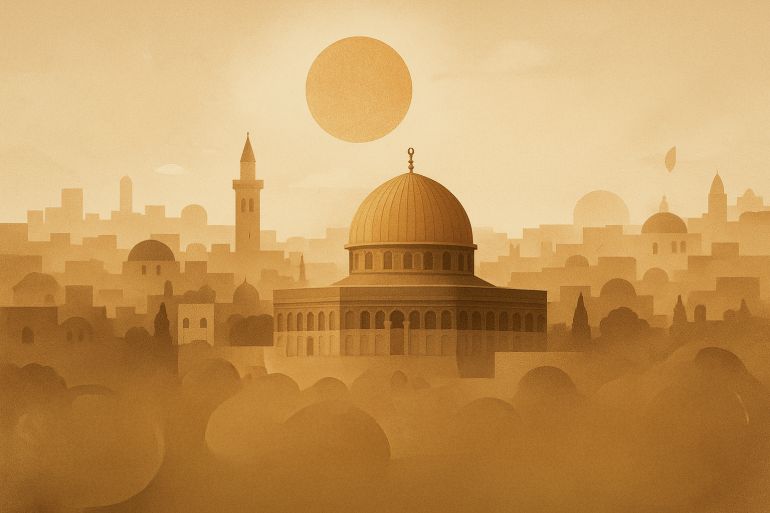
The miniatures of the Afghan artist Behzad, preserved in the world’s oldest and most famous libraries, have been included in the UNESCO World Heritage list, becoming a source of joy, freedom, and hope in Herat, his birthplace.
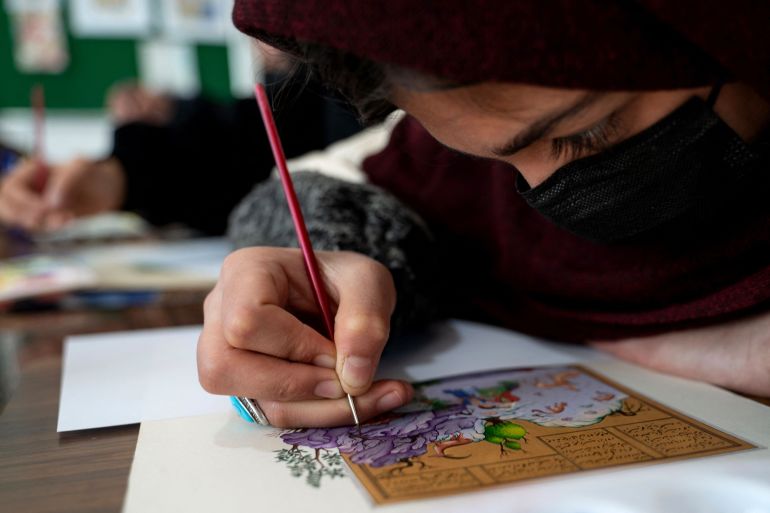
Mohammad Yunus Qaneh (45 years old) sits cross-legged on a red carpet, surrounded by delicate brushes and color palettes, as he paints a horse’s mane and a string of pearls. Since the age of fourteen, he has been passionate about the art of miniature painting by Kamal al-Din Behzad (1450–1535), becoming one of the heirs to this ancient art form in Afghanistan.
He says with a smile, “When I paint, I go back 500 years, to the streets of Herat in that era,” when the Timurid sultans supported artists like Behzad or the poet and religious mystic Abd al-Rahman Jami.
It is noted that at the crossroads of trade routes between China, Europe, and the Middle East, Herat in western Afghanistan was “the Florence of the Islamic world and a global capital of painting, music, and philosophy between 1404 and 1507.”
Ordinary people
Behzad, who was a contemporary of famous Italian artists like Leonardo da Vinci and Sandro Botticelli, breathed new life into this art before working in the Tabriz region of Iran.
It is explained, “Before him, faces were rigid, and paintings were lifeless.”
It continues, “Behzad introduced scenes from the daily life of ordinary people, where we see girls and boys studying, construction workers,” not just kings or religious figures.
Five centuries have passed since Behzad’s death. After experiencing the rule of various dynasties, and facing the ambitions and occupations of the British, Soviets, and Americans, Afghanistan has endured decades of war during which millions were killed.
Since their return to power in 2021, the Taliban authorities have banned women from studying after the age of twelve. Music is prohibited in public spaces, as is the art of acting, leading hundreds of artists to choose exile.
Nevertheless, miniatures in the style of Behzad remain an art that is “practiced, recognized, and transmitted,” as UNESCO confirmed in December by including this “living cultural expression” in the Intangible Cultural Heritage of Humanity list.
News that brings joy and hope
Qaneh, who since 2021 has been forced to close his gallery and now works only from his home, where customers are rare, exhibitions are non-existent, and artists are “stripped of their value,” says: “In these dark times, this is news that brings joy and hope.”
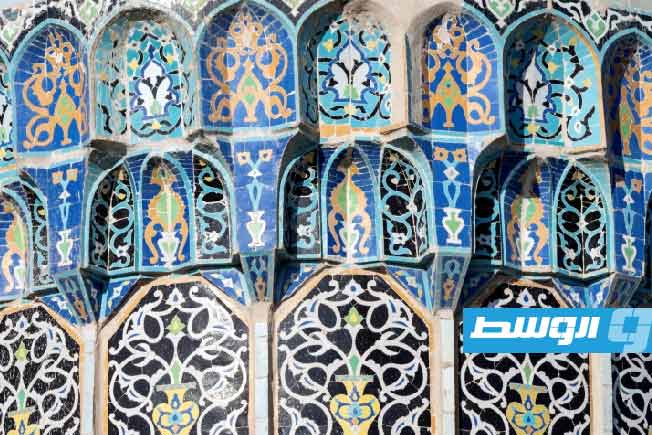
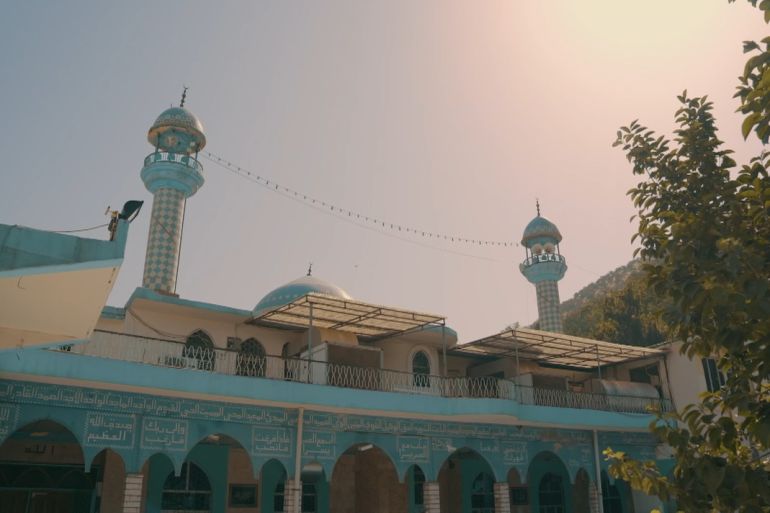
He sometimes climbs the hill near his house. He finds peace near a white tomb identified as Behzad’s tomb, overlooking the city of Herat and its grand mosque adorned with blue ceramic tiles, decorated with intricate floral and geometric patterns created by Behzad. The people of Herat love to come and contemplate them.
As for the manuscripts illuminated by the master, they are all abroad, in libraries or museums in Istanbul, London, and New York.
Out of regret for the Afghan people’s lack of access to their cultural heritage, in 2017, efforts were made to enlarge and reproduce Behzad’s miniatures for display in the Dome Hall of Herat Citadel.
The public there could contemplate the Tree of Life with the blazing autumn colors that Behzad often painted. Also, the ingenious geometric structures in the painting depicting the Prophet Joseph trying to flee from Zuleikha, which inspired the painter Henri Matisse in his work “The Painter’s Family.” However, this hall is currently closed to the public, its wooden door locked.
The Taliban government officially welcomed the site’s inclusion by UNESCO and wants to revitalize tourism. When asked, the regional official in the cultural administration offered no explanation.
Residents who preferred not to reveal their identities for security reasons point to increasing strictness and the ban
Afghanistan
Afghanistan is a landlocked country in Central and South Asia with a history spanning over 5,000 years, having been a crossroads for numerous empires and trade routes along the Silk Road. It is home to significant cultural heritage sites, including the Buddhas of Bamiyan and the ancient city of Herat, though many have suffered damage from recent conflicts.
Herat
Herat is a historic city in western Afghanistan, known as a key center of the Persian Renaissance during the Timurid Empire in the 15th century. It is famed for its ancient Islamic architecture, including the iconic Friday Mosque and the Musalla Complex with its intricate tilework.
China
China is one of the world’s oldest continuous civilizations, with a recorded history spanning over four millennia. It is home to numerous UNESCO World Heritage sites, such as the Great Wall and the Forbidden City, which reflect its long imperial past and profound cultural achievements.
Europe
Europe is a continent with a rich and complex history, shaped by ancient civilizations like Greece and Rome, the transformative periods of the Renaissance and the Enlightenment, and the profound impacts of two world wars. Culturally, it is renowned for its diverse artistic heritage, architectural landmarks, and as the birthplace of influential movements in philosophy, science, and politics.
Middle East
The Middle East is a transcontinental region centered on Western Asia and parts of North Africa, historically known as the cradle of civilization where some of the world’s earliest human societies and major religions emerged. It has been a central crossroads for trade, culture, and empires for millennia, from ancient Mesopotamia and Persia to the Ottoman Empire and modern nation-states. The region’s contemporary history is profoundly shaped by its vast petroleum reserves, the Arab-Israeli conflict, and geopolitical complexities.
Florence
Florence is a historic city in central Italy, renowned as the birthplace of the Renaissance. Its wealth of art and architecture, including landmarks like the Duomo and Uffizi Gallery, stems from its powerful history as a medieval banking and trade center under the influential Medici family.
Iran
Iran, historically known as Persia, is home to one of the world’s oldest continuous civilizations, with a rich cultural history spanning thousands of years. It is renowned for its significant contributions to art, science, and literature, as well as architectural marvels like the ancient ruins of Persepolis. Today, it is an Islamic republic with a distinct cultural identity shaped by both its pre-Islamic Zoroastrian heritage and its post-7th century Islamic history.
Tabriz
Tabriz is a major city in northwestern Iran, historically significant as the capital of various Iranian empires and a key hub along the Silk Road. Its rich history is exemplified by landmarks like the Tabriz Historic Bazaar Complex, a UNESCO World Heritage site that has been a center of commerce and culture for centuries.
British
The term “British” broadly refers to the culture and people of the United Kingdom, which comprises England, Scotland, Wales, and Northern Ireland. Its history is deeply rooted in the formation of a union of these nations, the expansion of the British Empire, and its subsequent global influence in language, law, and governance.
Soviets
The term “Soviets” refers to the system of workers’ councils that emerged during the 1905 and 1917 Russian Revolutions, becoming the foundational governing structures of the Soviet Union. These councils, composed of workers, soldiers, and peasants, were central to Bolshevik political power and the establishment of a communist state. The concept symbolized direct proletarian rule and defined the political system of the USSR until its dissolution in 1991.
Americans
The term “Americans” refers to the people of the United States of America, a nation formed through colonization, revolution in 1776, and subsequent waves of immigration. Its culture is a diverse blend of indigenous, European, African, and global influences, shaped by a history of expansion, industry, and democratic ideals.
Iran
Iran, historically known as Persia, is home to one of the world’s oldest continuous civilizations, with a recorded history spanning over 2,500 years. It is renowned for its profound cultural contributions in art, architecture, poetry, and science, and features numerous UNESCO World Heritage sites, including the ancient ruins of Persepolis and the grand Naqsh-e Jahan Square in Isfahan. The modern Islamic Republic was established in 1979 following a revolution that transformed the nation from a monarchy into a theocratic republic.
Libya
Libya is a North African country with a rich history rooted in ancient civilizations like the Phoenicians and Romans, followed by centuries of Arab and Ottoman influence. In the modern era, it was an Italian colony before gaining independence in 1951, later becoming known for Muammar Gaddafi’s lengthy rule from 1969 until the 2011 revolution. Its cultural sites include the well-preserved Roman ruins of Leptis Magna, a UNESCO World Heritage site.
Istanbul
Istanbul is a major city in Turkey that straddles the Bosphorus Strait, historically serving as the capital of the Byzantine and Ottoman Empires under the names Constantinople and Byzantium. Its rich history is visible in iconic sites like the Hagia Sophia, a former cathedral and mosque, and the Topkapı Palace, the former residence of Ottoman sultans. This unique position between Europe and Asia has made it a cultural and commercial crossroads for centuries.
London
London is the capital of the United Kingdom, founded as a Roman settlement called Londinium nearly 2,000 years ago. It has since grown into a major global city, historically serving as the centre of the British Empire and evolving into a leading hub for finance, culture, and politics.
New York
New York City, originally settled by the Dutch as New Amsterdam in the early 17th century, was later taken by the English and renamed. It grew into a major global port and financial center, becoming a primary gateway for immigrants entering the United States through Ellis Island in the late 19th and early 20th centuries. Today, it is a leading global city renowned for its cultural and economic influence.
Herat Citadel
The Herat Citadel, also known as the Citadel of Alexander, is a historic fortress in western Afghanistan believed to have foundations dating back to Alexander the Great’s era. It was extensively rebuilt during the Timurid Empire in the 15th century and has served as a military garrison, royal residence, and prison throughout its long history.
Dome Hall
The Dome Hall, also known as the “Kuppelhalle,” is a prominent neoclassical building in Leipzig, Germany, originally constructed between 1892 and 1901 as part of the city’s court complex. It survived World War II bombings and later became a notable venue for concerts and events, symbolizing the city’s architectural heritage and resilience.
Tree of Life
The Tree of Life is a solitary, 400-year-old mesquite tree located in Bahrain’s desert, notable for thriving without an apparent water source. Its exact origins are unknown, but it has become a significant cultural and tourist landmark, with local folklore suggesting its roots reach a mythical spring or the Garden of Eden.
Prophet Joseph
The Prophet Joseph is a revered figure in Islam, Judaism, and Christianity, but there is no specific physical site universally known by that name. However, the city of Nablus in the West Bank is home to **Joseph’s Tomb**, a site traditionally believed to be the burial place of the biblical and Quranic figure. The site has a long history of religious significance and has been a focal point of both veneration and conflict in the region.
Zuleikha
Zuleikha is a cultural and historical complex in Isfahan, Iran, traditionally believed to be the prison where the biblical figure Joseph was held. The site, which dates to the 17th century Safavid era, consists of a deep well and surrounding buildings that now function as a teahouse and restaurant. Its name and legend are derived from the Quranic story of Prophet Yusuf (Joseph) and Zuleikha, the wife of his Egyptian master.
Henri Matisse
Henri Matisse was a leading French artist of the early 20th century, renowned as a key figure in modern art for his use of vivid color and fluid draughtsmanship. He was a pioneer of the Fauvism movement and continued to innovate throughout his long career, notably with his late-in-life cut-out works.
The Painter’s Family
“The Painter’s Family” is a famous 1941 oil painting by the French artist Pierre Bonnard, depicting his wife Marthe and other relatives in an intimate domestic interior. It is considered a masterpiece of Intimism, a style characterized by its focus on personal, everyday scenes rendered with vibrant, expressive color. The work reflects Bonnard’s lifelong exploration of memory and perception within the private sphere of the home.
UNESCO
UNESCO, the United Nations Educational, Scientific and Cultural Organization, is a specialized UN agency founded in 1945 to promote global peace through international collaboration in education, science, and culture. It is best known for its World Heritage program, which identifies and helps protect cultural sites and natural landmarks of outstanding universal value.
Taliban
The Taliban is a fundamentalist political and military movement that emerged in Afghanistan in the early 1990s following the Soviet withdrawal. It established the Islamic Emirate of Afghanistan in 1996, enforcing a strict interpretation of Sharia law until being ousted by a U.S.-led coalition in 2001. The group regained control of the country in August 2021 following the withdrawal of international forces.