The Arab astronomical community, and even a wide segment of those interested in astronomy globally, only became familiar with terms like “Blue Moon” or “Black Moon” in the past few decades. These designations did not originate from classical scientific literature but were born in the gray area between science and media.
Catchy headlines and social media play a fundamental role in amplifying natural phenomena and repackaging them as “rare” or “exceptional” events.
Although the Moon has been going through its regular cycles for billions of years without regard for the names we give it, media globalization has turned some of its ordinary phases into exciting cosmic stories, with the Black Moon being a clear example.
What is a Black Moon scientifically?
The Black Moon is not an official astronomical term endorsed by the International Astronomical Union. It is a common descriptive term used in media and some educational astronomy websites. According to the website “Time and Date,” there are two common definitions for this term.
The first and most common definition describes a Black Moon as the second new moon occurring within a single calendar month. Since the lunar cycle lasts about 29.5 days, the alignment of two new moons in one month only happens approximately every 29 months.
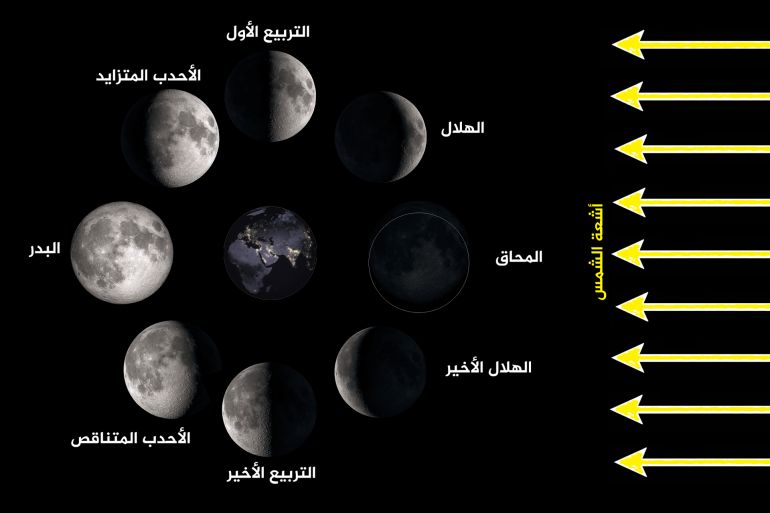
The second definition is related to seasons. The term Black Moon is used for the third new moon in a season that contains four new moons instead of the usual three (remembering that each season consists of three months). This is a slightly rarer case, recurring approximately every 33 months.
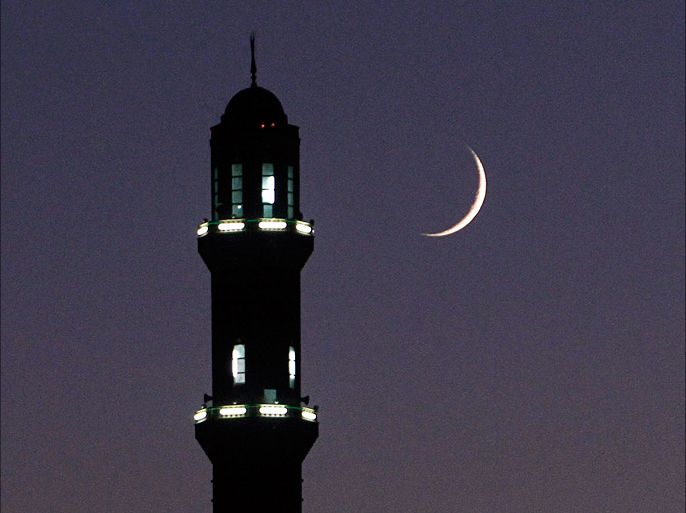
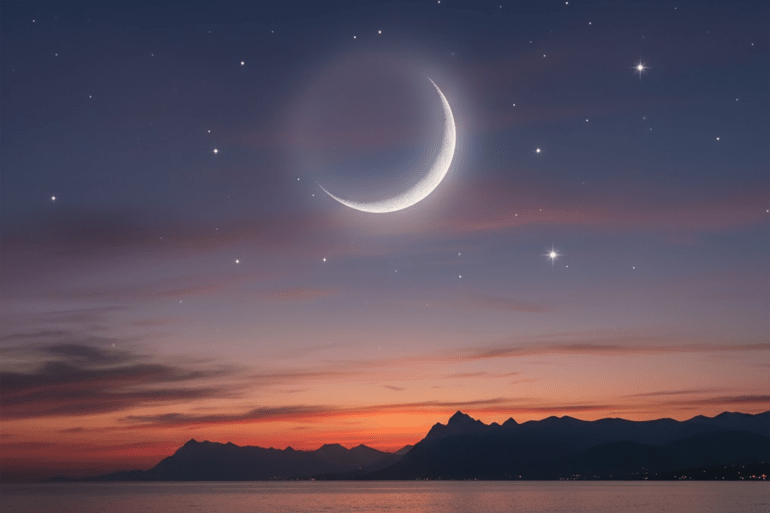
In all cases, the Black Moon is almost invisible because the Moon in its “new moon” phase faces the Sun, while its dark side faces Earth. This means the event, contrary to its exciting name, cannot be seen with the naked eye or with small telescopes.
Why is the Black Moon a rare phenomenon?
The reason for its rarity is not due to anything exceptional in the Moon’s own behavior, but rather to the human calendar. The lunar year does not perfectly align with the solar year, which sometimes leads to a “surplus” in the number of phases within a single month or season. It is this surplus that gives us designations like Black Moon or Blue Moon, not a real physical change in the Moon.
For this reason, astronomers emphasize that a Black Moon is physically no different from any other new moon and carries no special effects on Earth or humans, contrary to what some platforms with an occult or astrological nature promote.
Blue Moon.. The historical origin of the term
To understand the Black Moon, one must go back to its more famous “media sibling”: the Blue Moon. This term appeared in Western culture centuries ago and was used in the English language to denote rarity, as in the famous expression “Once in a blue moon.”
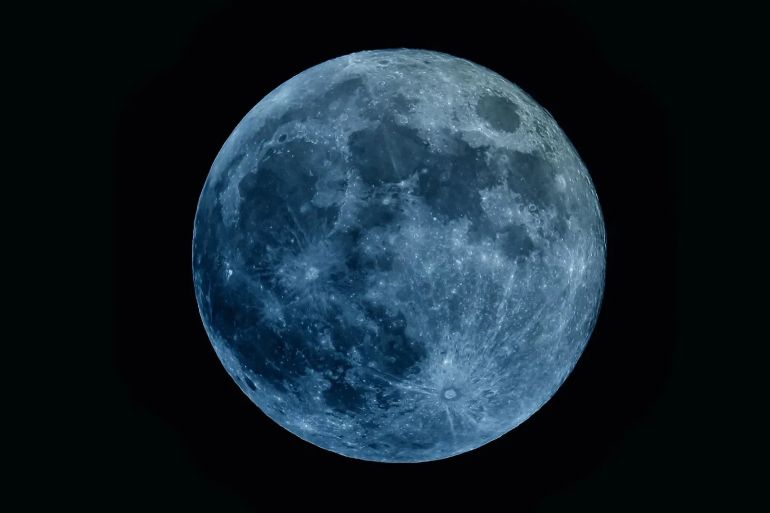
However, the modern astronomical meaning of a Blue Moon—the appearance of two full moons in one month—dates back to an editorial error published in 1986 in the magazine “Sky & Telescope.” Despite being a mistake in interpreting an old astronomical calendar, the term spread quickly, was adopted by the media, and later returned to popular astronomical dictionaries as a common, unofficial description.
Hence the analogy was born: if the second full moon is a “Blue Moon,” why shouldn’t the second new moon be a “Black Moon”? Thus, the term emerged in the late 20th and early 21st centuries, especially with the rise of digital journalism.
The Black Moon in August.. and New Moon dates
In August 2027, the calendar recorded an astronomical event referred to in the media as a Black Moon, when a second new moon occurs within a single