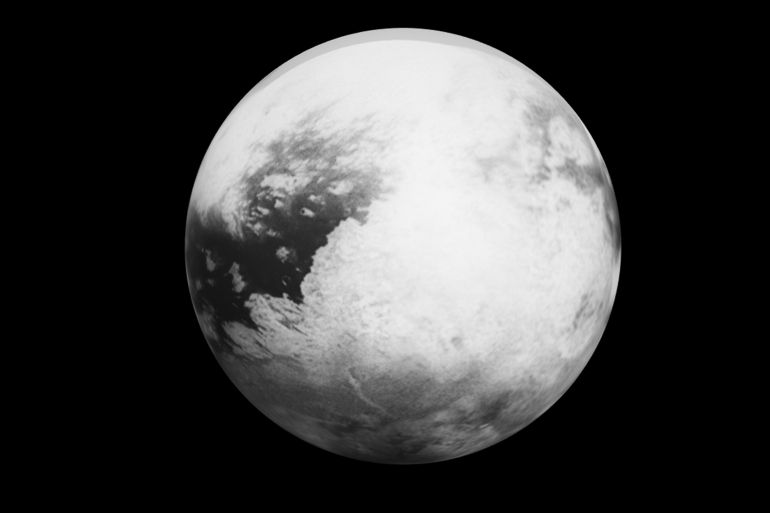
NASA is preparing to send the Artemis II mission astronauts on a historic journey around the moon, which could make them the first humans to directly view approximately 60% of the moon’s far side—areas never seen in real-time, even during the Apollo missions.
The launch, originally scheduled for February 8, 2026, has been preliminarily postponed to between March 4-11, 2026. It will not include a lunar landing, but the journey will enable the four astronauts to observe regions no one has ever seen up close.
Direct Geological Observation
The mission focuses on the “Mare Orientale” (Eastern Sea), a massive basin 965 kilometers wide on the edge of the moon’s far side. Its location has made it extremely difficult to see from Earth, despite its enormous size.
Thanks to the flight path and suitable sunlight, the Artemis II crew may achieve the first clear view of this ancient and complex geological feature, including its multiple rings and its lava-filled center, which indicates an ancient and violent impact event.
The crew will dedicate three hours of the flight to direct observation of the moon.
Scientists confirm that the human eye can detect subtle differences in brightness and texture, which could help determine rock composition and geological age—details that automated instruments might miss, especially under changing lighting conditions.
The mission will combine direct visual observation, photography, and continuous communication with scientists on Earth to ensure maximum benefit from every moment.
Astronaut Training and Scientific Preparation
Although the mission will not involve a landing, the astronauts have received intensive training in lunar geology, including simulation exercises in Iceland to familiarize them with volcanic and impact features similar to the moon’s terrain.
They will carry scientific checklists prepared by geologists, with the freedom to explore any points of interest they notice while passing over the far side.
This approach reflects a shift in how human missions are utilized, where human observation enables the discovery of fine details that could help select landing sites and scientific experiments for future missions.
The Far Side… A Preserved Record of Lunar History
The moon’s far side contains geological records that have not been altered by recent volcanic activity, unlike the near side which is covered by “maria” of volcanic lava, which has erased many ancient features.
Since the Soviet “Luna 3” mission in 1959 (the first spacecraft to photograph the moon’s far side), this side has remained a mystery, and the Apollo missions offered only brief glimpses, often under poor lighting conditions.
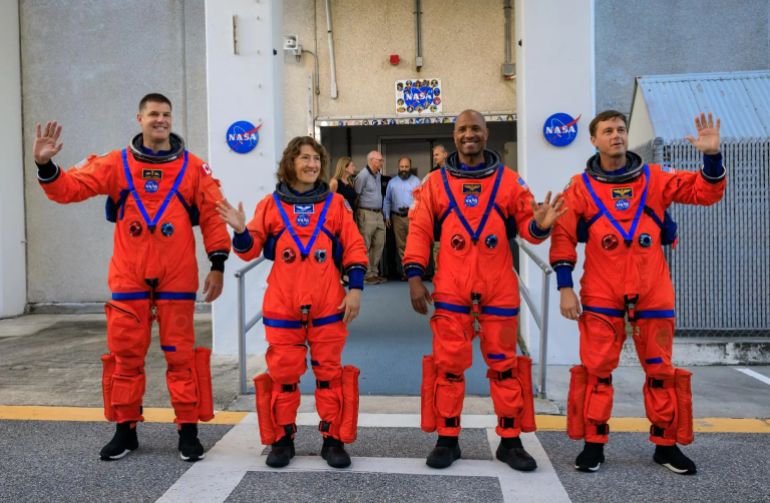
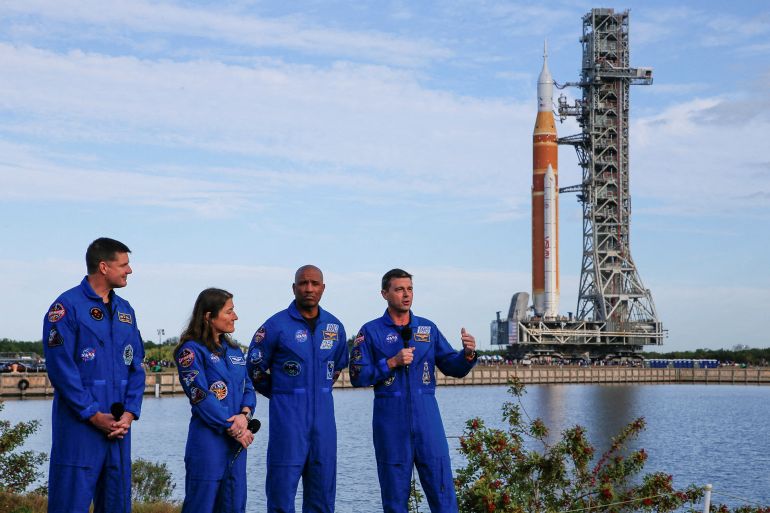
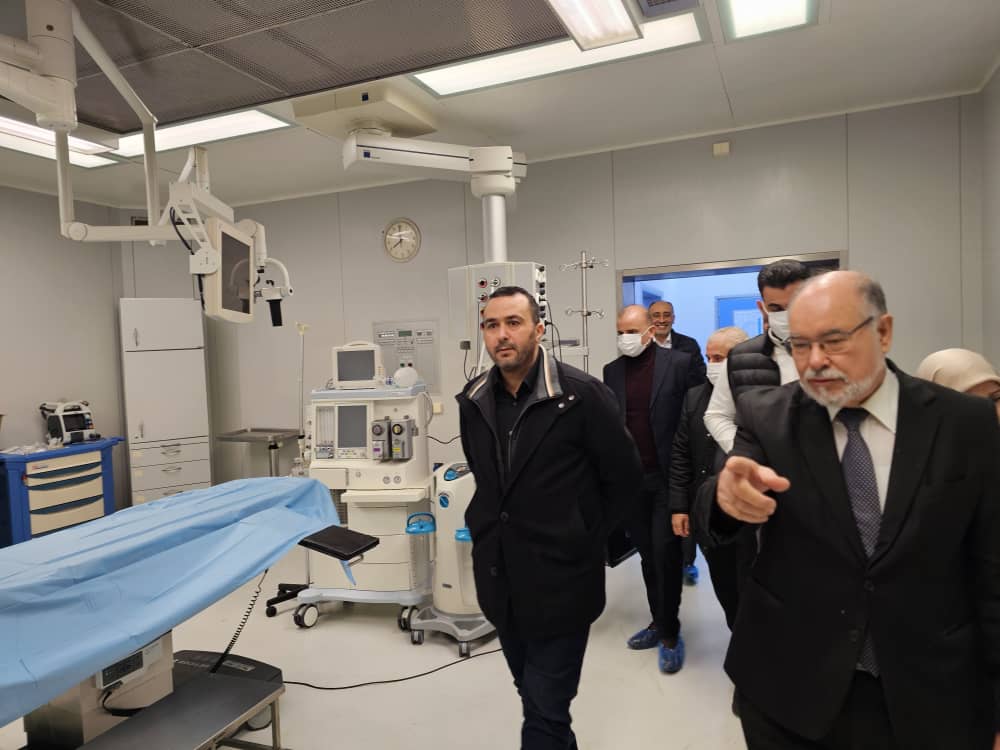
The crew of the Artemis II mission to the moon
The Artemis II mission will break this pattern, utilizing the flight path and a suitable launch window for a better view of the hidden hemisphere. It may help correct common misconceptions about the so-called (and misnamed) “dark side of the moon,” which in reality does not lack sunlight.
As the mission date approaches, scientists and the public hope for a direct look at the moon’s most mysterious regions, potentially opening a new chapter in our understanding of the moon’s history and geological origins.
NASA
NASA, or the National Aeronautics and Space Administration, is the United States government agency responsible for the nation’s civilian space program and aerospace research. It was established in 1958 in response to the Soviet Union’s launch of Sputnik, marking the beginning of the U.S.-Soviet space race. NASA is renowned for landmark achievements like the Apollo moon landings and the operation of the Space Shuttle and International Space Station.
Artemis II
Artemis II is NASA’s upcoming crewed mission, part of the Artemis program, which aims to return humans to the Moon. It will be the first crewed flight of the Orion spacecraft, sending four astronauts on a journey around the Moon without landing, building upon the uncrewed Artemis I test flight.
moon
The Moon is Earth’s only natural satellite, formed approximately 4.5 billion years ago from debris after a giant impact between Earth and a Mars-sized body. It has been a central object in human mythology, science, and exploration, most notably with the first crewed landing by Apollo 11 in 1969.
Apollo
Apollo is the ancient Greek and Roman god of music, prophecy, healing, and the sun, among other domains. Historically, he was one of the most important and widely worshipped deities in the classical world, with major cult centers at Delphi and Delos.
Mare Orientale
Mare Orientale is a large lunar impact basin on the Moon’s western limb, only clearly visible from spacecraft. It was formed by a massive asteroid impact roughly 3.8 billion years ago, creating a distinctive multi-ringed structure resembling a bullseye. Its name, meaning “Eastern Sea,” is a historical misnomer from an older lunar coordinate system, as it is located on what we now consider the Moon’s western edge.
Eastern Sea
The Eastern Sea, also known as the East Sea, is a marginal sea of the Western Pacific Ocean bordered by Korea, Japan, and Russia. Historically, it has been a vital maritime route for trade and cultural exchange in Northeast Asia and is central to ongoing diplomatic discussions regarding its naming conventions.
Earth
Earth is the third planet from the Sun and the only known astronomical object to harbor life. Its history spans approximately 4.54 billion years, with geological and biological evolution leading to the diverse ecosystems and human civilizations present today.
Iceland
Iceland is a Nordic island nation in the North Atlantic, first settled by Norse and Celtic explorers in the late 9th century. It is renowned for its dramatic volcanic landscapes, geothermal activity, and cultural heritage, including the medieval Icelandic Sagas.
Soviet
The term “Soviet” refers to the system of workers’ councils that formed the foundational political structure of the former Soviet Union. It originated during the 1905 and 1917 Russian Revolutions as a grassroots organizing body, before becoming the central governing institution of the communist state from 1922 until its dissolution in 1991.
Luna 3
Luna 3 was a Soviet space probe launched in 1959, famous for being the first mission to photograph the far side of the Moon. These historic images revealed a heavily cratered surface, fundamentally different from the familiar near side, and represented a major milestone in space exploration.
Kennedy Space Center
The Kennedy Space Center, located on Florida’s Merritt Island, is NASA’s primary launch center for human spaceflight, established in 1962. It was the launch site for the Apollo missions to the Moon, including Apollo 11, and continues to support operations for the International Space Station and modern commercial spaceflight ventures.