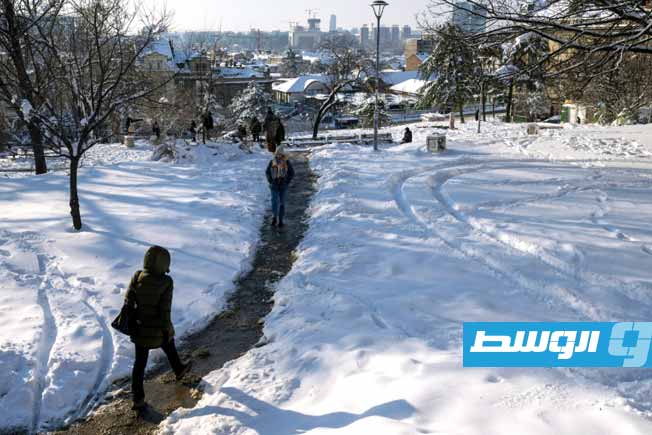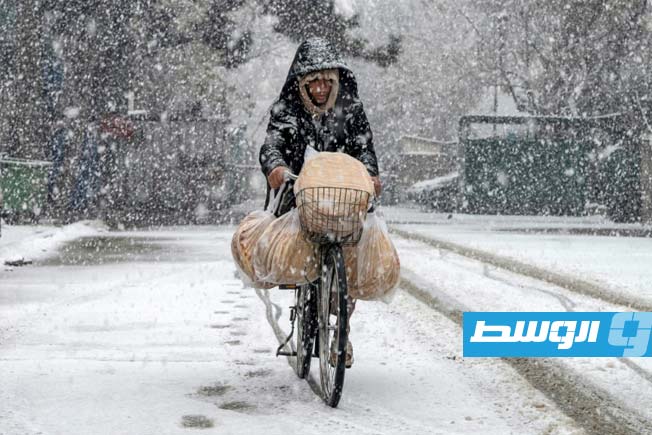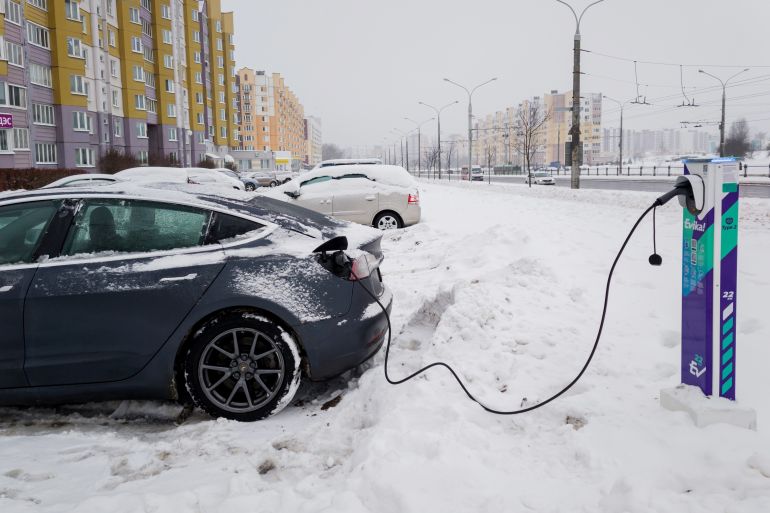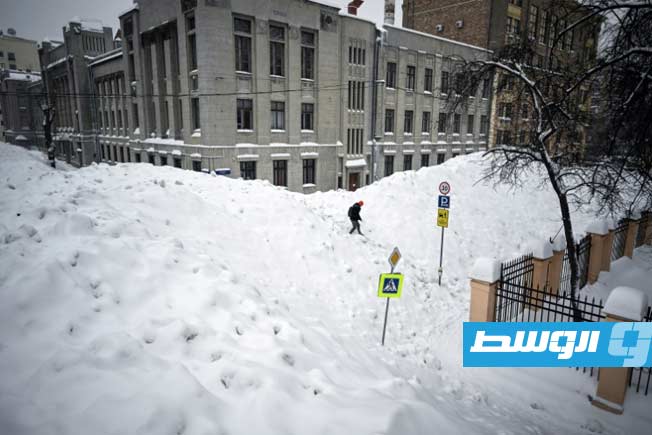
Moscow experienced its worst snowfall in two centuries in January, according to an announcement made on Thursday by meteorologists at the official Moscow University, who pointed to “deep and large-scale cyclones” that passed through the atmosphere of the Russian capital and its surroundings.
On January 29, snowfall in Moscow amounted to the equivalent of 92 millimeters of precipitation, “the highest total in the last 203 years,” as reported by the university on the social network “VK.”
The temperature was 1.5 degrees Celsius lower than the seasonal average of -6.2 degrees in January, according to the university.
Unusual Snowfall
This unusual snowfall is the result of “the passage of deep and large-scale cyclones in the Moscow region,” as stated by the university in its announcement.
–
–
The last snowfall of this intensity was recorded in 1823 in the Russian capital, with precipitation amounting to 122 millimeters, according to the university, which noted that “data collected in the distant past may not be entirely reliable.”
The second highest rate was recorded in January 2004, with 88.9 millimeters of precipitation.
Snow depth exceeded 60 centimeters on Thursday in the Russian capital.