The drama film “Josephine” dominated the major awards at the 2026 Sundance Film Festival, winning both the Grand Jury Prize for U.S. Dramatic Film and the Audience Award on Friday. The film received widespread praise for the performances of Channing Tatum, Gemma Chan, and newcomer Mason Reeves.
While accepting the Audience Award during the ceremony in Park City, Utah, the film’s director expressed gratitude to viewers, stating, “Cinema is my sanctuary, and it’s an incredible feeling to receive this recognition from you.”
The film “Nuissance Bear” won the U.S. Documentary Award for highlighting the impact of tourism on polar bears. Meanwhile, the World Cinema Documentary Grand Jury Prize went to “To Hold a Mountain,” which tells the story of a mother and daughter’s struggle to protect their ancestral mountain from being turned into a military base.
In the World Cinema Dramatic category, the Grand Jury Prize was awarded to “Shame and Money,” which presents the story of a couple in rural Kosovo facing the loss of their livelihood. The prize was shared with the film “American Patchuko.”
–
–
–
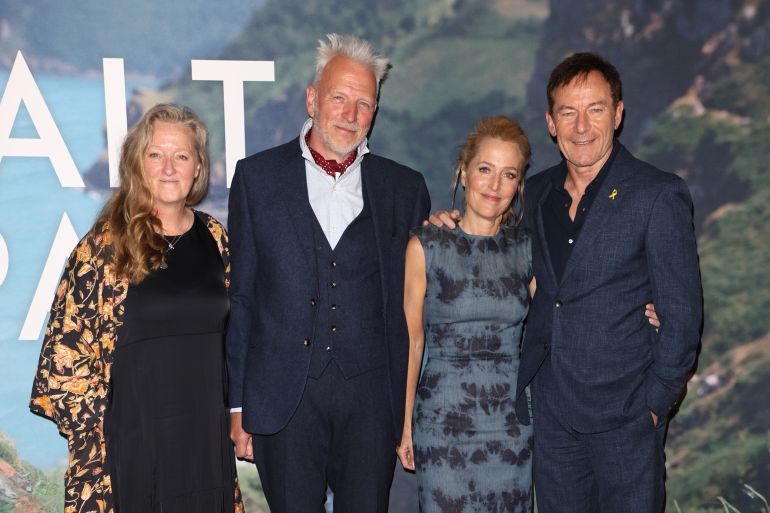
In the “Next” section for innovative works, “The Incomer” won the Innovator Award, presenting a mysterious story about a stranger’s arrival on a remote Scottish island. “The Dream” received a Special Jury Award for its use of motion-capture technology to narrate the life of a Puerto Rican family.
Directing Award Winners
In the directing category, the award for U.S. Dramatic Directing went to the film “Ha-Chan, Check Your Booty!” The film has been acquired for distribution. The award for Documentary Directing went to “Soul Patrol.”
Other Awards
The remaining awards included the Audience Award for World Cinema Documentary, which went to “One in a Million,” and the Audience Award for World Cinema Dramatic, which went to “Hold On to Me.” In the “Next” competition, the Audience Award went to “Unkupigigan,” which showcases efforts to repatriate the remains of Indigenous people.
As the festival concluded, the film industry is watching to see how these films will perform at the box office. While previous festival successes like “CODA” have gone on to Oscar glory, other celebrated Sundance films have faced challenges in attracting a wide audience.
This edition of the festival marks its last time in Park City, Utah, before it moves to the neighboring state of Colorado next year.
Sundance Film Festival
The Sundance Film Festival is an annual independent film festival held in Utah, USA, founded in 1978 by Sterling Van Wagenen and initially named the Utah/US Film Festival. It was revitalized under the leadership of actor Robert Redford’s Sundance Institute in 1985, transforming into a premier global showcase for independent cinema.
Park City
Park City is a mountain town in Utah, USA, originally founded as a silver mining boomtown in the 1860s. It transformed into a major ski destination in the mid-20th century and is now internationally known for hosting the Sundance Film Festival and the 2002 Winter Olympics.
Utah
Utah is a state in the western United States, historically inhabited by Native American tribes such as the Ute, before being settled by Mormon pioneers in 1847. It is renowned for its striking natural landscapes, including five national parks like Zion and Arches, and its deep cultural ties to the Church of Jesus Christ of Latter-day Saints.
Kosovo
Kosovo is a partially recognized state in Southeastern Europe, historically part of various empires including the Roman, Byzantine, and Ottoman. It is widely considered the cradle of Serbian medieval culture and the site of the 1389 Battle of Kosovo, a pivotal event in Serbian national identity, though its modern history is marked by the late-20th-century conflicts that led to its 2008 declaration of independence from Serbia.
Scottish island
The Scottish islands, such as the Orkney, Shetland, and Hebridean archipelagos, have a history of human settlement dating back to the Neolithic period, with sites like Skara Brae. They have been shaped by successive influences from Norse and Gaelic cultures, later becoming integral parts of the Kingdom of Scotland. Today, they are known for their distinct cultural identities, rugged landscapes, and historical sites.
Puerto Rican
Puerto Rico is a Caribbean island and unincorporated U.S. territory with a rich cultural history shaped by its indigenous Taíno roots, Spanish colonization beginning in 1493, and subsequent American influence since 1898. Its vibrant culture is a unique blend of these influences, evident in its music, cuisine, and architecture, such as the historic forts of Old San Juan.
Colorado
Colorado, admitted as the 38th U.S. state in 1876, is known for its diverse landscape of mountains, high plains, and deserts, largely shaped by the Rocky Mountains. Its history includes ancient Puebloan settlements, Spanish exploration, and a major 19th-century population boom driven by the Pike’s Peak Gold Rush.