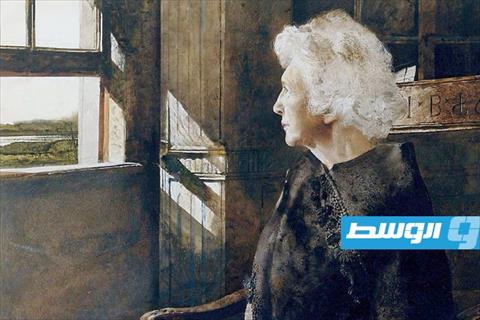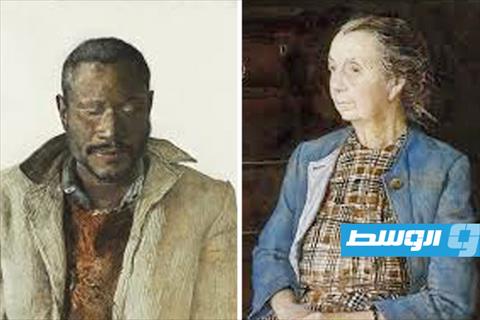
A touch of sadness is felt by the contemplative, emotional observer when looking at the paintings of the American realist painter, renowned for his precise depiction of rural life, though a deep, hidden sorrow often pervades them, perhaps due to their monotony.
His brush highlights feeling and the effects of subtle lighting.
Art critics note that his works have several key characteristics, the most prominent being hyper-realism. His paintings are distinguished by an extremely high level of detail, to the point where his brush highlights feeling and the effects of subtle lighting. The colors in his paintings are limited, as he often uses muted, earthy tones that evoke nostalgia and quiet contemplation. His subjects are rural and domestic, frequently featuring natural rural landscapes, dilapidated buildings, and figures that display deep emotional depth, strongly evoking feelings of loneliness and isolation, along with a profound connection to nature.
Historical Painting and Coloring Techniques
His techniques are masterful in the use of watercolors and tempera. For those unfamiliar, tempera is one of the oldest techniques, relying on mixing colored pigments with a water-soluble emulsified binding agent, often using egg yolk (egg tempera). It is characterized by bright colors, fast drying time, and high durability that lasts for centuries. It was commonly used in icons, murals, and Renaissance paintings before the discovery of oil paints. The artist Wyeth preferred using egg tempera, which allows for the painting of fine details, as well as watercolors for their fluidity and spontaneity.
It is worth noting that his paintings often contain symbolism and subtle narrative storytelling through simple narratives, with symbols and figures suggesting deeper meanings. Critics point to his famous painting “Christina’s World” as a clear example of this view, showcasing his artistic style. The young woman at the center of the painting, in a barren landscape, embodies states of perseverance and longing.
One of the Greatest Pioneers of American Realist Art
In short, he is considered one of the greatest pioneers of American realist art, leaving a mark on the cultural landscape. With his artistic ability to capture the essence of American rural life and its stages of transformation towards urbanization, critics believe that the rural scenes in his paintings, with their interior designs, delight the eyes while also delving deeply into highlighting the suffering of the human soul. This is what has made his paintings prominent in many American museums.
He held his first art exhibition at the age of twenty.
The artist was born on July 12, 1917, in a small village and was the youngest of five siblings. His father was a skilled painter, as was his mother. He had five children. He was homeschooled by his father, who encouraged his growing talent for drawing, shaping him into a great painter. The persistent efforts of his father, who frequently hosted prominent artistic figures, contributed to creating a distinctive creative atmosphere at home. Furthermore, during his adolescence, he spent time accompanying his father in his studio, receiving intensive artistic training. He preferred watercolors for their precision in detail and impressionistic qualities. In addition to his father’s efforts, which instilled in his son a deep confidence in practicing art, this seemingly enabled him to hold his first solo exhibition at the age of twenty, where all his paintings were sold, marking the beginning of his fame and solidifying his position as an artist. In the late 1930s, Wyeth became acquainted with another technique through his brother-in-law. Hurd taught him the method of painting with egg tempera, which he used and mastered throughout his long artistic career, thus reviving a favored artistic medium from the Italian Renaissance.
Andrew’s fame surpassed that of his father.
In 1939, he married, and tensions began to rise between father and son after Andrew’s fame surpassed that of his father, leading to some jealousy in their relationship. Life continued, and this great artist passed away on January 16, 2009, at the age of 91, after becoming a prominent realist painter distinguished in abstraction as a leading artistic style in America.